
Opinion
CARICOM should seek deeper ties to BRICS
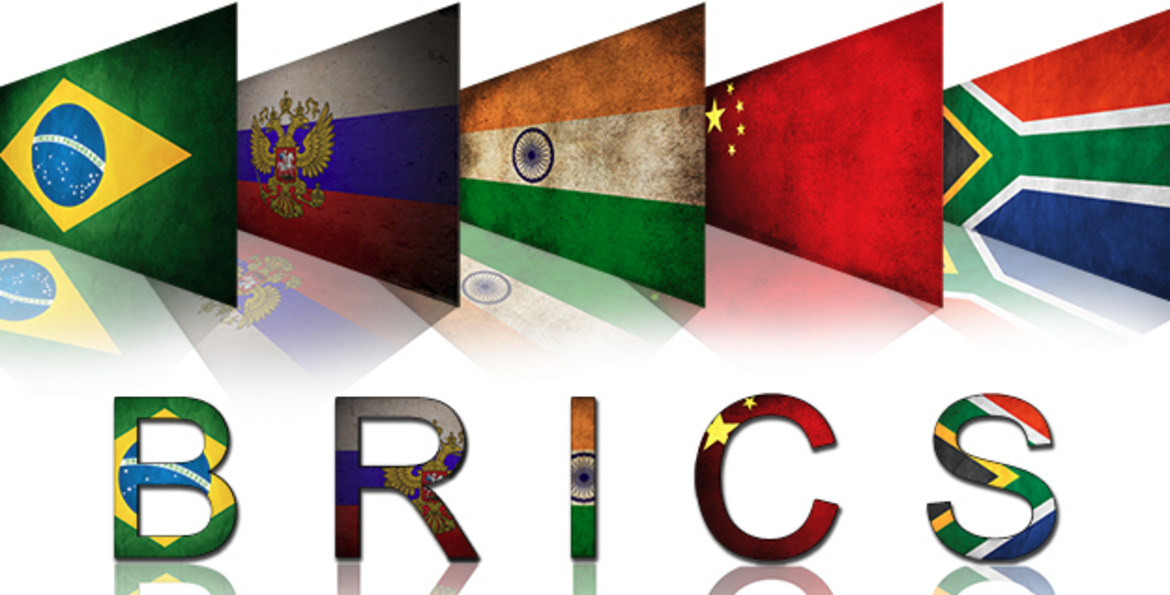
By Clement J. Rohee
The 9th summit of BRICS member states was recently held in Xiamen, China.
The 5 members of BRICS namely Brazil, Russia, India, China and South Africa have a combined nominal gross domestic product (GDP) of US$16.6 trillion and 22 percent of gross world production.
The World Bank experts expect BRICS growth to pick up to 5.3 percent in 2017.
The BRICS have a combined purchasing power parity (PPP) of approximately US$37 trillion and an estimated foreign reserves totaling US$4 trillion. Taken together as a group, BRICS population amounts to 3.6 billion people or 40 percent of the world’s population.
CARICOM boasts a single market and economy
In contrast, the Caribbean Community (CARICOM)’s total population is 17.7 million.
The CARICOM region has a nominal GDP of US$64.7 billion and combined PPP US$107.8 billion. CARICOM’s GDP increased by 0.3 percent in 2013. The community’s combined foreign exchange reserves amounts to 3 months of exports.
Unlike other integration movements, CARICOM boasts a single market and economy, harmonized legislation, free movement of capital and labor, a development fund, a court of justice and a host of regional institutional instruments that contribute to the strong and sustainable integration arrangement.
In other words, CARICOM has the distinct advantage of marketing itself to BRICS, whether in a loose or formal relationship, as a group of small economies in whom they are assured of a highly cohesive, reliable and structured relationship. In this regard, it is apposite to note that at the conclusion of the BRICS Summit this past September, its leaders issued the Xiamen Declaration in which inter alia, they announced plans to promote a ‘BRICS Plus’ arrangement with developing countries and international organizations.
The declaration pointed out that US$1.5 billion will be made available for ‘projects on clean and renewable energy and transportation.’ The Declaration supported the need for ‘an equitable distribution of wealth and the pursuance of human well-being centered strategies.’ According to the Declaration, the Summit marked a turning point from ‘a world system of domination to a world of sovereign equality and equal opportunities for all.’
Strategic Relationship
Given the economic and geo-strategic significance of both BRICS and CARICOM the question is; would it be too far-fetched for CARICOM countries to consider themselves as a contingent of the developing countries who would wish to engage BRICS with a view to establishing a futuristic formal or informal strategic relationship with BRICS within the meaning of the BRICS Plus framework?
The fact of the matter is, a pathway already exists for such a strategic relationship to take place.
China, a major player in BRICS has a significant diplomatic, trade, economic and technical cooperation presence among most CARICOM countries save for those who still maintain rather tenuous bilateral relations with Taiwan.
The now defunct CARICOM/South Africa Joint Commission should be resuscitated and efforts made to re-invigorate CARICOM’s all-round relations with South Africa within the meaning of South-South cooperation.
Guyana is the only CARICOM country that has significant technical and economic cooperation as well as trade relations with Brazil. The excellent bilateral relations both countries enjoy can be utilized as a platform for bringing CARICOM closer to BRICS’s doorstep. CARICOM has never reached out to Russia nor India as a 15-member community of states although both Russia and India have diplomatic missions or non- resident ambassadors in all CARICOM member states.
Moreover, it is quite possible that the majority of CARICOM member states have active economic, trade and technical cooperation initiatives with these 2 key members of BRICS.
It would make diplomatic sense therefore for a joint collaborative effort within CARICOM at the level of the Council on Foreign and Community Relations, to formulate a joint approach to both India and Russia with BRICS in mind.
Concurrently, diplomatic efforts should be exerted to bring about a confluence of the aforementioned three fronts with a view to arriving at a joint strategic approach to engage BRICS in one way or another.
