
Opinion
Can Africa become the ‘office’ of the world?
By Danilo Desiderio
In knowledge-based societies, manufacturing no longer holds the primary role in the economy that it once did. Many economists are now questioning the traditional industrialization model that many developing and less developed countries are following today. For example, Dani Rodrik has cautioned that the rush toward industrialization by countries trying to catch up with already industrialized nations requires significant investments in skills and capital development. These investments demand substantial financial resources and, most importantly, time.
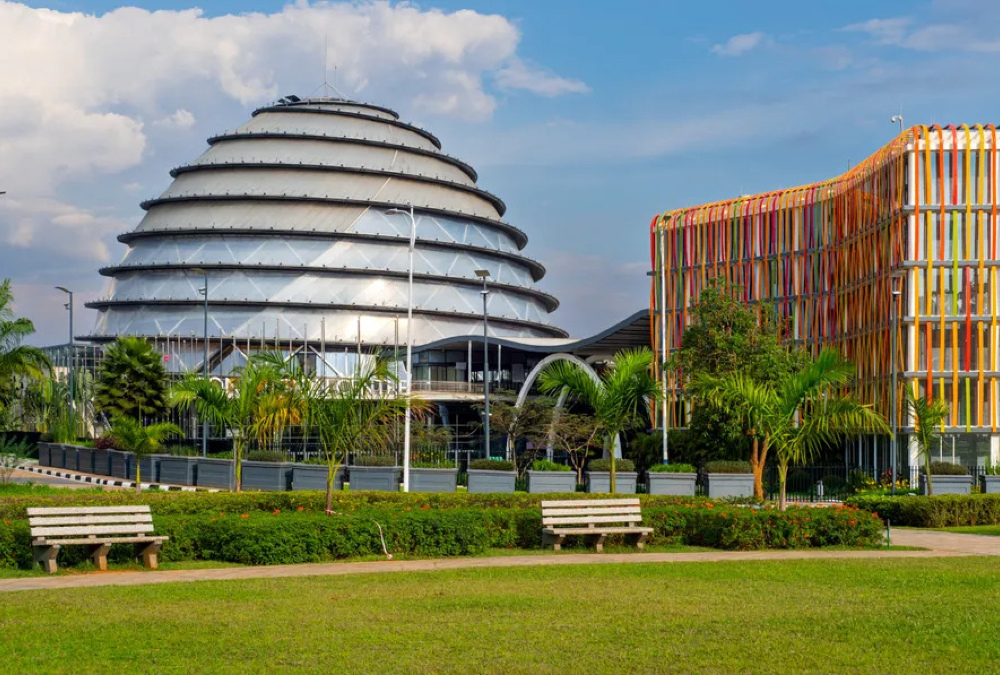
Because of this, some economists suggest exploring alternative development models that bypass manufacturing entirely and move directly to a service-based economy. This is what has been happening in Africa over the past two decades, where many workers have transitioned from low-productivity sectors, such as agriculture, to the service sector. This contrasts with Asia, where the workforce has primarily shifted to industry. Some African countries, like Rwanda, have focused on the service sector to drive economic growth. This approach is often seen as a paradox in the context of African development. Has it been successful? Not yet, but there’s potential for change.
Times are evolving, and what hasn’t worked so far could become effective in the future. With recent advancements in technology, services can now be offered beyond national borders, reaching consumers and businesses in other countries.
In his book Bad Samaritans, Ha-Joon Chang argues that it is challenging to develop a service-based economy without first establishing a robust manufacturing sector. This point has merit. However, when he asserts that demand for services tends to remain local to where the service is provided, we disagree.
Chang illustrates his point by saying that people do not go abroad for a haircut. While this is true, the argument does not account for how things have changed. People might not travel internationally for a haircut, but they might do so for more specialized services, such as a hair transplant, if the cost savings are significant. Similarly, they might seek dental care, cosmetic treatments, or even travel for tourism. You get the idea.
The reality is that, thanks to technological advancements, services no longer require proximity between providers and consumers. Today, many services are just as tradable as goods, and economies of scale can be achieved if these services are cost-effective and of high quality. A World Bank study conducted a few years ago suggests that countries new to the development scene might benefit more from focusing on the service sector rather than manufacturing.
This is evident in sub-Saharan Africa, where the service sector has shown considerable dynamism in recent years, now accounting for nearly 47 percent of the region’s economic activity by value. However, the impact on employment has been minimal. It is a fact that the manufacturing sector typically absorbs more labor than both the service and agriculture sectors. Africa undeniably needs to develop a strong industrial base.
But can African countries transition to high-productivity service sectors by deregulating and incentivizing these sectors in a way that promotes the growth of a competitive market capable of reaching consumers from outside the continent? In our view, the answer is a resounding YES!
Danilo Desiderio serves as the CEO of Desiderio Consultants Ltd in Nairobi, Kenya specializing in African customs, trade, and transport policies.
