
Opinion
Breaking Free: Why Africa Must Embrace Self-Reliance Over Aid Dependency

By NJ Ayuk
Africa must resist the temptation of dependency and embrace self-reliance. While external assistance may seem beneficial in the short term, it often fosters reliance rather than long-term economic growth.
Instead of lamenting challenges, we must take proactive steps toward sustainable development.
Historically, Western bureaucratic elites have allocated vast sums of taxpayer money under the guise of aid, often shaping policies that serve their interests rather than those of the recipients. While such programs may create a sense of goodwill, they can also enable external control and stifle local initiative.
True progress comes from investment and reform, not perpetual handouts.
Some argue that Africa’s colonial history justifies continued aid dependence. However, Asian nations – many of which were also colonized – chose a different path.
Rather than remaining victims of the past, they focused on building strong economies through strategic reforms, infrastructure development, and industrial growth. Africa can and must do the same.
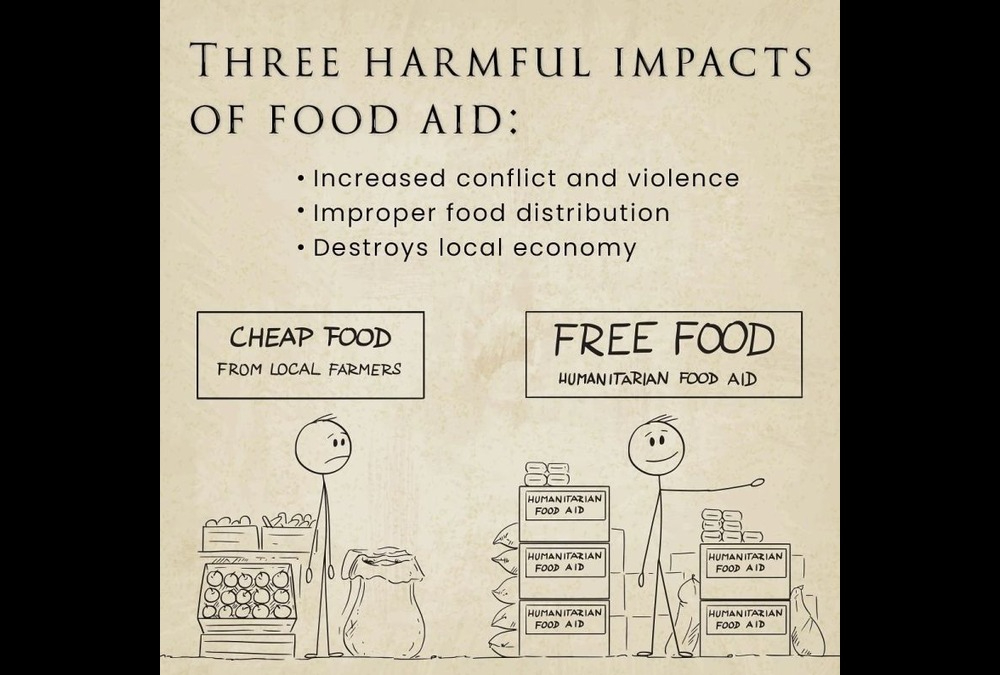
Evidence suggests that excessive aid can have unintended negative consequences. Economists Nathan Nunn and Nancy Qian highlight three key issues with food aid:
- Increased Conflict and Misuse – Aid often falls under the control of recipient governments, which may divert resources for personal or political gain. For example, in the early 1990s, food aid to Somalia was reportedly exchanged for money and weapons, exacerbating the civil war.
- Inefficient Distribution – Political interests frequently dictate how aid is allocated, preventing food from reaching those who need it most. A 2010 United Nations report estimated that up to half of food aid meant for conflict-affected and resource-poor regions never reaches its intended beneficiaries.
- Economic Disruption – Flooding local markets with free goods can undermine local businesses. After the 2010 earthquake in Haiti, international organizations distributed large quantities of free rice, causing a collapse in demand for locally produced rice. This put Haitian farmers and vendors out of business, leading to a long-term decline in food security.
Countries that have successfully transitioned from aid dependency to economic self-sufficiency provide valuable lessons. In the 1960s, Taiwan and South Korea experienced reductions in American economic aid, forcing them to implement critical reforms that led to sustained economic growth.
Similarly, India moved away from relying on wheat donations by reforming restrictive agricultural policies, ultimately achieving surplus production.
Africa has immense potential, but it requires a shift in mindset from dependency to innovation, from aid reliance to investment, and from excuses to action. Sustainable progress demands policies that encourage entrepreneurship, infrastructure development, and local industry growth.
The time to act is now.
NJ Ayuk is the Executive Chairman of the African Energy Chamber.
