
Opinion
A Blueprint for the U.S. – Africa Partnership
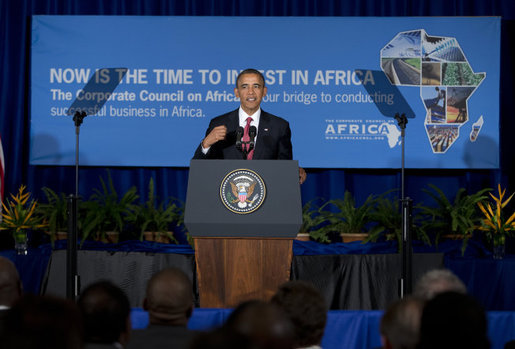
Like is already happening, President Obama is working trade with Europe via the Trans-Atlantic Trade and Investment Partnership (TTIP), with the Pacific region under the Trans-Pacific Partnership (TPP) and currently, Secretary of State John Kerry is working on deepening the North Atlantic Free Trade Area (NAFTA) provisions for Latin America and for Canada. To ensure that he also leaves a legacy for Africa, Obama has an opportunity to amalgamate his current with an enhanced AGOA, wielding them into an overarching U.S. approach to Africa.
Key Challenges
More than anything else, many experts agree that not only are we racing against a Congress agenda: We are also dealing with a calendar that is fast moving towards the end of the 113th Congress.
In the first place, AGOA must be renewed before this current Congress adjourns, or we could face the kind of disruptions experienced in 2012 when the third country fabric debacle led to cancellation of Christmas orders and the loss of business for a whole host of international companies.
Two Ways to Deal with Challenges
There are, essentially, two ways to deal with the current challenges: The first option is to begin, in the immediate term, to develop a comprehensive AGOA renewal proposal. As of January 2014, we shall had seven months before things got especially tight. In April 2014 – we expected that the USITC would provide its comprehensive report, giving all strategic stakeholders additional arsenal to ensure that any comprehensive AGOA proposal has the backing of this study.
The second option is to enact AGOA in two parts. Like the U.S. did with the Caribbean Basin Initiative, it could provide permanent duty-free treatment for an expanded list of AGOA products before the end of the year. This would prevent the current ‘cliff’ problems – the uncertainty that programs with deadlines will not be renewed as the deadline approaches – from ever coming up. In the meantime, Congress will work to ensure that AGOA is stronger and can guarantee that we have a second bite of the AGOA apple in the future. Basically, if the initial renewal does not provide a road-map for eventually replacing AGOA with a reciprocal program, this should also provide sufficient pressure to address the issue well before the end of Obama’s presidency.
Ideas for AGOA Enhancement
The first thing the U.S. Congress and the Obama Administration must do is work towards designating those agricultural products currently excluded from AGOA – particularly TRQ products where Africa has an export potential (groundnuts or peanuts, sugar and leaf tobacco – are allowed duty-free entry into the U.S. market. Various studies show that this, alone, could go along way in making AGOA more potent for a number of African countries which currently export little under the program.
Secondly, we must work on improving origin rules: Current origin rules require that for products to be eligible, they must undergo their final production process in the beneficiary African country. However this is, especially, outdated when it comes to supply chain where value can be added at any stage of the production process. One should consider amending the AGOA origin rules to provide duty-free entry for supply chain products with sufficient African content added at any point of production. In addition the minimal value added requirements should be reduced below the current 35 percent and the
US should negotiate with its FTA partners allowing African value-added to be cumulated in meeting origin requirements.
