
Opinion
Angola’s lessons from Brazil

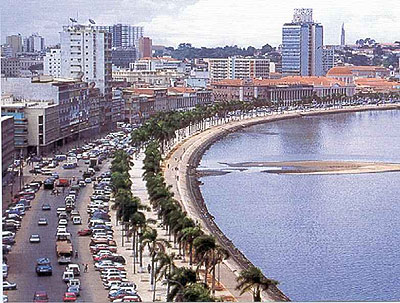
The old colonial capital of Luanda is being reborn. Work is well advanced on the new multibillion-dollar international airport.
Rows of luxury skyscrapers are under construction: for private apartments with astronomic rents to vie with Tokyo’s as the world’s highest, or for air-conditioned offices housing the latest multinational corporation taking its chance in one of Africa’s fastest-rising economies. Scores of multi-starred hotels have opened.
Yet many Angolans are asking how their Lusophone cousins in Brazil – plagued by the colonial legacy, living in the shadow of United States power in Latin America, together with decades of corrupt and oppressive military rule – broke their own vicious cycle.
Over the past three decades, Brazil has established an independent and productive economic direction.
Former president Luiz Inácio Lula da Silva made progress in fighting the deep inequalities, which were among the most extreme in the world.
His weapons were mass employment, training schemes and social protection measures for the poorest.
Closed Circle
To emulate that, Angola will have to switch from its current path as a state dependent on oil to one committed to production and investment, opening up decision-making to more than the select few.
A Luanda-based business- man who used to live in Brazil explained the differences: “In Angola, it’s run by a much smaller community of politicians, a very closed circle, the same circle for a long time. And that circle is much closer because of the war. You still have the same big men around – generals who are deciding policies but also involved in the economy.”
Across the Atlantic, the politics is more dynamic, he says: “In Brazil, the people directly elect the president.
They like someone who talks about basic things like food, schools and jobs. That’s why Lula was very popular. In Angola, the president wasn’t really elected by the people, so the speech doesn’t need to be so populist.”
Angola’s own tortured history – centuries of Portuguese rule followed by a devastating 27-year civil war – weighs heavily on its politics, to the frustration of a new generation of Angolans.
They cannot see why a country of 20 million people and one of the richest resource endowments in the developing world should not be at the leading edge of Africa’s development, let alone unable to provide decent schools, homes and jobs for its people.
