
Opinion
Angola-Brazilian connection could mean higher production
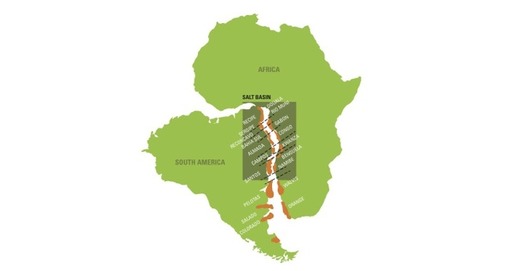
Brazil’s current production now includes more than 300,000bpd from pre-salt fields. Petrobras says that the pre-salt discoveries could double Brazil’s production within 15 years. Angola and Brazil face each other across the Atlantic Ocean, some 7,000 km apart, but their common geological history suggests that both countries could benefit from pre-salt deposits.
Brazil’s Tupi find prompted an enormous interest from oil companies, leading to the examination of geological and geo- physical data in Angola. About two-thirds of Angola’s daily oil production now comes from its deep off- shore blocks. In 2011, Angola’s state oil company Sonangol awarded 11 pre-salt blocks to companies including BP, Cobalt International Energy, Eni, Total, Repsol, ConocoPhillips and Statoil.
A year later, Maersk Oil announced the results of its Azul-1 well in Block 23, drilled specifically to evaluate a pre-salt prospect. Azul-1 produced 3,000bpd of oil and confirmed that there was an effective working petroleum system in the pre-salt sediments of the deep-water Kwanza Basin.
Shared expertise
Shortly afterwards, Cobalt announced the success of its first well drilled in the Kwanza Basin, Cameia-1, which tested at 5,000bpd of high-quality oil. Cobalt says the well could produce more than 20,000bpd. Brazilian and Angolan companies are also sharing their expertise.
Petrobras has stakes in six Angolan blocks, and Brazilian bank BTG Pactual agreed to buy 50% of Petrobras’s African holdings in 2013. Sonangol bought Starfish Oil and Gas, which held the rights to three blocks in Brazil, in 2010. As the oil industry keenly watches the results of more drilling in Angola, a key question arises about whether the success of Brazil’s pre-salt oil play can be repeated in Angola.
Would that mean that Angola can also double its oil production? The answer lies in the geology. Petroleum geology is not precise because of the technology geologists use to search for oil and gas in ancient strata lying at depths of some 4-5km beneath the sea floor.
The drilling targets are defined by seismic waves that must penetrate the thick salt layer and then be reflected back to the surface to be recorded as seismic lines. As with all oil and gas exploration in little-explored sedimentary basins, much risk is involved. Yet by the end of 2014, the answers to questions on Angola’s future production will be much clearer.
*Tako Koning is a Canadian senior petroleum geologist living and working as a consultant in Luanda, Angola.
Copyright The Africa Report 2014
