
Opinion
Angola-Brazilian connection could mean higher production
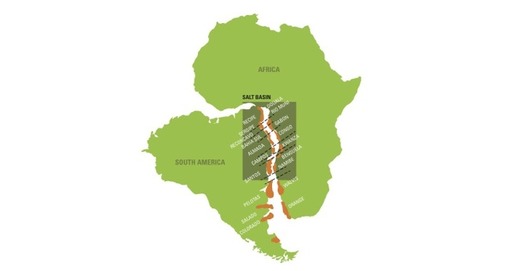
The implications of the shared geological history between Angola – currently producing 1.8 million barrels per day (bpd) – and Brazil – 2.1 million bpd – is exciting petroleum geologists and oil companies. During the Lower Cretaceous period, some 125 million years ago, Angola and Brazil were part of the super continent of Pangaea.
When continental drift started and Africa and South America began to separate from each other, extensive rift valleys formed similar to the East Africa rift system. These valleys contained large lakes full of plant and animal material that would eventually form source rocks capable of generating oil and gas.
With continued continental separation, the sea flooded the rift valleys and, owing to the effects of evaporation, thick layers of salt were deposited. These salt layers are up to 2km thick in parts of the Lower Cretaceous sedimentary basins of Angola and Brazil.
These impervious salt layers act as a seal above the porous sandstone and limestone reservoirs that contain the oil and gas generated by the lake sediments.
Brazil’s tupi discovery
In 2007, the discovery of the giant Tupi field beneath the salt in the Santos Basin transformed Brazil’s oil industry. Petrobras, Brazil’s state oil company, drilled the Tupi-1 well in 2,100m of water to a depth of 5,200m below the sea floor. It cost almost $250 million, but the reward was a well capable of producing 20,000bpd and the discovery of a field with recoverable oil reserves of about 6.5 billion barrels.
The rift that made oil for Angola and Brazil
The Tupi discovery – renamed Lula after Brazil’s President Luiz Inácio Lula da Silva – opened up a fairway of pre-salt oil and gas fields in the Santos and Campos basins. Oil industry analysts such as Wood Mackenzie and IHS estimate Brazil’s pre-salt reserves to hold as much as 30 billion barrels.
