
Opinion
Analysis: The United Nations legacy in Haiti
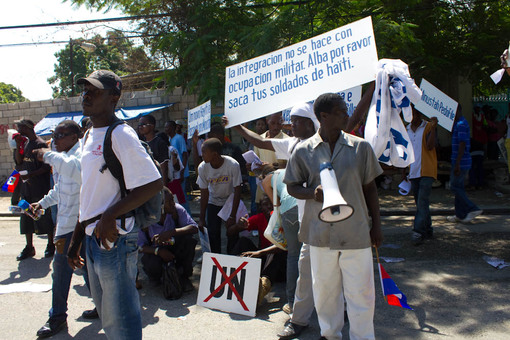

Haitians protesting the presence of the United Nations peace keepers. PHOTO/File
The accomplishments of the UN peacekeeping mission in Haiti have been overshadowed by scandals, from a cholera outbreak to sexual abuse cases. How will this affect future missions?
When the United Nations deployed peacekeepers to Haiti in 2004, its troops were charged with restoring order following the tumultuous departure of then-president Jean Bertrand Aristide. Their presence brought a much-needed calm after months of violence and political unrest. In the years that followed, they provided security for two democratic elections and, after Haiti’s devastating 2010 earthquake, pitched in with recovery and reconstruction efforts.
Once popular, the UN mission now is viewed by many as a poor use of money and an unnecessary presence – a result in part of numerous scandals that have rocked the mission in recent years. From accusations of sexual abuse of two boys, ages 14 and 18, to the deadly cholera epidemic, peacekeepers are being blamed for impeding the path to a sustainable state.
