
Opinion
Africa’s Urban Boom: The Economic Engine Powering the Continent’s Future

By Dishant Shah
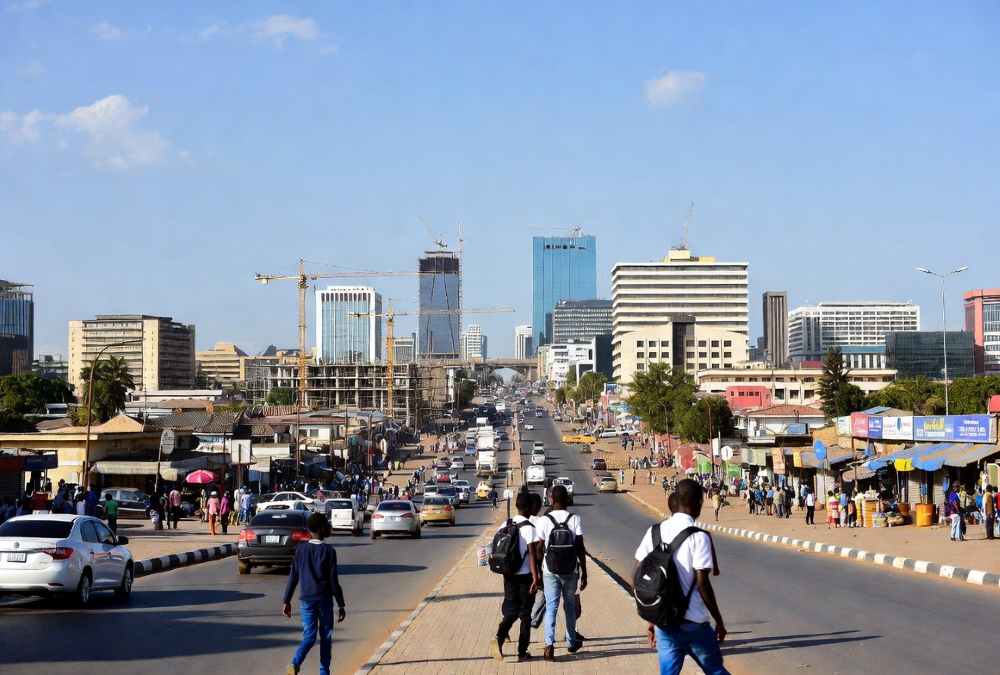
In 1950, fewer than 15 percent of Africans lived in cities. Today, that figure exceeds 40 percent. By 2050, more than 1.4 billion Africans are expected to inhabit urban areas – meaning the continent will effectively add nearly one new million-person city every month for the next three decades.
This is not speculation. It is already unfolding.
Urbanization in Africa is typically framed as a social crisis. The dominant narrative fixates on congestion, housing shortages, sprawling informal settlements, and infrastructure buckling under pressure.
Yet history tells a markedly different story: urbanization is not a problem demanding solutions – it is a phase of economic ignition that precedes prosperity.
Every major growth story in modern history has passed through precisely this stage. Nineteenth-century Europe, early twentieth-century America, and post-1980s China all experienced explosive urban expansion before achieving broad-based economic development.
Cities concentrate labor, capital, ideas, and markets in ways that rural economies simply cannot replicate. They compress distances between producers and consumers, reduce transaction costs, and transform population growth into measurable economic productivity.
Africa is now entering this transformative phase at unprecedented scale.
The Numbers Demand Attention
Africa’s urban population is expanding at approximately 4 percent annually – faster than any other region globally. Cities like Lagos, Kinshasa, Cairo, Nairobi, Dar es Salaam, and Addis Ababa are not emerging consumption centers of the future.
They are mega-markets today, driving demand across multiple sectors simultaneously.
Urbanization fundamentally reshapes how Africans earn and spend. Urban households typically generate two to three times the income of their rural counterparts and allocate spending disproportionately toward manufactured goods, processed foods, transportation, education, healthcare, and financial services.
This behavioral shift quietly rewires entire national economies. Informal trading networks evolve into formal retail chains. Subsistence patterns give way to consumer markets.
A Different Development Path
Critically, Africa’s urbanization is occurring without the full industrialization that characterized Europe’s or East Asia’s trajectories. This creates a fundamentally different opportunity landscape.
Rather than heavy manufacturing and massive factory complexes, growth is emerging in sectors like construction materials, modular housing systems, off-grid energy solutions, water management technologies, urban transportation networks, financial technology, and last-mile logistics.
These are not speculative moonshot ventures – they represent practical, scalable businesses addressing enormous, immediate demand.
There is also an underappreciated demographic advantage at play. Africa’s cities skew remarkably young, with median ages in most urban centers below 25 years.
This means labor supply, consumer demand, and entrepreneurial energy are all rising in tandem. Few regions in economic history have urbanized with such a youthful population structure, creating conditions ripe for sustained expansion.
Building Cities, Not Just Inhabiting Them
Urbanization does not automatically generate prosperity – that much is clear from examples worldwide. Cities must be deliberately built, not merely inhabited.
The critical distinction lies in approach: those who succeed will be the actors who recognize Africa’s urban growth as an infrastructure, services, and systems-building opportunity rather than a charity case or policy burden.
Africa’s most compelling investment thesis for the coming decades is not found in mineral extraction, foreign aid dependence, or aspirational rhetoric about technological leapfrogging. It resides in something far more tangible: cities – expanding, imperfect, crowded, dynamic cities – that are quietly constructing the foundation for the continent’s next economic chapter.
The transformation is underway. The only question is who will recognize it in time to participate meaningfully in what may prove to be the defining economic story of the mid-21st century.
Dishant Shah is a partner at Legion Exim, a company specializing in facilitating the export of high-quality engineering products directly sourced from manufacturers in India to Africa. His areas of expertise include new business development and business management.
