
Opinion
Africa’s Trade Shift: China Surpasses the U.S. as the Continent’s Top Economic Partner

By Mark-Anthony Johnson
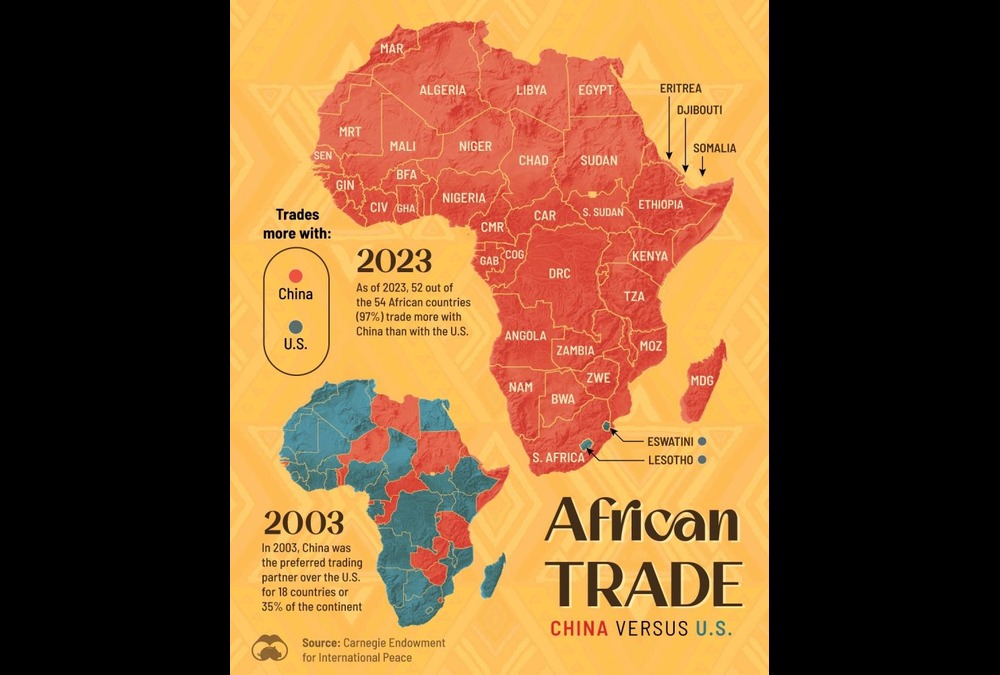
Over the past two decades, a dramatic shift has reshaped Africa’s trade landscape. In 2003, just 18 African countries – about 35 percent of the continent – preferred trading with China over the United States.
Fast forward to 2023, and that number has surged to 52 out of 54 African nations, representing a staggering 97 percent of the continent.
Here is what you need to know about China’s growing economic dominance in Africa – and the implications for global trade.
China: Africa’s Leading Trading Partner
China has solidified its position as Africa’s largest trading partner, far outpacing the United States in total trade volume. In 2024 alone, bilateral trade between China and Africa reached US$295 billion, reflecting a 6 percent year-on-year increase.
Meanwhile, the U.S. trade deficit with Africa stood at US$7.4 billion in 2024 – a decline from previous years.
This widening gap underscores a broader trend: China’s deepening economic footprint across the continent.
The Pillars of China’s Influence in Africa
Dominant Trading Partner
For the past 15 years, China has consistently held the title of Africa’s top trading partner, driven by strong demand for raw materials and increasing exports of manufactured goods.
Infrastructure Investment
China has heavily invested in Africa’s infrastructure, funding and constructing roads, railways, ports, and airports. These projects not only improve connectivity but also lay the groundwork for long-term economic integration.
Loan and Investment Powerhouse
China is one of Africa’s largest bilateral creditors. As of 2023, Chinese public lenders held nearly US$62 billion in African debt, providing both opportunities and challenges for recipient countries.
Belt and Road Initiative (BRI)
Through its global BRI strategy, China aims to strengthen trade and investment links with Africa by financing infrastructure and boosting economic cooperation. Many African nations have signed on, eager to attract capital and development.
Critical Minerals Strategy
China is increasingly focused on securing access to Africa’s rich deposits of critical minerals such as cobalt and lithium – key components in electric vehicles, batteries, and advanced technologies. This strategic interest further cements China’s presence in the region.
U.S. Trade Relations with Africa: A Mixed Outlook
Despite being a longstanding trade partner, the U.S. has seen its relative influence in Africa wane.
Persistent Trade Deficit
The U.S. maintains a trade deficit with Africa, meaning it imports more from the continent than it exports. In 2024, U.S. imports from Africa totaled US$39.5 billion, up 1.9 percent from the previous year, while U.S. exports to Africa rose to US$32.1 billion, an 11.9 percent increase.
Key Exports
Top U.S. exports to South Africa include crude petroleum, aircraft, and petroleum gas. In return, the U.S. imports platinum, vehicles, and precious metals from South Africa – the largest single African trading partner of the U.S.
African Growth and Opportunity Act (AGOA)
The AGOA program grants eligible African countries duty-free access to U.S. markets, encouraging economic development and trade diversification. While AGOA remains an important tool, its impact has been overshadowed by China’s aggressive trade and investment strategies.
Why the Shift Toward China?
Several key factors explain Africa’s growing economic alignment with China:
- US-China Trade War: Tariff disputes between Washington and Beijing have led to increased Chinese exports entering Africa as an alternative market.
- Chinese Financing Models: China offers loans with fewer conditionalities and lower borrowing costs compared to Western institutions, making them attractive to African governments.
- Strategic Preferences: Many African leaders view China as a pragmatic and reliable partner, unburdened by the political conditions often attached to Western aid and investment.
Looking Ahead
As China continues to deepen its economic ties with Africa, the U.S. faces mounting pressure to rethink its engagement strategy. With infrastructure, trade, and resource extraction shaping the future of this relationship, the stakes are high – not just for Africa, but for global geopolitics and economic development.
In a rapidly evolving world, Africa’s trade allegiances are shifting, and the balance of power is being redrawn.
Mark-Anthony Johnson is the founder and CEO of JIC Holdings, a global asset and investment management firm founded in 2009. With over 30 years of experience and strong ties to Africa, his investments span mining, infrastructure, power, shipping, commodities, agriculture, and fisheries. He is currently focused on developing farms across Africa, aiming to position the continent as the world’s breadbasket.
