
Opinion
Africa’s New Economic Reality: Remittances Rise as Aid Retreats

By Mark-Anthony Johnson
Record remittance flows are eclipsing foreign aid – and as Washington turns off the tap, the continent’s diaspora may be stepping in to fill the void.
For decades, the dominant narrative about Africa’s finances has been shaped by two immovable pillars: foreign aid flowing in from wealthy governments and multilateral institutions, and a chronic shortage of homegrown capital. That narrative is now fraying at the edges – and in some places, it is coming apart entirely.
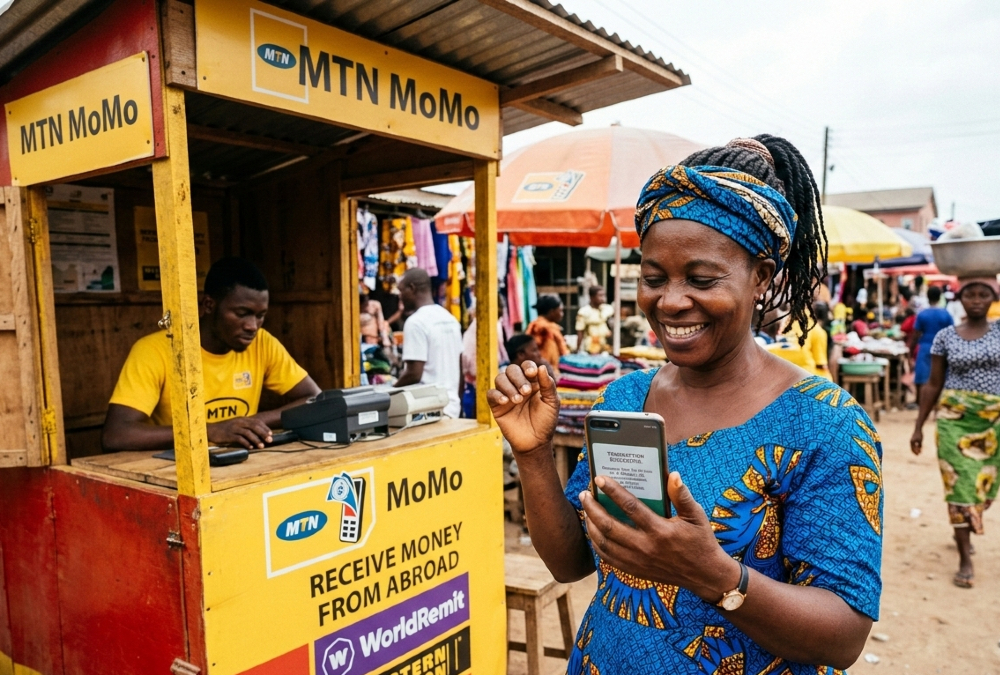
Two developments, unfolding simultaneously in early 2026, illustrate the scale of this transformation. First, remittances to Africa – the money sent home by members of the diaspora working abroad – are surging to historic levels, in some countries outpacing every other source of external finance.
Second, the United States government is moving to terminate what remains of its humanitarian aid programs across the continent, signaling a fundamental reorientation of American foreign policy. Taken together, these trends pose an uncomfortable question: Is the era of aid-dependent Africa ending, and if so, what comes next?
The Remittance Revolution
The numbers are, by any measure, extraordinary. In 2025, Egypt received US$41.5 billion in remittances – a 40.5 percent year-on-year increase that made it not only Africa’s largest recipient, but one of the most significant in the world.
Nigeria, long the continent’s undisputed leader in this category, received US$23 billion, its highest level in five years. Morocco attracted approximately US$12 billion, primarily from its large diaspora in Europe.
And Ghana, often overlooked in these conversations, saw inflows surge by 91 percent in 2024 alone, reaching US$4.6 billion.
In total, remittances to Africa reached approximately US$96.4 billion in 2024 – roughly 5.2 percent of the continent’s entire GDP, and a figure that, strikingly, equaled total foreign direct investment inflows for the same year.
Egypt’s dramatic ascent deserves particular attention, because it was not merely a product of more Egyptians working abroad. It was, at its core, the consequence of a policy decision.
In March 2024, Egypt shifted to a flexible exchange-rate regime, effectively eliminating the chasm that had long existed between official and parallel market rates. The practical effect was immediate: Egyptians living and working in the Gulf, Europe, and North America who had been routing money through informal channels – or not sending it at all – suddenly had every reason to use the formal banking system again.
Diaspora confidence, once lost, returned with remarkable speed.
Nigeria’s story is similarly instructive. The Central Bank of Nigeria reports that average monthly remittance inflows have risen to US$600 million following its own rounds of foreign exchange reform – a belated acknowledgment that punishing currency controls do not stop capital flight; they simply redirect it away from the formal economy.
The lesson for policymakers across the continent is clear: remittances respond to incentives, and the biggest incentive of all is a trustworthy exchange rate.
There is something profound in these figures that goes beyond macroeconomics. Remittances are not the benevolence of distant institutions. They are personal – transfers from a son in London to his mother in Lagos, from a nurse in Riyadh to her family in Cairo, from an engineer in Toronto to aging parents in Accra.
They do not come with conditionality clauses, governance benchmarks, or geopolitical strings attached. They flow because of obligation, love, and kinship. And increasingly, they flow at a scale that dwarfs anything foreign governments are prepared to offer.
Washington Exits, Quietly
Against this backdrop of growing self-sufficiency, the United States is executing what its own officials describe as a “responsible exit” from humanitarian programs across the continent – a phrase that is doing considerable diplomatic heavy lifting. The Trump administration is terminating all remaining humanitarian funding in seven African nations: Burkina Faso, Cameroon, Malawi, Mali, Niger, Somalia, and Zimbabwe.
The stated rationale, drawn from internal State Department communications, is that these programs lack a “strong nexus” with American national interests. The irony is inescapable – many of these same programs were classified as “lifesaving” by the U.S. administration itself, not long ago.
Zimbabwe offers a particularly sharp illustration of the collateral damage this pivot can inflict. On February 25, 2026, the U.S. Embassy in Harare confirmed it was winding down health assistance after negotiations for a US$367 million funding deal collapsed.
The breakdown was reportedly triggered by the Zimbabwean government’s objections to provisions around data sovereignty and the sharing of sensitive biological samples – an assertion of national dignity that Washington was unwilling to accommodate. The programs at risk cover HIV/AIDS, tuberculosis, and malaria: diseases that do not pause for diplomatic disagreements.
The United States is also pulling its funding from the UN’s Office for the Coordination of Humanitarian Affairs in these countries, further diminishing the international community’s capacity to respond to crises.
For nine other nations – among them Ethiopia, Sudan, and the Democratic Republic of Congo – funding is being redirected under new frameworks rather than eliminated outright, though the terms and reliability of those frameworks remain to be seen. The broader architecture is being rebranded as an “America First Global Health Strategy,” one that explicitly ties assistance to bilateral trade arrangements and strategic resource access rather than human need.
Even the once-celebrated PEPFAR program – the President’s Emergency Plan for AIDS Relief, which has saved millions of lives across sub-Saharan Africa since its inception – is being restructured. Some HIV funding continues through new bilateral mechanisms, but it is increasingly conditional on performance targets and co-investment from host nations.
The implicit message is no longer “America cares”; it is “America transacts.”
A Convergence That Demands Attention
It would be tempting to read these two stories as separate – one a tale of economic empowerment, the other a geopolitical pivot. But they are, in fact, deeply connected.
The surge in remittances represents the emergence of an alternative architecture of African development finance: decentralized, diaspora-driven, and largely beyond the reach of foreign governments to manipulate or withdraw. The American aid retreat, however painful in the short term for the most vulnerable populations, may accelerate a reckoning that has been long overdue.
That reckoning is this: Africa cannot afford, politically or economically, to remain dependent on the shifting priorities of Washington, Brussels, or Beijing. The countries that have grown their remittance inflows most dramatically – Egypt, Nigeria, Ghana – did so not by waiting for external largesse, but by fixing their own macroeconomic dysfunction.
The lesson generalizes. Institutions that work, currencies that are trusted, banking systems that don’t punish savers: these are the foundations on which sustainable development is built, and no amount of foreign aid can substitute for them.
None of this is to minimize the immediate suffering that results from the abrupt withdrawal of humanitarian programs in fragile states. The people of Malawi, Somalia, and Burkina Faso are not abstractions; they are human beings caught between Washington’s disengagement and governments that, in many cases, lack the capacity or the will to fill the gap.
The realpolitik of “Trade Not Aid” may be intellectually coherent as a long-term development philosophy, but it offers cold comfort to a child with tuberculosis in Harare today.
Still, the broader trajectory points in a direction that should give African policymakers and their international partners cause for cautious optimism – if they are prepared to act on it. Remittances already equal foreign direct investment across the continent.
With the right reforms, they could exceed it by a considerable margin. The African diaspora is vast, educated, and, as the data increasingly show, willing to invest in its home continent when the conditions are right.
The question is whether African governments will seize that opportunity or continue to look westward for answers that are, plainly, no longer on offer.
Mark-Anthony Johnson is the founder and CEO of JIC Holdings, a global asset and investment management firm founded in 2009. With over 30 years of experience and strong ties to Africa, his investments span mining, infrastructure, power, shipping, commodities, agriculture, and fisheries. He is currently focused on developing farms across Africa, aiming to position the continent as the world’s breadbasket.
