
Opinion
Africa’s Governance Paradox: Why Size Doesn’t Equal Success

By Gregory September
Africa’s largest countries occupy vast expanses of territory. Algeria sprawls across more than 2.3 million square kilometers.
The Democratic Republic of Congo (DR Congo) follows closely behind. Sudan rounds out the top three.
Yet their sheer scale has delivered neither prosperity nor stability. These nations possess immense natural resources, strategic depth, and seemingly limitless potential.
What they often lack is the institutional capacity to govern effectively.
The paradox is stark: land creates opportunity, but power flows from governance. No amount of territory can compensate for weak institutions, fragmented authority, or fiscal mismanagement.
Africa’s development challenge isn’t geographic – it’s structural.
The Hidden Costs of Territorial Scale
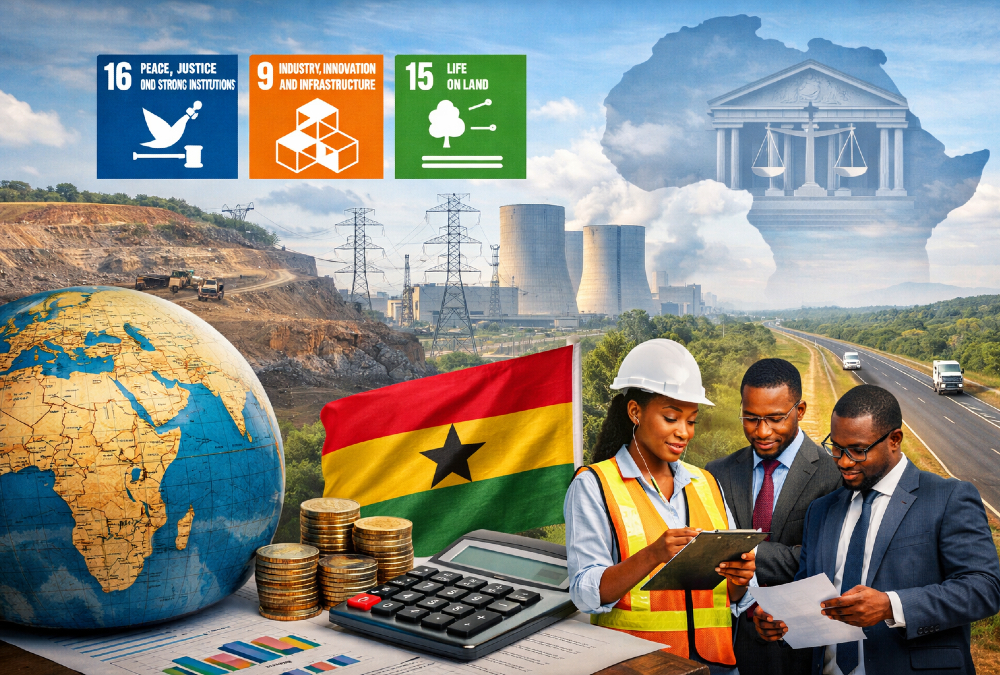
Large countries face governance pressures that smaller nations can more easily navigate. The United Nations’ Sustainable Development Goals illuminate these challenges with particular clarity, placing sustainability at the center of effective statecraft.
SDG 16 – Peace, Justice, and Strong Institutions – becomes exponentially harder to achieve across vast distances. When central governments cannot project authority to remote regions, fragmentation takes root, undermining institutional sustainability.
Weak institutions turn geographic spread into ungovernable space. The result: parallel power structures, lawlessness in peripheral areas, and perpetual instability that erodes long-term political and social sustainability.
SDG 9 – Industry, Innovation, and Infrastructure – demands massive capital investment that scales with territory. Building roads, power grids, and logistics networks across thousands of kilometers strains even well-resourced treasuries.
Planning failures don’t just slow development; they transform size from asset to liability. Infrastructure gaps widen.
Regional disparities deepen. Economic potential remains locked behind impassable roads and unreliable electricity, weakening economic sustainability.
SDG 15 – Life on Land – places enormous ecological responsibility on large landholders. Poor land governance accelerates deforestation, desertification, and biodiversity loss, directly threatening environmental sustainability.
Climate vulnerability multiplies. The very resources that should fuel development instead become sources of international criticism and carbon debt, calling into question long-term sustainability.
If governance matters more than size, what should Africa prioritize?
Ghana’s Billion-Dollar Lesson in Institutional Credibility
While size captures headlines, Ghana recently demonstrated what disciplined governance can accomplish. In just 12 months, the West African nation eliminated US$1.47 billion in energy sector debt – a feat that reverberates far beyond its borders.
Ghana’s energy sector had teetered on the brink of collapse. Independent Power Producers operated under unsustainable contracts.
The state-owned power utility accumulated staggering liabilities. International confidence evaporated. The World Bank withdrew guarantees. Investors fled.
Then came the turnaround. Through systematic debt clearance, tough renegotiations with independent power producers, and restored fiscal discipline, Ghana rebuilt its energy infrastructure – and its reputation.
The World Bank reinstated its guarantee. Private investors returned. The country moved from crisis to credibility in a single fiscal year.
This wasn’t achieved through natural resource windfalls or foreign aid packages. Ghana succeeded through institutional reform: transparent accounting, credible commitments, and political will to make unpopular decisions.
The message to global markets was unmistakable: African countries can govern themselves out of crisis when leaders choose accountability over expediency.
The Investment Implications
Ghana’s energy reset carries profound implications for African development finance. International investors increasingly view the continent through a governance lens rather than a resource lens.
Capital flows not to countries with the most land or the richest mineral deposits, but to those demonstrating institutional reliability.
The most impressive element of Ghana’s achievement wasn’t the debt clearance itself – it was the speed and transparency of execution. Renegotiating contracts with independent power producers required navigating complex legal frameworks and international arbitration risks.
Restoring the World Bank guarantee demanded credible fiscal projections and policy commitments. Ghana delivered on both fronts while maintaining democratic stability.
Other African nations facing energy crises should study this model carefully. Nigeria’s power sector dysfunction persists despite vastly greater oil revenues.
South Africa’s electricity crisis deepens year after year despite sophisticated financial markets. Kenya struggles with independent power producer contracts that mirror Ghana’s former predicament.
The common thread: governance failures that no amount of natural wealth can overcome.
Beyond Energy: Governance as Infrastructure
What governance reforms could prevent future energy crises across Africa? The Ghana example suggests several priorities.
First, transparent public finances. Energy sector liabilities must appear on government balance sheets, not hidden in off-budget vehicles. Markets reward honesty; they punish surprises.
Second, credible regulatory frameworks. Independent power producers need predictable rules and enforceable contracts. Investors accept reasonable returns; they flee arbitrary rule changes.
Third, technical capacity in public institutions. Ghana’s turnaround required skilled negotiators, competent accountants, and officials who understood both energy markets and international finance.
Building this capacity takes time and resources – but it pays dividends across every sector.
Fourth, political courage to make tough decisions early. Energy crises don’t resolve themselves. Delaying painful reforms only compounds costs. Ghana’s leaders chose short-term political risk over long-term economic disaster.
The Geography of Institutional Quality
Africa’s development narrative needs reframing. The continent’s challenges don’t stem from colonially imposed borders or resource curses or demographic pressures – though all these factors matter.
The fundamental constraint is institutional: the gap between what governance systems must deliver and what they currently can.
Large countries face amplified versions of problems that affect small ones too. Distance magnifies communication failures.
Diversity strains national cohesion. Resource abundance creates rent-seeking opportunities. But these are governance challenges, not geographic inevitabilities.
Algeria, the DR Congo, and Sudan possess everything needed for prosperity except effective institutions. Their size should be an advantage – more resources, more markets, more strategic options.
Instead, it becomes a burden because governing large territories requires sophisticated state capacity that takes decades to build.
Ghana’s energy success offers a template, but not a panacea. The country still faces significant development challenges.
Debt levels remain elevated. Growth has slowed. Regional inequalities persist. Yet by demonstrating that African governments can solve complex problems through disciplined reform, Ghana has shifted the conversation from aid dependency to institutional capability.
The Path Forward
For Africa’s largest countries, the question isn’t how to manage vast territories – it’s how to build institutions worthy of them. This requires patient investment in unglamorous fundamentals: civil service professionalism, judicial independence, fiscal transparency, regulatory consistency.
It also requires international partners willing to support institutional development rather than just extracting resources or managing crises. The World Bank’s decision to restore its guarantee to Ghana sent a powerful signal: institutional reform will be rewarded with renewed confidence and capital.
The continent’s geographic diversity should be a source of strength. Large countries have room for experimentation, multiple economic centers, and buffers against regional shocks.
Small countries benefit from cohesion, manageable governance challenges, and focused development strategies. Both can succeed – if institutions match ambitions.
Africa is indeed big. But size alone guarantees nothing.
The countries that will prosper in the coming decades are those that recognize governance as the ultimate form of infrastructure – more valuable than roads, more powerful than resources, more essential than any geographic advantage. Ghana’s energy transformation proves this is possible. The question is which countries will follow.
Gregory September is a South African academic, author, and geopolitical analyst with extensive experience in government and Parliament. He is the founder and CEO of SAUP (Sustainability Awareness and Upliftment Projects NPC), which focuses on sustainability education and community development. He previously served as Head of Research and Development for the Parliament of South Africa. His work centers on sustainability, African geopolitics, and economic development, and he regularly contributes to analysis of global political and economic affairs.
