
Opinion
Africa’s Financial Leapfrog: How Digital Payments Are Redefining a Continent

By Jastine Martine
African businesses moved US$205 billion in cryptocurrency transactions last year. The figure is staggering, but the reason behind it is simple: waiting 45 days for cross-border payments while surrendering 8 percent to traditional banking fees was no longer sustainable.
Today, the Pan-African Payment and Settlement System (PAPSS) settles transactions in 120 seconds. Mobile money transfers cost between 2 percent and 3 percent. Stablecoins bypass foreign exchange restrictions entirely.
This is not speculation about Africa’s cross-border payment market. This is its current reality.
The infrastructure is operational. The solutions are proven.
Industry analysts project the market will reach US$1 trillion by 2035. Yet Western observers continue to misunderstand what is actually happening on the ground.
The Digital Crossroads
Africa stands at a pivotal moment in its financial evolution. But this time, the path forward is not constructed from concrete and steel.
It is built from application programming interfaces, mobile wallets, and instant payment rails.
Driving this transformation is a significant institutional commitment: the African Development Bank’s 2024-2033 Strategy, which prioritizes digital payments and financial inclusion as core development objectives. The ripple effects from this policy shift have the potential to fundamentally redefine the continent’s economic narrative.
The Myth of Price Sensitivity
There is a persistent misconception that African consumers care only about price. The reality is more nuanced: they care about not wasting money on services that fail to deliver.
This distinction matters enormously.
M-Pesa charges transaction fees. Numerous competitors offered “free” alternatives.
M-Pesa won the market. The reason? Reliability. The service worked consistently, every single time users needed it.
Value trumps price. As one industry analysis aptly summarized: “Your African users aren’t poor – they are rational.”
Africa’s digital payment revolution is not merely catching up to global standards – in many respects, it is setting them.
The Fallacy of a Single Market
“We are expanding to Africa” has become a common refrain among international fintech companies. The response should always be: “Which Africa?”
A financial technology application that succeeds in Kenya – where mobile money, agent networks, and USSD codes dominate – will almost certainly fail in South Africa, where banking apps, payment cards, and formal financial systems prevail.
The regulatory frameworks differ. Consumer behaviors diverge. Infrastructure varies dramatically.
Africa is not a unified market. It comprises 54 distinct markets, each with unique characteristics, challenges, and opportunities.
Rethinking the Innovation Narrative
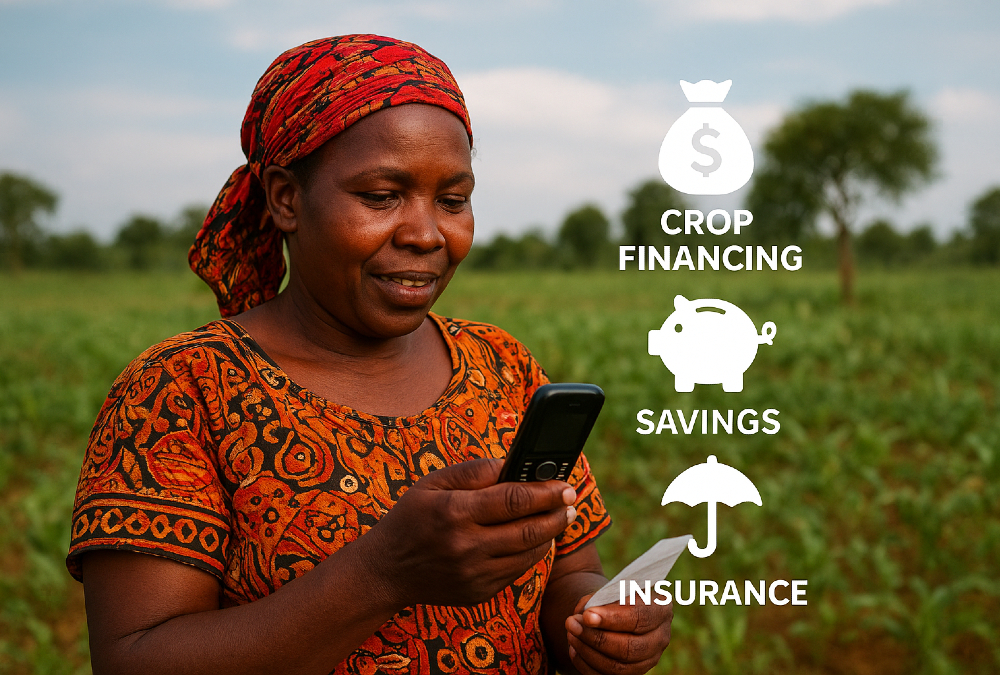
The conventional wisdom holds that Africa lags behind in payment technology. Try explaining that to the Kenyan farmer who manages crop financing, savings accounts, and agricultural insurance entirely through a basic feature phone.
Or to the Tanzanian entrepreneur who accepts payments from five countries with zero friction. Or to the 500 million East Africans projected to have access to comprehensive digital financial services by 2030.
While developed markets struggle to retrofit modern technology onto century-old banking infrastructure, East Africa constructed mobile-first payment ecosystems from the ground up.
The result is a unified, interoperable, and accessible financial system that the World Bank credits with lifting 2 percent of households above the poverty line.
This is not a curiosity or an anomaly. This is the blueprint for tomorrow’s payment systems. And it is being built today, in real time, across the African continent.
The Strategic Imperative
The Western financial establishment would be wise to pay closer attention. Africa’s digital payment revolution is not merely catching up to global standards – in many respects, it is setting them.
The combination of necessity-driven innovation, regulatory flexibility, and widespread mobile adoption has created a laboratory for financial technology that may well define the next generation of global payment systems.
The infrastructure is live. The user base is growing exponentially.
The economic potential is measured in trillions, not billions. The only question remaining is whether international observers will recognize this transformation while it is still unfolding – or only in retrospect, once the opportunity has passed.
Jastine Martine is a Business Analyst and Resident Technologist at HEBO Consult in Dar es Salaam, Tanzania. He specializes in process optimization and digital transformation, converting complex business challenges into clear, data-driven solutions. Jastine is passionate about advancing Capital Markets and Investment Finance across Africa.
