
Opinion
Africa’s Agricultural Awakening: The Continent’s Untapped Green Revolution

By Dishant Shah
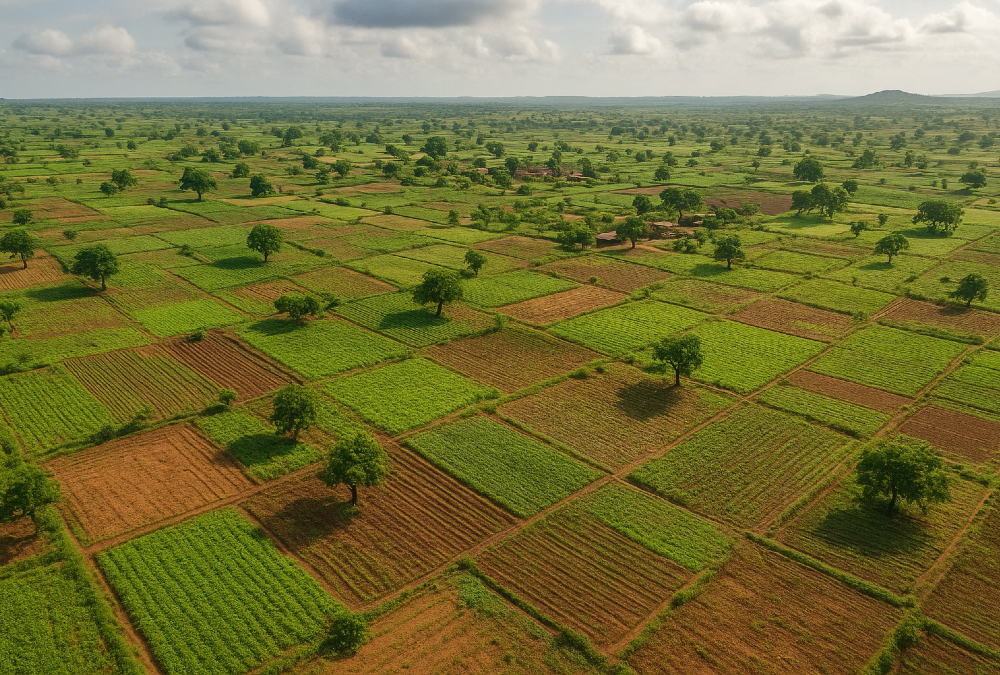
Africa is home to nearly 60 percent of the world’s uncultivated arable land – roughly 200 million hectares lying fallow across the continent. The Democratic Republic of Congo alone accounts for more than 80 million of those hectares, a figure that dwarfs the combined arable land of France and Germany.
Yet despite this abundance, Africa contributes less than 10 percent of global agricultural output and operates at less than a quarter of its yield potential.
The paradox is stark: fertile soil lies untapped while food insecurity persists.
Consider this: average cereal yields in sub-Saharan Africa hover around 1.5 metric tons per hectare, less than half the global average of 4 tons. If African farmers merely doubled their productivity – to just 3 tons per hectare, still below the world norm – the continent could feed an additional 1.2 billion people.
That’s not a hypothetical windfall; it’s a conservative estimate rooted in existing land and labor.
The Yield Gap Is a Systems Gap
The bottleneck isn’t biophysical – it’s systemic.
Africa’s yield gap stems not from poor soil, but from underdeveloped infrastructure and fragmented support systems. Only 6 percent of cultivated land is irrigated, compared to 37 percent in Asia.
Post-harvest losses siphon away 20–30 percent of produce due to inadequate storage, poor roads, and inefficient logistics. Fewer than 10 percent of farmers have reliable access to improved seed varieties, modern inputs, or credit.
But these challenges mask an extraordinary opportunity.
From Fields to Factories: Agriculture as Industrial Catalyst
With targeted investment in agricultural technology, irrigation, energy, and rural finance, Africa could transform from a net food importer into a net food exporter by 2030. The African Development Bank estimates such a shift could unlock $500 billion in annual GDP and generate tens of millions of jobs – not just on farms, but across agro-processing, packaging, transport, and export logistics.
This isn’t just about farming. It’s about industrialization by another name.
Agriculture can be the springboard for broader economic transformation – powering demand for machinery, cold chains, renewable energy, and digital services. In a world grappling with climate volatility, trade fragmentation, and supply chain fragility, a productive African agriculture sector would bolster global food resilience while anchoring regional self-reliance.
The land is ready. The market is hungry. The moment is now.
The next Green Revolution won’t begin in a lab in Iowa or a policy chamber in Brussels – it could very well rise from the fields of the Congo Basin, the savannas of Nigeria, or the highlands of Ethiopia.
Africa’s soil has always been fertile. What it needs now is systems worthy of its potential.
Dishant Shah is a partner at Legion Exim, a company specializing in facilitating the export of high-quality engineering products directly sourced from manufacturers in India to Africa. His areas of expertise include new business development and business management.
