
Opinion
Africa’s 2026 Elections: A Strategic Filter for Multinational Capital

By Kei Rapodile
Multinational corporations that retreat from African electoral uncertainty will cede ground to those with the discipline to stay.
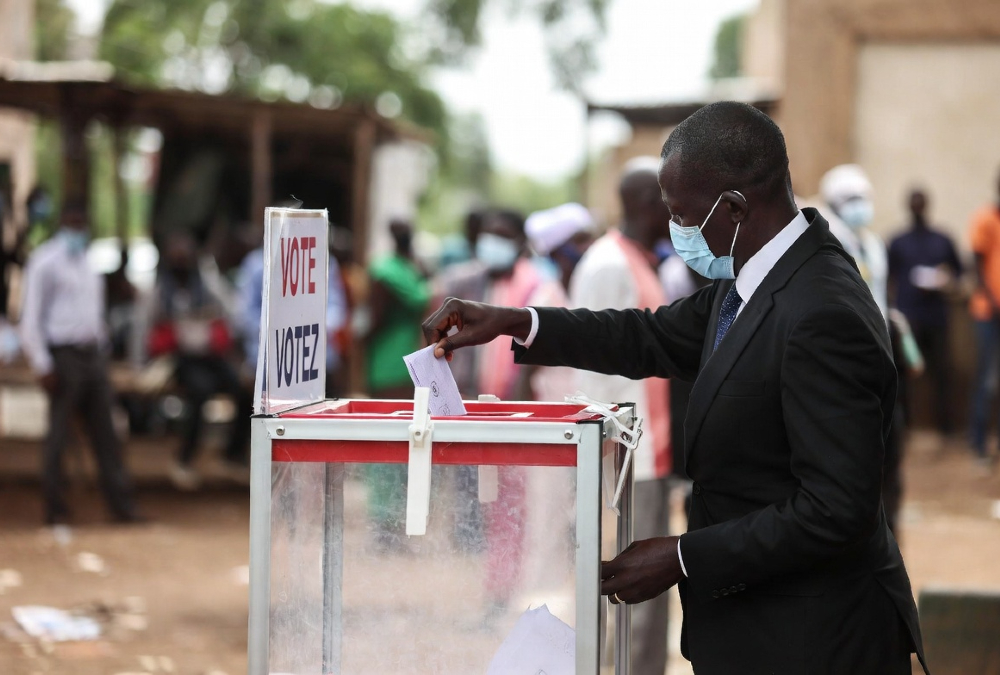
Africa is entering one of its most consequential political years in a generation. Thirteen countries will hold national elections in 2026, while South Africa conducts local government polls with far-reaching implications for municipal budgets, infrastructure delivery, and public procurement.
For multinational corporations operating across the continent, these electoral cycles are not merely political milestones to be noted on a calendar. They are strategic stress tests – filters, in effect, that expose the difference between companies that genuinely understand African markets and those that merely think they do.
The first and most damaging mistake global investors habitually make is to treat “Africa election risk” as a monolithic category. It is not. Electoral environments across the continent differ dramatically in their institutional strength, fiscal capacity, governance stability, and regulatory predictability.
Collapsing this diversity into a single risk label is analytically lazy, and it is expensive. Multinationals that recognize these distinctions will preserve capital and identify opportunity; those that do not will misprice exposure and underperform.
Not All Elections Are Created Equal
Consider the spectrum. In entrenched incumbency systems – Uganda and the Republic of the Congo being instructive examples – leadership continuity is the dominant and broadly predictable outcome.
Policy frameworks remain stable, regulatory surprises are rare, and the investment environment, while far from dynamic, is at least legible. The trade-off is limited reform momentum.
For multinationals operating in these markets, the path to success runs through compliance rigor, diversified stakeholder engagement, and disciplined currency risk management. Speculative bets on transformative reform are seldom rewarded.
Reform-sensitive economies present an altogether different calculus. Zambia is a case in point.
In these markets, elections are not peripheral events – they actively shape fiscal policy trajectories, debt management frameworks, and sector-specific regulation. Investor sentiment swings on treasury signaling, currency stability, and the posture of multilateral lenders.
Here, phased capital deployment, maintained liquidity buffers, and political risk insurance are not optional hedges; they are baseline requirements for managing exposure responsibly.
At the far end of the spectrum sit fragile and post-conflict systems, of which South Sudan is the starkest current example. In these environments, elections are embedded within broader processes of peacebuilding and institutional consolidation.
The operative risks – contract enforceability, security stability, and administrative capacity – demand a fundamentally different operational posture. Asset-light business models, offshore arbitration clauses, and rigorous ESG oversight are not merely best practices in such contexts.
They are structural prerequisites for sustainable operations.
Sector Exposure Is Uneven, but Rarely Fatal
Not every sector feels electoral pressure equally, and it is worth mapping the terrain carefully. Mining and extractive industries face the sharpest scrutiny during election cycles, as licensing decisions, royalty structures, and local content requirements become politically charged.
Infrastructure and construction are acutely sensitive to procurement continuity and fiscal liquidity, which can tighten sharply as governments prioritize election spending over capital commitments. Financial services are exposed to currency volatility and sovereign risk, while telecommunications and fast-moving consumer goods companies tend to be more insulated – though not entirely immune to exchange rate fluctuations and shifts in consumer confidence.
The critical insight, however, is this: in the vast majority of cases, elections affect timing rather than market viability. Approvals slow. Disbursements stall. Decision-makers wait. But fundamentally sound market opportunities do not evaporate during election seasons.
They simply require patience, liquidity, and operational discipline from the companies pursuing them.
South Africa’s Local Elections: A Study in Operational Friction
South Africa’s 2026 local government elections deserve particular attention, not because they carry the highest systemic risk on the continent – they do not – but because they illustrate a category of risk that multinationals frequently underestimate: operational friction within a sophisticated institutional environment.
Metropolitan municipalities such as Johannesburg and Cape Town manage multi-billion-rand infrastructure budgets and procurement pipelines that are central to the construction, utilities, and property development sectors. The institutional frameworks governing these processes are relatively robust by African standards.
Yet coalition politics – a defining feature of South Africa’s post-2021 municipal landscape – introduces persistent fragility. Administrative turnover can slow project approvals and disrupt cash flows in ways that are difficult to model in advance.
The risk here is not systemic instability. It is grinding, operational friction: delayed sign-offs, shifting procurement priorities, and the quiet erosion of project timelines.
Managing this requires attention to execution discipline and stakeholder relationships – not the dramatic crisis-management protocols that investors sometimes associate with African political risk.
A Framework for the Disciplined Investor
Navigating this landscape demands structure. Multinationals should begin by segmenting their African portfolios by governance quality, fiscal health, and reform trajectory – not by region or by the crude heuristic of whether a country is holding an election.
Capital deployment must be phased around electoral timelines. Maintaining liquidity buffers to absorb short-term volatility is not timidity; it is sound treasury management.
Compliance oversight should be heightened, particularly for politically sensitive transactions that might attract scrutiny in a charged pre-election environment.
Equally important – and often overlooked – is the question of legitimacy. Multinationals that are visibly embedded in their host economies, through local procurement, enterprise development, and transparent tax contributions, are materially better positioned to weather political transitions.
Companies that are perceived as extractive or disengaged face amplified reputational and operational risk precisely when political attention is most intense.
Across the electoral cycle, the discipline is consistent. In pre-election phases, cautious capital allocation and scenario planning are essential.
During the election itself, compliance scrutiny intensifies and politically exposed transactions require careful management. In the post-election period, capital deployment can resume once policy direction and administrative posture have stabilized.
Currency volatility – which frequently coincides with election-driven government spending – can be managed through hedging and rigorous treasury discipline.
Uncertainty as a Filter, Not a Threat
Africa’s 2026 elections – including South Africa’s local polls – should not trigger corporate retreat. They should trigger strategic recalibration.
The companies that will emerge from this electoral cycle in the strongest competitive position are not those with the most sophisticated political intelligence, though that helps. They are those with the operational foresight to have built genuinely resilient market positions before the uncertainty arrived.
Elections, in this sense, function as a filter: they reveal which companies possess the discipline, the local knowledge, and the analytical clarity to navigate complexity – and which do not.
For undisciplined capital, African elections can indeed be disruptive. For disciplined capital, they are something else entirely: a moment of competitive differentiation, when the companies that have done the work separate themselves from those that have not.
The continent’s long-term fundamentals – its demographics, its urbanization trajectory, its expanding consumer base – remain intact regardless of who wins any particular election in any particular country. The question is not whether Africa is worth investing in. It is whether your organization has built the capacity to do so intelligently.
For those that have, 2026 is not a year to fear. It is a year to perform.
Kei Rapodile is a registered Business Adviser and certified DTT Technician with a focus on Marketing, Construction, and ICT. He is the founder of Ebos Advisory, a micro advisory firm supporting enterprise growth and local economic development. Over the past 5 years, he has delivered 3,000m² of completed structures and trained over 500 students in digital literacy. With 10+ years of experience, Kei bridges strategy, infrastructure, and digital systems for practical impact. He is committed to reshaping South Africa’s built environment through innovation and inclusive enterprise.
