
Opinion
Why Africa should withdraw from the International Criminal Court
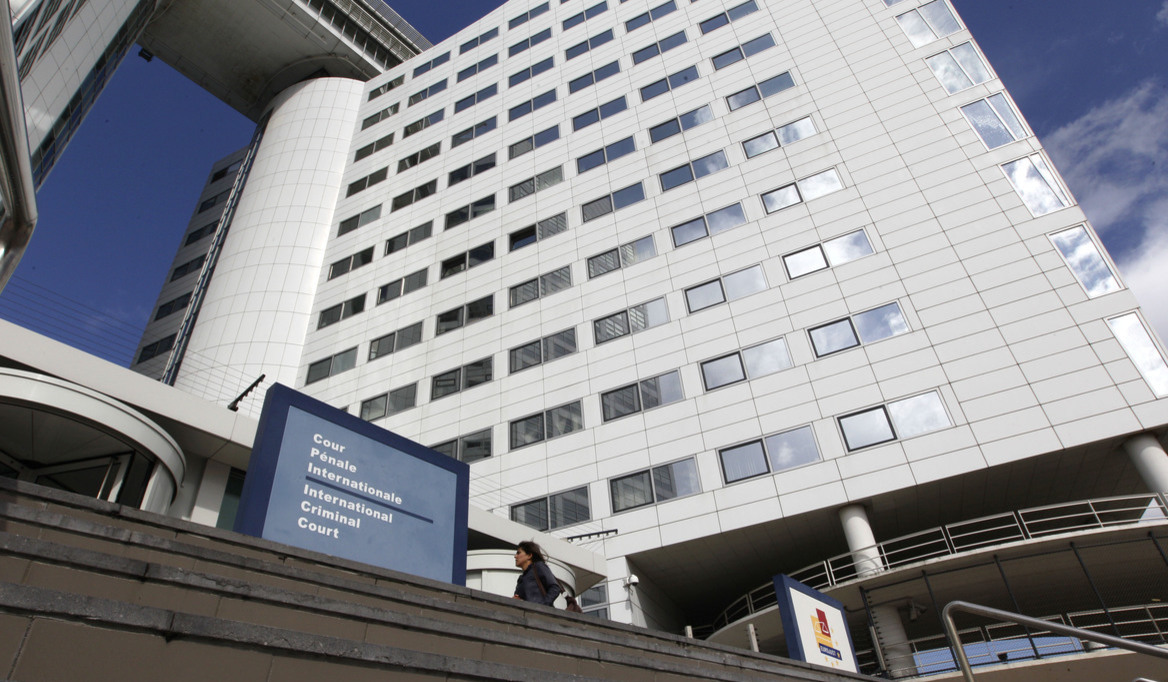
By David Hoile
South Africa’s withdrawal from the International Criminal Court is a sign that the institution is dysfunctional.
South Africa last week announced that it would leave the International Criminal Court (ICC), confirming that it had issued and sent an “Instrument of Withdrawal” letter to the United Nations (U.N.) Secretary General.
More African countries are expected to follow suit – earlier this month Burundi said it would withdraw from the court, and Kenya, Namibia and Uganda have also raised the possibility.
South Africa’s decision to withdraw from the ICC is a sign that the institution is dysfunctional.
The ICC which was created as a result of the Rome Statute in 1998, was mandated with the prosecution of genocide, war crimes, and crimes against humanity. Since 2005, the court has indicted 39 people, every one of them African.
The institution that African countries signed up for – a court that promised to pursue injustice without fear or favor – is not the one they see before them today. The ICC’s claims to international jurisdiction and judicial independence are institutionally flawed and the court’s reputation has been irretrievably damaged by its racism, blatant double-standards, hypocrisy, corruption and serious judicial irregularities.
While the ICC presents itself as the world’s court this is simply not the case. Its members represent just over one quarter of the world’s population: China, India, Indonesia, Russia and the United States are just some of the many countries that have remained outside the court’s jurisdiction.
A court is also only as credible as its independence. Far from being an independent and impartial court, the ICC’s own statute grants special “prosecutorial” rights of referral and deferral to the Security Council – by default its 5 permanent members (3 of which are not even ICC members). Political interference in the legal process was thus made part of the court’s founding terms of reference.
Inextricably tied to the European Union
The institution is also inextricably tied to the European Union (EU) which provides over 60 percent of its funding. The expression “he who pays the piper calls the tune” could not be more appropriate.
The fact that the big 5 ICC funders are Africa’s former colonial rulers also sits uneasily with a continent suspicious of recolonization by questionable legal diktat. The EU is additionally guilty of blatant political and economic blackmail in tying aid for developing countries to ICC membership.
Africa is also correct when it points out that the ICC is self-evidently a racist court, in that it treats one race of people differently to all others. Instead of impartially enforcing the Rome Statute, the Europeans have chosen to focus the court exclusively on Africa. African heads of state have spoken of “race hunting.”
Despite having received almost 9,000 formal complaints about alleged war crimes in at least 139 countries, the ICC has chosen to indict 39 black Africans in 8 African countries. In so doing the ICC has ignored all European or Western human rights abuses in conflicts such as those in Afghanistan and Iraq or human rights abuses by Western client states.
While the ICC’s key first two cases were African “self-referrals” it is now clear that the African governments were made “an offer they could not refuse”: refer yourself and we will only indict your rebels – if not we will indict both government and rebels.
The ICC has emerged very much as a European-funded and directed instrument of European foreign policy.
Broader Western hypocrisy is all too evident. The United States has forcefully pointed out that the ICC is a kangaroo court, a travesty of justice open to political influence, and has said that no American citizen will ever come before it.
Washington is nonetheless very happy, for its own political reasons, to demand that black Africans appear before it.
Dysfunctional
Double standards and politics aside, the ICC has shown itself to be irretrievably dysfunctional. The court’s proceedings thus far have often been questionable where not simply farcical. Its judges – some of whom have never been lawyers, let alone judges – are the result of grubbily corrupt vote-trading among member states.
Far from securing the best legal minds in the world this produces mediocrity. At least one elected “judge” had neither law degree nor legal experience – but her country had contributed handsomely to the ICC budget. The court has produced witnesses who recanted their testimony the moment they got into the witness box, admitting that they were coached by non-governmental organizations as to what false statements to make.
Dozens of other “witnesses” have similarly disavowed their “evidence.” Most recently the ICC prosecutor had to admit that one of its own star witnesses in its case against Kenya’s Deputy President William Ruto was “a thoroughly unreliable and incredible” witness.
And then there has also been the ICC prosecutor who was not only seemingly unaware of the legal concept of presumption of innocence but also threatened to criminalize third parties who might argue a presumption of innocence on the part of those indicted – and as yet unconvicted – by the court.
A clearer case of Alice in Wonderland justice, along the lines of “sentence first, verdict afterwards,” is difficult to find. There has been prosecutorial misconduct, not least of which hiding exculpatory evidence, which should have ended any fair trial because they would have compromised the integrity of any legal process.
The ICC’s first trial proceeded erratically because of crass prosecutorial misbehavior and judicial decisions to add new charges half-way through proceedings, a move that was subsequently overturned. Simply put, the court and the prosecutor have been making things up as they go along.
The ICC claims to be “economical” and to bring “swift justice,” yet it has consumed more than a € 1 billion (US$ 1.089 billion) in its 14-year existence and has only secured 3 convictions – of which 2 were questionable. The ICC claims to be victim-centered yet Human Rights Watch has publicly criticized the ICC’s ambivalence toward victim communities. The ICC claims to be fighting impunity, yet it has granted de jure immunity to the United States and afforded de facto immunity and impunity to NATO member states and several serial abusers of human rights who happen to be friends of the EU and US.
The reality is that the ICC is an inept, corrupt political court that does not have Africa’s welfare at heart, only the furtherance of Western, and especially European, foreign policy and its own bureaucratic imperative – to exist, to employ more Europeans and North Americans and where possible to continue to increase its budget – all at the expense of African lives. Three cheers for South Africa and Burundi pointing out that the emperor is naked.
Dr David Hoile is the director of the Africa Research Center. He is a public affairs consultant specializing in African affairs and defence and security analysis. He is also the author of Justice Denied: The Reality of the International Criminal Court. A version of this article was published in The Jerusalem Post.
