
Opinion
Africa at the Heart of the Belt and Road: A $39 Billion Catalyst for Transformation

By Ajay Wasserman
In the first half of 2025, the Belt and Road Initiative (BRI) shattered records – signing over US$124 billion in new investments across 176 projects worldwide. That figure surpasses the total investment volume of the entire previous year, underscoring a dramatic acceleration in China’s global infrastructure strategy.
But amid this surge, one region is emerging not just as a beneficiary, but as a strategic cornerstone: Africa.
Of that historic US$124 billion, a staggering US$39 billion has been directed toward African nations – more than 30 percent of the BRI’s global commitments in just six months. This isn’t marginal engagement; it’s a signal of Africa’s rising centrality in the architecture of the 21st-century global economy.
This capital influx is not charity. It’s not traditional aid.
It’s strategic investment in energy, digital infrastructure, logistics, and critical minerals – sectors that are foundational to industrialization and long-term growth.
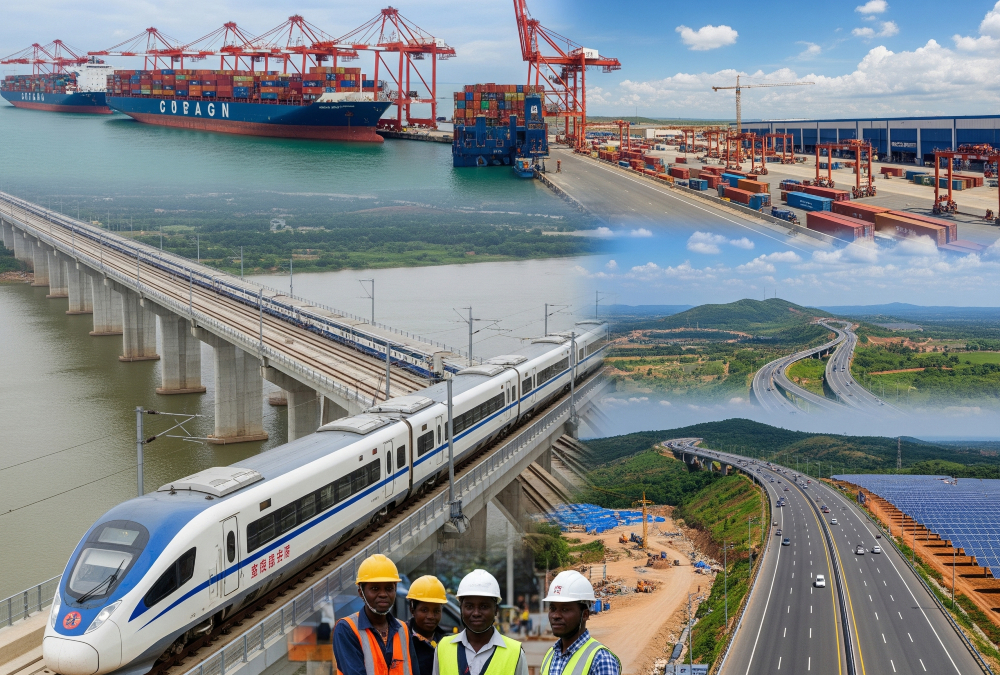
From solar farms lighting up the Sahel to high-speed digital corridors in East Africa, and new Atlantic-facing logistics hubs poised to reshape trade flows, the BRI is catalyzing a transformation in some of the world’s most dynamic frontier markets.
Africa is no longer on the periphery of global supply chains. It is becoming a core node – a source of renewable energy, a hub for digital innovation, and a vital link in the secure sourcing of critical minerals essential for the green transition.
The BRI is helping to unlock that potential, bridging infrastructure gaps that decades of underinvestment left behind.
But with opportunity comes urgency. The US$39 billion in BRI funding presents a pivotal question for African leaders, entrepreneurs, and policymakers.
Will African innovators be central to this momentum – or sidelined by it?
History shows that resource booms and foreign investments don’t automatically translate into inclusive growth. Without strong local participation, transparent governance, and policies that prioritize domestic value addition, such capital flows risk enriching external actors while leaving local economies dependent and underdeveloped.
Yet, if harnessed wisely, this wave of investment could serve as the launchpad for a new generation of African entrepreneurs, engineers, and industrialists. Imagine African-owned solar enterprises powering regional grids.
Tech startups leveraging new digital infrastructure to scale across borders. Logistics firms building pan-African supply chains from newly developed ports and rail networks.
The infrastructure is being built. The capital is flowing. The real challenge now is ownership.
To global observers, the message is clear: the Belt and Road is no longer just a geopolitical narrative – it’s an economic reality reshaping continents. And Africa is not a passive recipient; it is increasingly a co-architect of this new era.
The world should not just watch this transformation – it should engage with it. For investors, it’s a frontier of untapped potential.
For policymakers, it’s a call to strengthen regulatory frameworks and promote local equity. For African entrepreneurs, it’s a moment to lead.
US$39 billion isn’t just a number. It’s a test of vision, agency, and ambition.
The question isn’t whether Africa will benefit from the Belt and Road. It’s whether Africa will own its place in it.
Ajay Wasserman is the Group CEO and Chief Investment Officer of Fio Capital Group, a private family office and investment holding company based in Pretoria. Focused on empowering entrepreneurs and fostering sustainable growth, he believes the future success of global economies depends on the innovation and leadership of private entrepreneurs and businesses.
