
Opinion
AfCFTA’s Hidden Crisis: Why Africa’s Problem Isn’t Tariffs – It’s Time

By Kelly Mua Kingsly
Africa proclaims the African Continental Free Trade Area (AfCFTA) as the world’s largest free-trade zone, spanning 1.4 billion people across 54 countries with a combined GDP exceeding US$3.4 trillion. Yet behind this ambitious vision lies an inconvenient truth: eliminating tariffs represents the simplest challenge.
The genuine barriers are operational, structural, and devastatingly quantifiable.
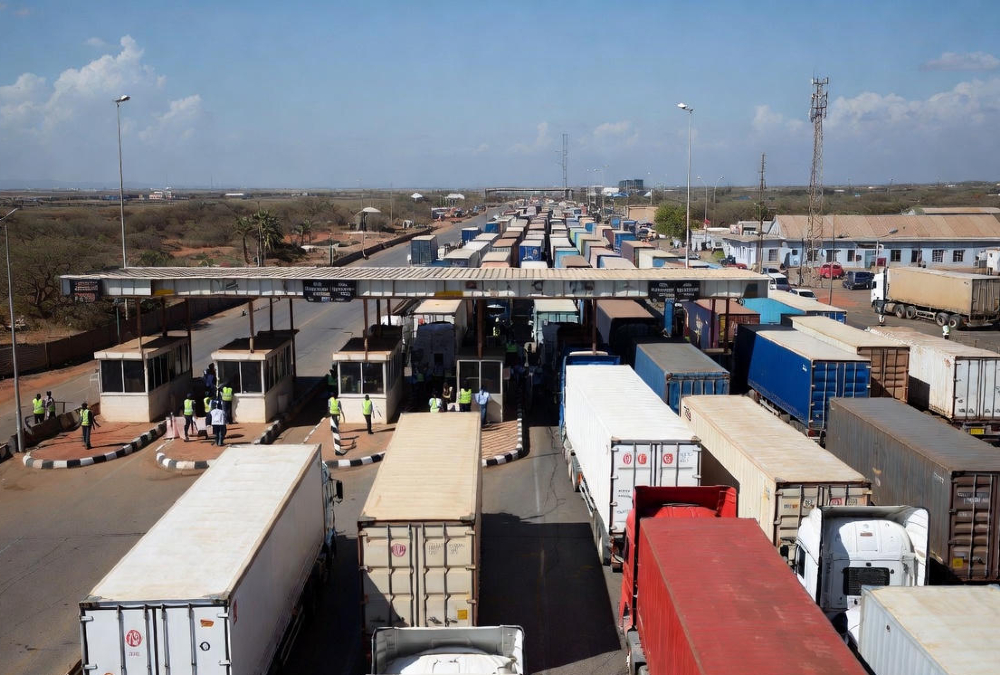
Consider the realities on the ground. Crossing certain African borders still requires 48 to 72 hours, compared with a mere two to six hours in Europe.
Nearly 70 percent of customs systems across the Common Market for Eastern and Southern Africa (COMESA), the Economic Community of West African States (ECOWAS), the Southern African Development Community (SADC), and the East African Community (EAC) operate in isolation, unable to communicate with one another.
Logistics costs devour up to 40 percent of product value, while moving goods across the continent costs US$0.13 per ton-kilometer – more than double the expense in India or China. These inefficiencies explain why intra-African trade languishes below 15 percent, while Asia achieves 58 percent and Europe surpasses 67 percent.
Without addressing these structural constraints, AfCFTA risks becoming another beautifully drafted agreement marked by disappointing execution. African manufacturers will continue losing ground to imports from China, India, and Turkey.
Regional value chains in automotive production connecting Morocco, Egypt, and South Africa, pharmaceuticals linking Kenya and Ethiopia, textiles spanning Nigeria, Ghana, and Benin, and agriculture networks across Zambia, Tanzania, and the Democratic Republic of Congo (DR Congo) will remain frustratingly underdeveloped.
The continent doesn’t suffer from a tariff problem. It suffers from a plumbing problem.
Building the Infrastructure for Trade
From a policy and financial engineering perspective, the solution requires five critical interventions.
Border modernization must become the immediate priority. Digitized single-window systems, GPS-tracked cargo, and guaranteed six-to-twelve-hour clearance times represent achievable standards.
Countries like Rwanda and Kenya have already demonstrated success, cutting delays by 60 percent through digital customs implementations. The technology exists and has proven effective – what’s needed is political will and coordinated deployment.
Harmonized standards across regional economic communities would eliminate the absurdity of goods clearing one border only to face inspection at a second. Unified sanitary, phytosanitary, and industrial standards must replace the current patchwork of conflicting requirements that function as invisible tariffs, adding costs and delays without enhancing safety or quality.
Scalable trade finance remains critically absent. Only 20 percent of African small and medium-sized enterprises can access letters of credit, the basic instrument of international commerce. Governments must establish AfCFTA-wide guarantee pools, risk-sharing mechanisms, and digital financing infrastructure.
Without reliable trade finance, even the most efficient borders cannot facilitate commerce at scale.
Logistics infrastructure demands substantial investment. Upgrading major ports including Tema, Durban, and Mombasa, expanding dry port facilities, and financing trucking corridors alongside interoperable rail networks from Lagos to Abidjan, Lobito to Kolwezi, and Dar es Salaam through Isaka to the DR Congo would transform the physical movement of goods.
These aren’t merely infrastructure projects – they’re the arterial system through which continental trade must flow.
Fast, credible dispute resolution provides the final essential component. A 15-day commercial arbitration mechanism for cross-border trade conflicts would offer businesses the certainty they require to commit capital across borders.
Currently, the prospect of lengthy legal battles in unfamiliar jurisdictions deters investment in regional value chains.
The Cost of Inaction
The United Nations Conference on Trade and Development warns that non-tariff barriers prove up to five times more restrictive than tariffs across Africa. Until these obstacles are systematically dismantled, tariff reductions alone cannot deliver promised growth – they will generate only frustration and cynicism about continental integration.
The stakes extend beyond trade statistics. Africa’s youth population will double by 2050, requiring hundreds of millions of jobs.
Manufacturing and regional trade represent the most viable pathway to employment at that scale. Yet without functional trade infrastructure, African countries will remain locked in their current position: exporting raw materials while importing finished goods, perpetuating precisely the economic relationships continental integration was designed to transcend.
AfCFTA won’t fail because of tariffs. It will fail if Africa fails to fix the fundamentals.
The agreement has created the legal framework for free trade. Now comes the harder work: building the physical and institutional infrastructure to make that framework operational.
Time – both the time goods spend at borders and the time remaining to implement solutions – has become Africa’s most critical constraint. The question isn’t whether Africa can afford these investments. The question is whether it can afford not to make them.
Kelly Mua Kingsly brings extensive expertise in public finance and strategic leadership. He currently serves as the Head of Finance Operations at the Ministry of Finance of Cameroon, while also holding a dual role as Project Finance Manager at the Ministry of Economy, Planning, and Regional Development, and Censor at the Central Bank of Central African States (BEAC). He has previously served as Chairperson of the Board of the African Trade & Investment Development Insurance (ATIDI) and as a Director on the Board of Quantum Blockchain Capital. Driven by a strong passion for Africa’s economic transformation, he is deeply committed to advancing the continent’s path toward industrialization.
