
Opinion
AfCFTA at Five: Progress Made, Gaps Exposed, and the Road Ahead

By Danilo Desiderio
Five years into the African Continental Free Trade Area (AfCFTA), the gap between promise and delivery threatens to undermine the continent’s boldest economic experiment.
As 2025 closes, Africa’s most ambitious economic project demands a reckoning. The AfCFTA, launched with great fanfare in January 2021, was supposed to revolutionize intra-continental commerce, create the world’s largest free trade zone by number of countries, and unlock prosperity for 1.3 billion people.
Instead, it has become a masterclass in the treacherous gap between aspiration and execution.
The intellectual enthusiasm has been genuine. Media outlets, research institutes, universities, think tanks, and policy analysts have produced mountains of analysis examining every facet of the agreement – from tariff liberalization and rules of origin to industrialization, infrastructure, and digital trade.
This cascade of commentary has burnished AfCFTA’s reputation as Africa’s most audacious integration project. Yet beneath this veneer of progress lies an uncomfortable truth: five years in, the AfCFTA remains stubbornly embryonic.
The Foundations Remain Incomplete
Consider the legal architecture. Many instruments essential to the agreement’s functioning are still evolving, incomplete, or bizarrely inaccessible.
The Protocol on Trade in Services – supposedly a core pillar – remains absent from the official AfCFTA Secretariat website. The Protocol on Intellectual Property Rights has been adopted in principle, but its annexes lack formal approval. Adding insult to injury, the website’s English-language link for the IPR Protocol mistakenly redirects users to the Protocol on Investment instead.
For an agreement that aspires to facilitate seamless continental commerce, this administrative chaos is damning.
The symbolism matters. If the AfCFTA Secretariat cannot maintain accurate documentation on its own website, what hope exists for harmonizing customs procedures across 49 ratifying countries?
Progress Exists, But It’s Painfully Thin
To be fair, the agreement has notched some achievements. Membership has reached 49 ratifying countries.
The Pan-African Payment and Settlement System (PAPSS), launched in 2022, now enables cross-border transactions in local currencies – a genuine innovation that reduces dependence on hard currency and lowers transaction costs.
Countries have submitted tariff schedules, exemptions, and services commitments, creating at least the skeletal framework for trade in goods and services. But here’s the sobering reality: fewer than ten countries have fully operationalized the agreement within their national legal, customs, and regulatory frameworks.
Domestic implementation has been glacial and wildly uneven, transforming AfCFTA into what amounts to a beautifully drafted treaty with minimal real-world traction.
Infrastructure: The Decisive Bottleneck
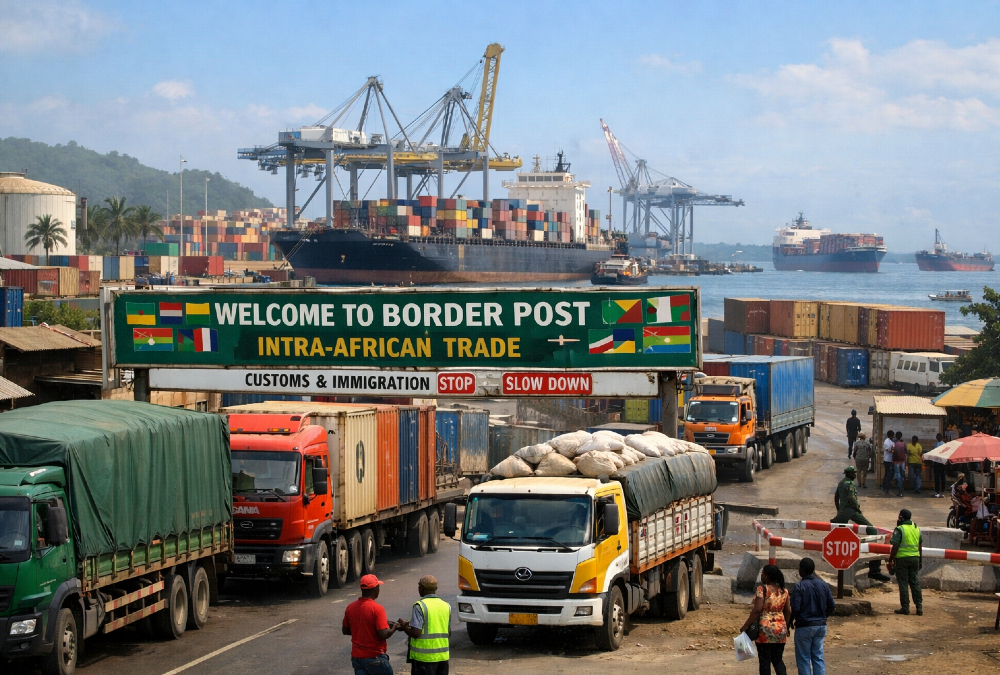
AfCFTA officials, regional economic communities, and business organizations have been remarkably consistent on one point: trade liberalization without infrastructure is theater. The continent needs both hard infrastructure – roads, ports, energy grids, and logistics networks – and soft infrastructure, including efficient regulations, streamlined customs procedures, and reliable trade-related services.
Neither exists in sufficient quantity. Transport, logistics, energy, and regulatory deficits continue strangling intra-African trade.
Shipping and logistics costs for perishable goods routinely devour 30–40 percent of export values, according to the Africa Freight and Logistics Market Report 2025. These eye-watering figures don’t just impede commerce; they make meaningful integration economically impossible for all but the most valuable goods.
Rules of Origin: Still Unresolved After Five Years
The incomplete resolution of Rules of Origin (RoO) continues constraining AfCFTA’s operationalization.
While the Ministerial Council of Trade Ministers achieved consensus in Cairo this October on finalizing RoO for key sectors – including textiles, apparel, and automotive products – the adoption of transitional implementation mechanisms for remaining rules delays full application of preferential tariff treatment. This reflects persistent sensitivities among member states unwilling to expose their industries to continental competition.
The result? Businesses remain trapped in limbo, unable to confidently plan investment or supply chains because the fundamental rules governing preferential market access remain fluid.
The Business Perspective: Uncertainty Reigns
From the trenches of commerce, uncertainty dominates. The Guided Trade Initiative, launched in 2022 to pilot commercially meaningful AfCFTA trade, has confronted a brutal reality: non-tariff barriers – excessive documentation requirements, inconsistent standards, arbitrary border charges – often prove more restrictive than tariffs themselves.
Small and medium-sized enterprises face particularly punishing obstacles. Limited access to trade information, prohibitive compliance costs, and labyrinthine regulatory requirements effectively exclude them from cross-border opportunities.
For businesses that cannot afford specialized trade lawyers and customs brokers, AfCFTA might as well not exist.
The Grand Paradox
Here lies AfCFTA’s central paradox: it has generated unprecedented political momentum and intellectual engagement while the chasm between ambition and reality yawns ever wider. Five years after operationalization, critical legal instruments, institutional mechanisms, and operational frameworks remain incomplete or unevenly applied.
The agreement’s transformative potential exists almost entirely in theory.
This “implementation gap” demands urgent attention. The continent must move beyond academic discussion and media celebration toward legal finalization, institutional coherence, and sustained, results-oriented action at both national and regional levels.
Without this decisive pivot, Africa’s most ambitious trade project risks calcifying into history’s most thoroughly analyzed failure – a cautionary tale of what happens when grand visions collide with bureaucratic inertia and political timidity.
The clock is ticking. AfCFTA can still fulfill its promise, but only if Africa’s leaders prioritize delivery over declarations.
Otherwise, the agreement will join the graveyard of continental initiatives that generated headlines but changed nothing – a monument to missed opportunity rather than realized potential.
Danilo Desiderio serves as the CEO of Desiderio Consultants Ltd in Nairobi, Kenya, specializing in African customs, trade, and transport policies. He is a customs and trade expert at the World Bank and a senior associate to the Horn Economic and Social Policy Institute (HESPI).
