
Opinion
A Value-Creating Reset for Ghana’s Airport Name

By Paa-Kwesi Heto
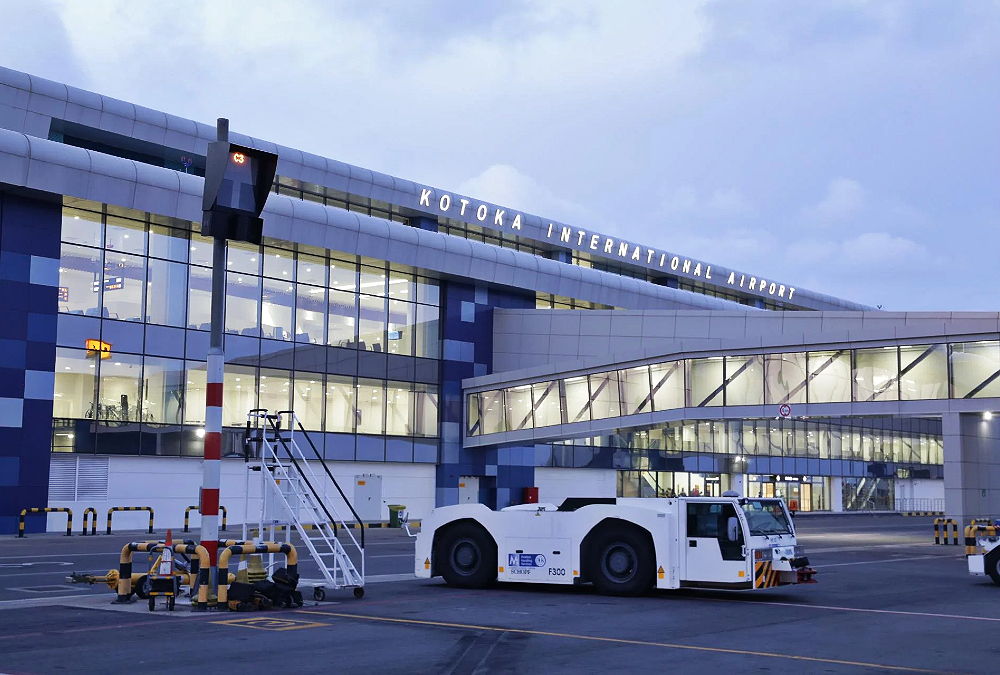
The Mahama administration’s proposal to rename Kotoka International Airport represents far more than administrative housekeeping. It’s a long-overdue reckoning with how Ghana presents itself to the world and to its own citizens.
This isn’t merely symbolic politics – it’s about correcting a historical anomaly that has persisted for over half a century.
The spirited public debate that followed the announcement demonstrates something encouraging: Ghana’s democracy has matured enough to question its own sacred cows.
National symbols matter. They shape how societies see themselves and how individuals understand their place within a larger story.
When those symbols commemorate the wrong things, they send the wrong messages.
Three main arguments have emerged against the renaming. Each deserves careful consideration, but none withstands scrutiny.
The Fallacy of Honoring Mistakes
Some opponents argue that controversial historical symbols serve an educational purpose – reminders of collective errors that promote civic accountability. The principle has merit. Museums worldwide preserve difficult histories precisely for this reason.
But there’s a crucial distinction between preservation and celebration. Using Ghana’s primary international gateway to commemorate a coup leader doesn’t educate – it confuses.
How many Ghanaians actually know Lieutenant General Emmanuel Kwasi Kotoka’s story because of the airport’s name? How many view him as a national hero worthy of such prominence?
The answer reveals the problem. Kotoka’s main historical contribution was overthrowing Ghana’s elected government with foreign assistance in 1966, then dying while defending the military regime he helped establish.
This is not heroism – it’s a cautionary tale.
If Ghana genuinely wants to educate citizens about its turbulent coup era, the solution isn’t an airport name. It’s a dedicated democracy museum that can provide nuanced, comprehensive historical context.
Ghana has done this brilliantly with its slave castles, transforming sites of horror into powerful educational experiences. A democracy museum could tell the full story of Ghana’s coups, explaining why the nation ultimately chose constitutional governance over military rule.
Such a museum could even occupy the Osu Castle or, more pointedly, incorporate the controversially expensive infrastructure projects of the previous administration – physical reminders of what happens when political parties govern like oligarchs rather than democrats.
Ghana’s December 7, 2024 election sent an unmistakable message: voters prefer democratic governance and a society that honors human dignity regardless of birth or position. If that’s the national aspiration – and it clearly is – Ghana’s most visible symbols must reflect it.
The nation’s main international gateway should embody hope and unity, not memorialize a coup.
A Death Doesn’t Justify Commemoration
A second argument holds that the National Liberation Council renamed the airport in 1969 to mark where Kotoka died during the failed 1967 counter-coup, supposedly honoring both his sacrifice and a significant moment of national turmoil. This reasoning collapses under basic questioning.
Even accepting the dubious premise that the renaming was unrelated to the 1966 coup Kotoka helped execute, why should Ghana memorialize his death location? Was he the only Ghanaian to die at the airport? Was his death uniquely sacrificial in service of the state?
The answer to both questions is no. Kotoka was not a flawed hero deserving nuanced remembrance – he was a coup participant who overthrew democratic governance.
As the late Ngũgĩ wa Thiong’o and I detailed in our article “Ghana’s International Airport Name: A Normalized Abnormality,” the current name represents exactly what the title suggests: an aberration that has simply been accepted for so long that people stopped questioning it.
Normalized abnormalities are perhaps the most dangerous kind. They embed themselves in national consciousness, shaping identity in subtle but profound ways.
The Cost Argument Doesn’t Hold Up
The third objection concerns expense. Minority Ranking Member Kennedy Osei Nyarko estimates renaming costs between US$2 million and US$5 million, though no detailed, credible budget has been publicly released.
Yes, renaming carries costs. But context matters. Since IATA and ICAO airport codes will remain unchanged, this is an administrative name change, not a code change – a crucial distinction that substantially reduces expenses.
There’s no need to update legacy airline reservation systems like Amadeus, Sabre, and Travelport, or flight-planning software. The actual changes involve physical assets: road signs, gate displays, terminal signage, uniforms, stationery, and security badges.
These are standard rebranding expenses that any major institution undertakes periodically.
Moreover, Kotoka International Airport is profitable and maintains its own marketing budget. The rebranding need not burden Ghana’s general fund. With transparent budgeting and proper planning, the costs become manageable – particularly when weighed against the value of presenting an authentic national identity.
Democracy Deserves Better Symbols
Ultimately, this debate transcends airport nomenclature. It’s about whether Ghana will allow historical inertia to define its national identity or whether it will actively curate symbols that reflect its democratic values and aspirations.
Every international visitor who arrives in Ghana passes through this gateway. Every Ghanaian who travels abroad departs from it. The name they see should inspire pride, not require awkward historical explanations.
Ghana has chosen democracy – repeatedly, decisively, and at considerable cost. Its national symbols should reflect that choice. Renaming the country’s largest international airport isn’t cosmetic – it’s necessary alignment between values and representation.
I urge policymakers and citizens alike to support this renewal. Let Ghana present an identity rooted in truth, unity, and hope.
Let the nation’s gateways reflect the dignity and vision of people genuinely committed to progress and democratic governance.
The question isn’t whether Ghana can afford to rename the airport. It’s whether Ghana can afford not to.
Paa-Kwesi Heto, Ph.D., is a Visiting Assistant Professor of Education and Societal Change at Soka University of America Graduate School and a Project Policy Analyst at the University of California, Irvine. He has been associated with a U.S. higher education organization for at least a decade. Moreover, all his graduate education, which comprises five master’s degrees and a doctorate, is from U.S. universities.
