
Opinion
A Stellar Record of Failure: The IMF and Jamaica
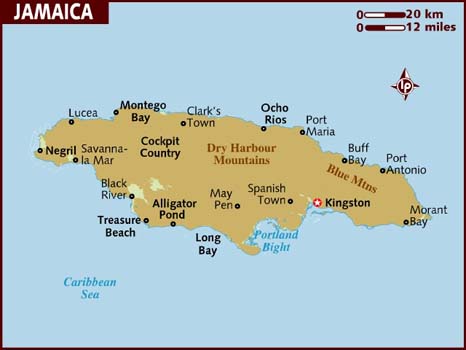
While a share of the blame no doubt hangs on the actions of the government of Jamaica, the country’s Prime Ministers and their governments have had little room for independent or autonomous policy making outside of the constraints of the IMF. By and large, Jamaica has followed the rules set forth by the international institution, and Jamaica has had increasingly fewer and less powerful tools to draw revenue from. Due to this, the government now relies on grants and unsustainable borrowing to keep the economy going.
The long string of bailouts in Europe have not gone unnoticed by Prime Minister Simpson-Miller, who in a March interview with Bloomberg, remarked that “If they could give a bailout like Greece, lord have mercy, you would see Jamaica grow and flourish.”
Simpson-Miller has declared her plans to renegotiate the current terms of the IMF in Jamaica, but so far has made no public announcements about whether or not such talks have been successful.
Two years ago, Jamaica did restructure more than J$700 billion (US$8.1 billion) of its domestic debt. Creditors accepted lower interest at longer maturities, saving the country around J$40 billion (US$460 million) a year in debt-servicing costs.
While such renegotiations do open small spaces of action and ease some of the financial burden, they do little to change the overall structures of debt domination that Jamaica has to face. If the IMF was serious about bringing about development and prosperity in Jamaica it would reconsider its strict demands of austerity. Thirty years of IMF economic prescription has proved to be a failure for the country of Jamaica. But for big banks, foreign governments, and those interested in weakening the power of the country, it has been a success. It has generated significant interest payments and hollowed out the Jamaican state, leaving little for infrastructure development or social policies.
The report acknowledged the importance of renegotiations, saying, “Without securing adequate fiscal space to allow for additional public investment and social spending, continued engagement with the IMF and prioritizing deficit reduction is likely to keep Jamaica on a path of low growth and subpar social conditions.” While the IMF has made a shift away from “structural adjustment” to “poverty reduction partnerships,” but that is too little, too late. It is long overdue that the IMF own up to its responsibility in running the Jamaican economy into the ground. It’s time to look for new experts and sources of advice. Jamaica has been too good a friend to the IMF, losing much of its economic and political independence in the process.
Kevin Edmonds is a NACLA blogger focusing on the Caribbean. Edmonds is a former NACLA research associate and a current PhD student at the University of Toronto, where he is studying the impact of neoliberalism on the St. Lucian banana trade.
