
Opinion
A Missing Link in India-Africa Trade: The Power of Direct Digital Payments

By Dishant Shah
When it comes to boosting trade between India and Africa, the conversation often revolves around tariffs, logistics, and infrastructure. These are undeniably important – but there’s one critical piece of the puzzle that rarely gets the attention it deserves: payments.
Currently, cross-border transactions between India and African countries pass through a long and costly chain of intermediaries. Transactions rely on SWIFT messages, multiple correspondent banks, currency conversions into U.S. dollars, high fees, and often result in unnecessary delays.
This outdated system isn’t just inefficient – it actively discourages small businesses on both sides from engaging in international trade.
A Powerful Solution: Connecting Two Digital Payment Giants
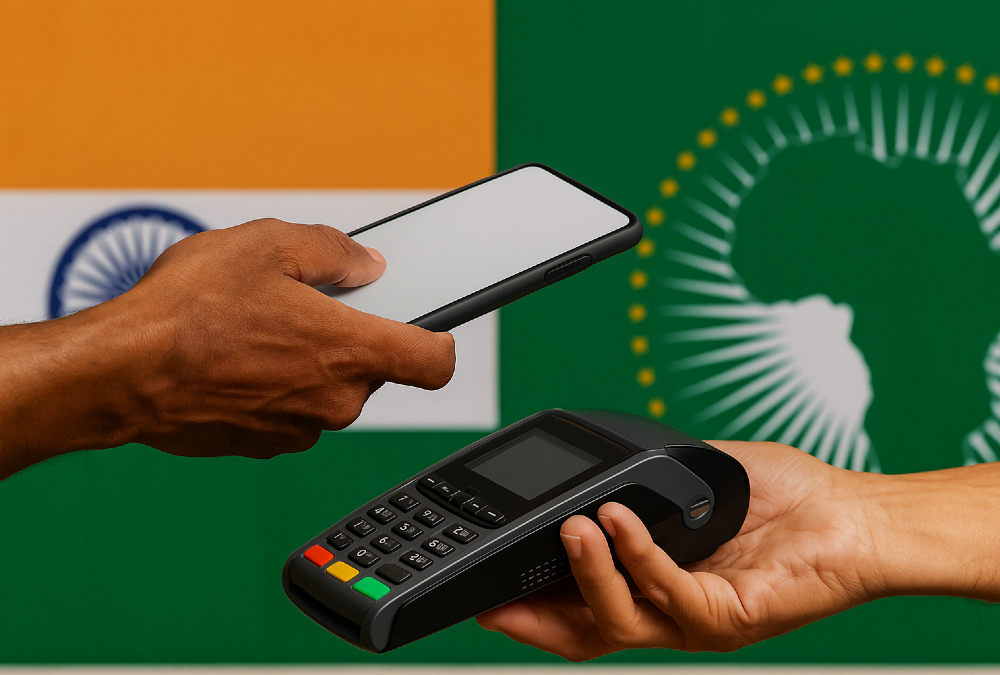
But there’s an opportunity to change this narrative. A powerful solution lies in the potential collaboration between two robust digital payment systems: the Pan-African Payment and Settlement System (PAPSS) and the National Payments Corporation of India (NPCI).
PAPSS, developed by the African Export-Import Bank (Afreximbank) and endorsed by the African Union, is a continent-wide real-time payment platform. It enables instant, secure, cross-border transactions in local African currencies.
Already live in countries like Ghana, Nigeria, and Sierra Leone, PAPSS is laying the groundwork for a more integrated and self-reliant African financial ecosystem.
Meanwhile, NPCI—the organization behind Unified Payments Interface (UPI) – has revolutionized digital payments in India. Processing over 10 billion transactions per month, UPI is fast, scalable, and deeply embedded in India’s financial fabric.
It has already been integrated with payment systems in Singapore, the United Arab Emirates, and France.
Now, imagine a direct digital link between UPI and PAPSS. An Indian trader could pay a Kenyan supplier directly in rupees, while the recipient receives the equivalent amount in Kenyan shillings – instantly, securely, and without reliance on the U.S. dollar.
No foreign exchange conversion. No exposure to currency volatility. Just a seamless, low-cost transaction.
Unlocking Trade Potential Through Financial Innovation
Such a system would do more than streamline payments – it would unlock massive potential for bilateral trade. In FY2023, India-Africa trade surpassed US$98 billion, making India one of Africa’s top five trading partners.
Yet much of this trade still depends on hard currencies like the U.S. dollar, which are expensive to access and often scarce in many African economies.
A local-currency settlement mechanism could make trade more inclusive, resilient, and accessible – especially for micro, small, and medium enterprises (MSMEs), startups, farmers, and informal traders who are often locked out by complex banking requirements.
This isn’t just about improving payments; it’s about enabling commerce at scale. It’s about transparency, trust, and convenience across borders.
The good news? Neither PAPSS nor NPCI needs to build entirely new infrastructure.
They simply need to connect two already-proven systems – creating a model of South-South cooperation that bypasses traditional Western-dominated financial rails.
We have already mastered sending money across the street in three seconds. Isn’t it time we did the same across continents?
Dishant Shah is a partner at Legion Exim, a company specializing in facilitating the export of high-quality engineering products directly sourced from manufacturers in India to Africa. His areas of expertise include new business development and business management.
