
Opinion
Variant of ‘Marshall Plan’ can reduce unemployment in Africa
Governments and the private sector must also commit to strong, transparent institutions to help boost confidence in Africa’s business climate. African nations such as Botswana, Rwanda and Liberia have made tremendous progress in this area, though in some countries, war and civil unrest continue to take a toll. Sustained economic and job growth requires creating a safe and reliable environment for capital – including strong civil and legal institutions, corporate financial transparency (such as efforts by the Nigerian Stock Exchange to improve the quality of financial reporting for listed companies), accountable, democratically-elected politicians, and modern, open and transparent markets (like the new commodities exchanges that Heirs Holdings, Berggruen Holdings and 50 Ventures and its partners are creating at African Exchange Holdings). Aggressive advances on such policy fronts will help support the development pillars of infrastructure investment and industrialization – both of which are vital to creating employment on the continent.
The second pillar of Africa’s development program must be infrastructure investment, particularly in power and transportation, without which business cannot function. Today, more than 70 percent of sub-Saharan Africa lacks access to electricity and every 1 percent increase in electricity outages reduces Africa’s per-capita gross domestic product (GDP) by approximately 3 percent. Access to affordable electricity is essential to unlocking the continent’s growth potential – reducing costs and enabling business growth, including homegrown businesses that create jobs and sustainable local economies.
Transportation infrastructure promises to have an equally transformative impact: roads, railways, waterways and airways are the backbone of a thriving commercial economy. The African Union should encourage and embrace transportation projects that first connect African nations to each other, and then to our global trading partners. Projects like the toll road between Entebbe and Kampala, and the Kenya-Tanzania highway will facilitate greater trade of agricultural and manufactured goods within Africa. Consider that today in Nigeria, 65 percent of our produce spoils for lack of storage infrastructure, and is difficult to export to other African markets for lack of rail and road infrastructure.
Major multinationals like Diageo, Wal-Mart, Barclays, and Microsoft are ramping up African operations in spite of infrastructure challenges. In some cases, they even build their own infrastructure.
Stronger policy and physical infrastructure would bring more investment from those who cannot or refuse to bootstrap it. It would also help small and mid-sized enterprises grow faster, and these companies are the engines of job growth in any economy.
Africa’s third development pillar must be building our manufacturing and processing industries. Africa lacks the capacity to process and refine its own natural resources. Raw materials such as oil, cocoa and gold are shipped overseas, where they are processed into high-margin products and often re-imported into Africa – costing both jobs and hard currency. For example, Nigeria exports raw crude oil and then imports expensive gasoline, when the country should be able to refine the oil itself, supplying not just its own market, but also other markets across Africa. This inability to create finished goods at home, and trade them with other African nations, drastically limits the continent’s growth potential, and thus its ability to create businesses, jobs and wealth within Africa’s own domestic economies.
I believe we can solve Africa’s employment challenge, but only if we focus on these three development pillars with great urgency, and accelerate current investment and business trends. Many of Africa’s stock markets are delivering stellar returns, while institutional, retail mutual fund and private equity capital is flowing rapidly into African markets. Many multinationals and African conglomerates are investing heavily in Africa.
Despite such investment and economic growth, however, Africa is not creating nearly enough jobs. According to demographics, time is not on our side. But with a coordinated jobs plan for Africa, we can secure a productive, economically independent future for the continent and its people.
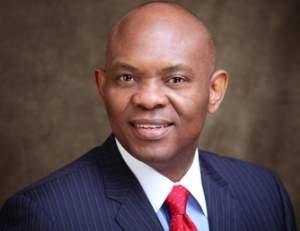
Tony O. Elumelu is an entrepreneur, philanthropist, and the chairman of Heirs Holdings Limited.
