
Opinion
From Trinidad & Tobago to Jamaica with love
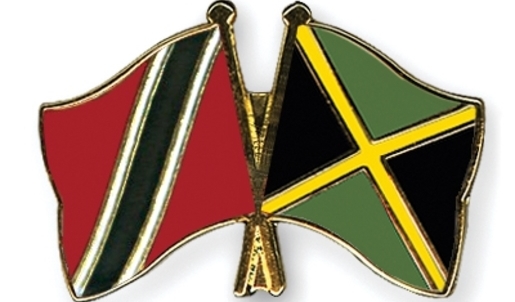
By David Muhammad
Over the last week, there have been many disturbing statements coming out of Trinidad & Tobago regarding our Caribbean Jamaican family.
Things have been said that have come across as inflammatory, prejudiced, and even hateful. Jamaican citizens have been branded and labeled as burden on our society, criminals and illegal aliens.
We seem to not appreciate how far and wide ignorant statements spread, especially when they are used for sensationalism. People across Trinidad & Tobago are disgusted and incensed over these cruel and unkind remarks.
There are some factors that we must consider as this discussion continues. We are one with the people of Jamaica as it pertains to our status as citizens of the Caribbean. Furthermore, both Trinidad & Tobago citizens and Jamaican citizens have the Caribbean Community (CARICOM) logo on our passports – which facilitates a degree of freedom of movement in and out of each other’s countries without discrimination.
I stand in full solidarity with the Jamaican citizens who legitimately attempted to enter Trinidad & Tobago who were disrespected, mistreated and denied entry.
During the term of the 2010-2015 Kamla Persad-Bissessar United National Congress (UNC) administration, conditions were put in place whereby Indians from India had more free rights and access to Trinidad & Tobago as compared to our own regional neighbors. And while Jamaicans were being either detained and sent back to Jamaica, or only being given a few days in our country, at the same time, Indians from India were allowed to stay in Trinidad & Tobago for up to 90 days without any restriction whatsoever.
So we began to see an unexplainable and unjustifiable hostility against Jamaicans that some felt was based on a paranoia that people of African descent from other Caribbean nations may become fully naturalized and support the People’s National Movement (PNP) party as opposed to the Indo-based UNC. These were concerns that were felt as far back as the late 1950s and early 1960s during the time of the Federation of the West Indies when the Democratic Labor Party in Trinidad & Tobago forcefully opposed the idea of unity of the Caribbean nations.
But now we are in 2016 with a new PNM government – but some of the old political sentiments appear to be lingering in some state institutions – even under the new regime. The current government should really be on the forefront of this issue, defending the principle of Caribbean unity, especially since there are deep historical roots that connect the people of the Caribbean even after slavery.
It is estimated, for example, that ‘most’ people of African descent have near relatives from either Barbados, Grenada, St Vincent & the Grenadines – and most of us born in the 1960s, or before that – would have either a parent, grandparent or great-grandparent from one of the other Caribbean island-nations.
This is our heritage and legacy, and it must be respected, the children in the schools must also be educated on the ancestral Caribbean connection and how we are bound by a common past. But instead, an ignorant loathing, and a divisive poisonous narrative, has been spewed to create an unnecessary rift between people who should be coexisting in harmony and working together.
Jamaica, probably more so than any other Caribbean territory, has put the English-speaking Caribbean on the map, making the entire region very proud, and we always celebrate together in our victories, except, of course, during the moments of competitive rivalry. Our youth population listens to more music from Jamaica than they do their own music, except during carnival, and Jamaican culture is loved and embraced in general by Trinidad & Tobago.
Jamaica needs to understand that the negative sentiments that are coming out of Trinidad & Tobago are by no means a reflection of the thinking of the majority of people of Trinidad & Tobago.
So, my Jamaican friends, while you may come into conflict with some of these hateful individuals who give our country a bad name, we have to live with them daily and put up with the disdain and discrimination in our own land. What complicates it even more is when those who should know better jump on the bandwagon and utter the same divisive thoughts without even realizing that they are hurting, not helping, the situation.
As far as the decision to boycott Trinidad & Tobago products is concerned, I will respect whatever decision the Jamaican people make in their taking a position fighting for dignity and self-respect. I admire the Jamaican people for that, and if such a move raises sensitivity levels to the cause, so be it.
My book, Black Studies, has been sold in at least 7 different bookshops and other outlets across Jamaica, but the consciousness contained in it is geared towards uniting, rather than dividing.
What the citizens of Trinidad & Tobago need to understand now is that the Jamaican Government is standing up for its citizens in a way that our government might not stand up for us if we were caught in the same situation in a foreign land facing deportation.
Finally, with the entire Caribbean being a region of immigrants, it is quite ironic that some CARICOM governments seem to be so anti-immigration. Trinidad & Tobago, in particular, cannot afford to underestimate the contribution of Caribbean immigrants to the building of our nation. For example, the leader of the trade union movement who inspired revolutionary change in this country, Uriah Buzz Butler, was born in Grenada. One of his greatest colleagues who helped strengthen and spread the movement, Clement Payne, was from Barbados.
Trinidad & Tobago’s greatest calypsonian, The Mighty Sparrow, was born in Grenada. Iconic carnival Mas band leader Peter Minshall, with 8 Band of the Year titles, was born in Guyana. The same migrant mix also applies to other Caribbean nations.
Therefore, I hope that when the dust clears, these two magnificent nations, Jamaica and Trinidad & Tobago, can return to being sisters at different ends of the Caribbean.
David Muhammad is a Trinidadian author and social commentator, specializing in racial issues in the Caribbean.
