
Opinion
The Sahel’s Stand: Africa Writes Its Own Story

By Farhia Noor
The Sahel is teaching the world a lesson it had forgotten: Africa is neither weak nor helpless. And it is certainly not for sale.
Across the arid stretch of West Africa, from the ancient trade routes of Mali to the uranium-rich soils of Niger, a historic realignment is underway. It is being led by some of the continent’s youngest and most assertive leaders – men who have traded the diplomatic caution of their predecessors for something far more consequential: collective leverage.
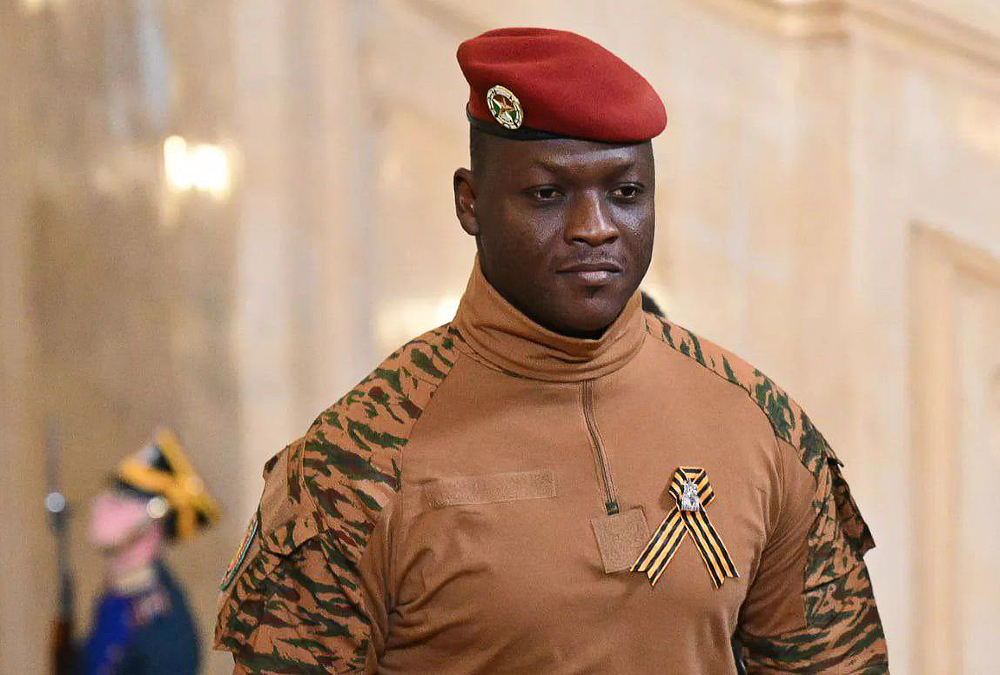
Assimi Goïta in Mali is securing borders long left porous by foreign intervention. Ibrahim Traoré in Burkina Faso is dismantling decades of aid dependency. Abdourahamane Tchiani in Niger is asserting national dignity through decisive, unapologetic diplomacy.
Three nations. One strategy. A unified assertion that sovereignty, in the 21st century, requires more than flags and anthems – it requires coordinated, collective power.
Visa Diplomacy: Reciprocity as Strategy
The recent visa restrictions imposed by the United States on citizens of Mali, Burkina Faso, and Niger were met not with protest, but with proportional response. When Washington closed its doors, the Sahel closed theirs.
No violence. No escalation. Simply reciprocity.
This is the new arithmetic of African diplomacy: “If you restrict us, we restrict you.” It is neither hostility nor isolationism. It is the calculated, disciplined exercise of sovereign rights. The message is unambiguous – engagement must be mutual, or it will not occur at all.
Rejecting the Narrative of Benevolent Intervention
For decades, foreign powers have operated across the Sahel under the legitimizing banners of peacekeeping, development assistance, and democratic support. The results are now measurable: terrorism has metastasized.
Poverty has deepened. Instability has become structural.
The Sahel’s new leadership poses an uncomfortable question: If two decades of Western military and humanitarian presence have yielded only deterioration, whose interests were truly being served? The answer, increasingly evident, is that external actors shaped politics, influenced security apparatuses, controlled narratives, and protected foreign commercial interests – often at the expense of local stability.
These are military governments, yes. But they represent something larger: societies collectively rejecting humiliation in favor of dignity.
As the West African proverb observes, “Until the lion learns to write, every story will praise the hunter.” The Sahel is now holding the pen.
Pro-Africa, Not Anti-West
This pivot is routinely mischaracterized as anti-Western. It is not. It is pro-African – a demand that partnership replace supervision, and that respect supplant control.
The West’s anxiety is not directed at Mali’s military capabilities or Burkina Faso’s economy. It is directed at the possibility of replication.
A unified, self-directed Africa represents an existential challenge to a post-colonial order built on asymmetric access and conditional support. Economic pressure, media criticism, and diplomatic isolation will follow.
They always do. But as the elders say, “Rain does not fall on one roof alone.” The cost of resistance is shared; so too will be its rewards.
Farhia Noor is a seasoned business consultant based in Dar es Salaam, Tanzania. With a proven track record in developing enterprises and executing turnkey projects across both government and private sectors, she brings deep expertise to the table. Farhia is also a committed advocate for community-led development and is passionate about advancing sustainable, intra-African growth.
