
Opinion
The role of private capital in African Power – Unleashing disruptive change
By Ibrahim Sagna
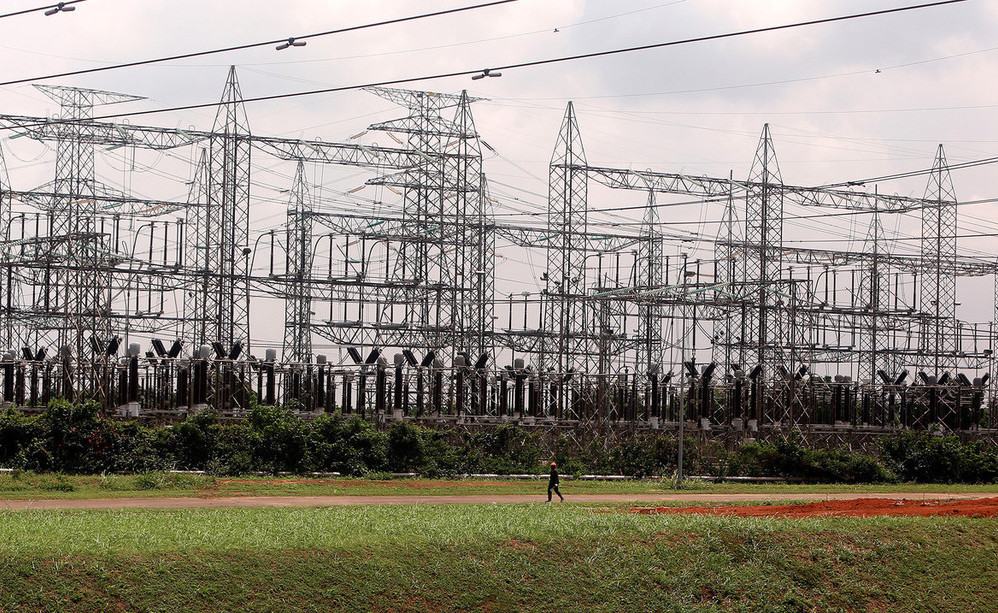
Africans across the continent suffer regular power outages that can last for hours – and in some instances days.
When the lights go out, diesel generators roar to life to power hospitals, hotels, offices and some of the more affluent private residences in Africa’s bigger cities. This lack of access to reliable power is one of the biggest bottlenecks to growth in Africa, and private capital has a big role to play in solving the problem.
A parallel can be drawn between the disruption caused by a lack of GSM mobile technology in the early 2000s and private sector investment in the sector.
I can still remember my first trip to Lagos in 2001. I was in town on official business to assess what would arguably become the biggest private equity investment opportunity in the country – MTN Nigeria.
Upon arrival, my colleagues and I were provided a selection of mobile phones on competing wireless networks. The non-GSM phones were extremely unreliable.
I was shocked by the needless inefficiency of the whole system, but at the time this was the norm in Lagos.
Vital private sector investment in GSM technology and operators allowed a whole line of vital services to come on stream, including ATMs and POS (point of sale terminals).
It is incredible to think that there were no ATMs in Nigeria less than 2 decades ago and, at the end of my 2001 trip, when I ran out of cash to pay for my hotel, the concierge looked at my credit card with confusion and suspicion.
Since then, the Nigerian economy has made massive leaps forward. Today, you instantly receive an email invoice once you purchase your NEO coffee and you pay UBER with your phone using your PAGA e-wallet.
The move away from an economy dependent entirely on cash has not only ended long queues at the banks and made life more convenient, it has also encouraged the growth of new industries. E-commerce businesses such as JUMIA and KONGA are all taking advantage of the growing use of e-payments. All of this thanks to a sector essentially funded by private capital willing to invest in Africa.
Unlocking Africa’s power potential will require, on the other hand, a new paradigm, a broader scope of interventions involving a lot more government, more developers, more innovative capital structures, a smarter set of technologies, a greater reliance on off grid solutions and, most importantly, a balanced mix of fossil fuels and renewable energy.
My colleagues at the Africa Finance Corporation (AFC) and I are convinced that now is the time for Nigeria’s power sector to benefit from private capital and disruptive change.
Our organization has had the privilege to be involved in over US$550 million of power financing deals across 9 African countries, and with the expectation to deliver 2,000 megawatts of additional power generation capacity in the near term. In 2014, the AFC met and surpassed its initial commitment under former U.S. President Obama’s Presidential Power Africa Initiative through various investments in power across the Power Africa countries. The AFC committed to invest US$250 million, but by the end of 2014, had made total investments of US$269 million funded from its balance sheet and mobilized over US$1.2 billion of 3rd party investments across the 6 Power Africa focus countries.
We have gone beyond the remit of traditional investments and are actively involved in project development efforts in power related opportunities across the continent. We also provide advisory services in the sector, for instance we advise the Central Bank of Nigeria (CBN) on its US$2 billion intervention fund which investments have already translated into 880 megawatts of power across Nigeria – half of that capacity is new generation.
In order for private capital to access opportunities in Africa’s power sector, the role of government needs to be more pronounced; better coordination and planning will be more and more crucial. The reality is that once power ceases to be a major challenge, it will undoubtedly constitute one of the most formidable catalysts of economic growth in Nigeria, and across Africa. Private investors able to execute a strategy around the convergence of needs between local regulation, international expertise and large pools of capital will reap some healthy dividends in the process too.
Ibrahim Sagna is the Head of Financial Advisory at the Africa Finance Corporation (AFC) – a Nigeria based multilateral institution that is focused on funding and supporting infrastructure on the African Continent.
