
Opinion
Patrice Lumumba: Africa’s Enduring Symbol of Identity, Unity, and Sovereignty
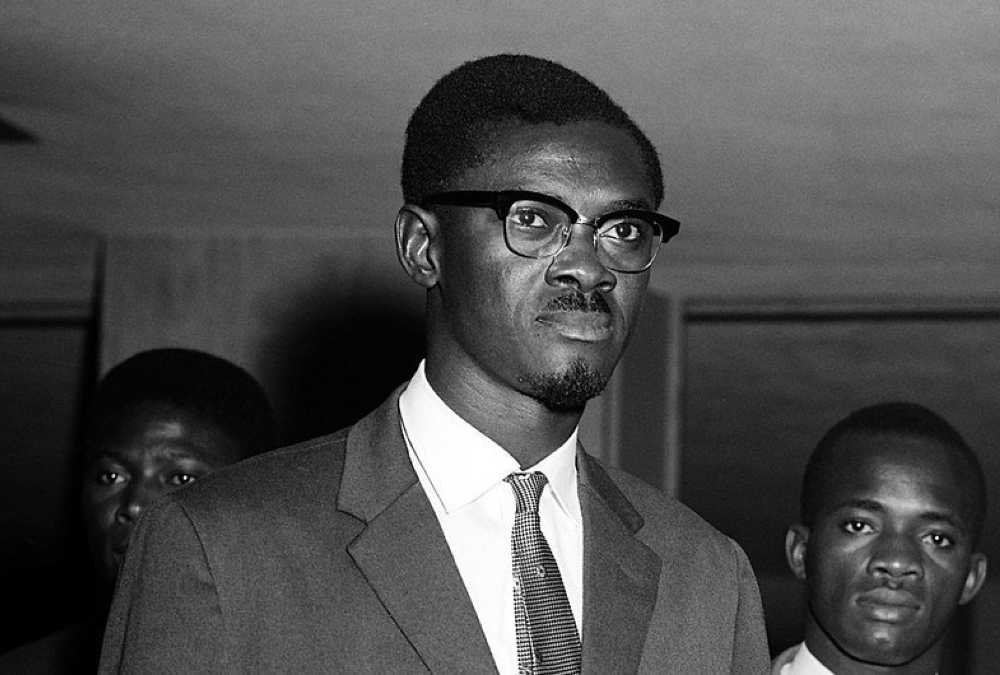

By Dishant Shah
When we speak of African identity, self-determination, and unity, one name rises above the rest – not merely as a historical figure, but as a moral compass: Patrice Lumumba.
In 1960, Lumumba became the first Prime Minister of an independent Congo. Yet his vision extended far beyond his nation’s borders.
He imagined a continent bound not just by political independence, but by shared cultural, economic, and psychological self-determination. He did not see Africa as a collection of post-colonial states bound by arbitrary lines drawn in European offices.
He saw it as a single civilization, fractured by imperialism but destined to rise again – economically sovereign, culturally unshackled, psychologically liberated.
Why Lumumba Terrified Empires
What set Lumumba apart wasn’t just his charisma or eloquence – it was the radical clarity of his convictions:
- Identity as Liberation: Lumumba refused to let Africa be defined by its colonizers. In his landmark independence speech – delivered before King Baudouin of Belgium – he declared, “We are not your slaves anymore.” It was a seismic rebuke. He demanded that Africans reclaim their names, their histories, their dignity – not as gifts from former rulers, but as birthrights.
- Unity as Survival: “A divided Africa is a conquered Africa,” he warned. Lumumba envisioned a continent united not by rhetoric, but by shared purpose: a customs union, a common defense policy, a coordinated economic strategy. His call for Pan-African solidarity terrified Western powers who relied on fragmentation to maintain control.
- Economic Sovereignty as Non-Negotiable: Lumumba understood that political flags and national anthems meant little if copper from Katanga, cobalt from Shaba, and diamonds from Lualaba continued to flow into foreign bank accounts while Congolese children starved. His push to nationalize resources and redirect wealth toward African development made him an existential threat – not to Belgium alone, but to the global extractive order.
The Assassination That Changed Africa
By January 1961, Lumumba was dead – murdered in a covert operation involving Belgian officials, CIA operatives, and Congolese collaborators. His body was dissolved in acid. The world watched in silence.
This was no mere coup. It was an assassination of possibility.
Lumumba’s murder sent a chilling message across the continent: Any African leader who dares to demand true sovereignty will be erased. Yet, history has a way of outliving its executioners.
Lumumba’s Legacy: A Mirror Held to Modern Africa
Today, nearly seven decades later, we must ask ourselves: Has Africa honored his vision?
- Are our nations truly sovereign when multinational corporations still control our minerals, our energy, and our digital infrastructure?
- Is Pan-Africanism alive – or has it been reduced to ceremonial summits and empty declarations?
- Do we define our own development agenda – or do we still beg for loans with conditions written in Brussels, Washington, or Beijing?
Lumumba’s life was not a relic. It is a reckoning.
His legacy lives in the youth demanding fair trade for African goods, in the entrepreneurs building tech hubs from Lagos to Nairobi, in the scholars rewriting African history from African perspectives, and in the activists pushing for reparations and resource justice.
He reminds us that freedom is not granted – it is seized. Identity is not inherited – it is asserted. Unity is not poetic – it is strategic.
A Call to Action
To African leaders: True sovereignty means controlling your resources, not just your borders.
To African entrepreneurs: Build businesses that serve African needs first.
To African citizens: Demand accountability – not just in elections, but in economic justice.
Patrice Lumumba died young. But his ideas? They are immortal.
The revolution he began was never about one man. It was about a people deciding, once and for all, that they would no longer be subjects of someone else’s future.
Africa’s unfinished business is not liberation from colonialism – it is liberation from the mindset of dependence.
Lumumba didn’t just want independence for Congo. He wanted independence for Africa’s soul.
And that mission? It is still ours to complete.
Dishant Shah is a partner at Legion Exim, a company specializing in facilitating the export of high-quality engineering products directly sourced from manufacturers in India to Africa. His areas of expertise include new business development and business management.
