
Opinion
Dr. Francis Mangeni – Part Two of a Universal Africa
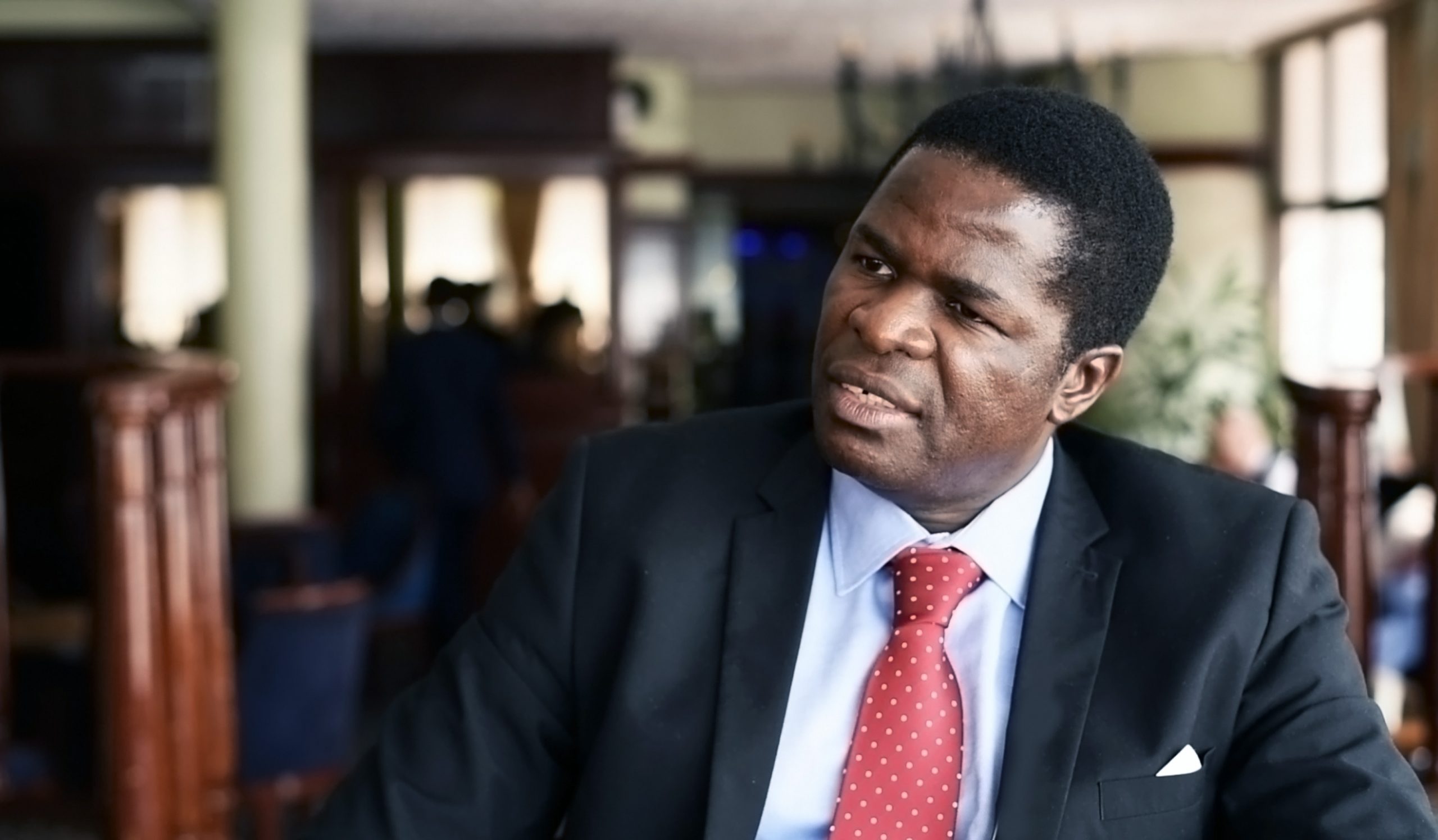
Following over a decade of service at the Common Market for Eastern and Southern Africa (COMESA), Dr. Francis Mangeni is now Head of Trade Promotion and Programs at the AfCFTA Secretariat, based in Accra, Ghana.
***
Introduction
In this second of a four-part article, I point out that although they continue to face a plethora of existential crises, Africa’s various regions have adapted to, adopted and developed practices that ought to be harnessed and consolidated at the continental level. These practices have been evident within regional institutions and these institutions have, themselves, played a significant role regional integration. With further capacity, African institutions and Africa as a whole can be a force for good; addressing continent-wide challenges and therefore infusing value systems that would bolster the human race and of course, the planet’s biodiversity.
***
A Truncated Version of Pan-Africanism & Functionalism
The Pan-African movement held its first congress in 1900. It was initially concerned with improving the conditions and treatment of colonised peoples. However, by the 1945 Congress, the movement had come of age, with robust diplomatic agency for decolonisation. Africa was meant to unite, and no African country would be free until all were free. These were the highest expressions and zeitgeist of the Movement. At its core, Pan-Africanism became received wisdom, formed the ethos of the sort of political and economic thinking that drove Africa’s post-colonial era of Africa, and provided the Grundnorm for regional integration.
It is important to point out that while Pan-Africanism may have evolved out of decolonisation struggles – emerging as the foundation for the vision and roadmap for the post-colonial political and economic transformation of Africa – Viner’s customs union theory was, itself, Eurocentric – evolving out of the post-war/ new world order initiatives under the Marshall Plan, and for formation of the European Communities. Nonetheless, Eurocentricity alone does not exhaust an accounting for regional integration as a phenomenon. Within the universal scope, there has been practical necessity for situating action at manageable local levels and even if the epitome of universality is world government, localized global institutions embody both Lockean and Hobbesian aspirations. However, the inadequacy of it all has seen global institutions seeking localised presence within regions and countries instead of things happening the other way around. Indeed, the totally practical and age-long principle of subsidiarity calls for operations at the immediate or lowest suitable level. Together with subsidiarity, functionalism has pragmatically informed subject-specific and problem specialisation of global and regional institutions.
The first best option would be to have a functioning global multilateral market, as the logical and optimum scope of benefits accruing from large markets. Similarly, a functioning global economic order and a codified constitutional order would be the holy grail. The world is a large and complex place, though. Second best options have thus co-existed and facilitated progress towards first best options. Apt indeed is the old Italian proverb cited by Voltaire, that perfect is the enemy of the good, or let the best not be the enemy of the good. Regional integration between contiguous or dispersed territories, can be found appropriate in addressing crises and taking up opportunities that are geographically localised or particularly relevant to the actors.
The poet of thermodynamics and chemistry Nobel peace prize laureate of 1977, Ilya Prigogine, was intrigued by and studied how order tended to emerge out of chaos. His insight was that when society gets pushed into disequilibrium, a self-organising process that is not predetermined, tends to start, fighting back, and a tipping point is reached when possibilities that lie in the future are seized and actualised. This resonates too with the idea of institutions as complex adaptive systems and the inexorability in the life sciences of simple forms growing into complex forms to cope better.
Making due allowance for contingencies such as agency and the butterfly effect, this largely explains the phoenix-from-ashes moments in Africa over the last century. A phoenix theory of regional integration would thus be quite appropriate.
As practised in Africa, regional integration has been phased and a process, moving from free trade areas (free movement of goods) and customs unions (with a common external tariff), to common markets (free movement of goods, services, persons, labour and capital and rights of establishment and holding property), economic unions (coordination and harmonisation of sectoral policies), monetary unions (harmonisation of monetary policy and adoption of a single currency) and confederations or federations (a common government); as may be agreed in the constitutive instruments. In Africa, only the EAC, however, aims to be a federation or confederation, an exercise and ideal so far fraught with uncertainty, but very much still on the cards.
These phases though are not applied as a compartmentalised linearity. Rather, a pragmatic approach is taken of implementing any appropriate elements, as development and social economic transformation require. This has been called a developmental approach to regional integration.
Typically then, most regional integration organisations will simultaneously have programs for free movement of goods, services and people; investment promotion and industrialisation; competition and intellectual property regimes; and macroeconomic convergence and stability, as well as peace, governance and political stability. They will do so, though nominally considered to be free trade areas because they haven’t implemented a common external tariff, considered to be a revenue- and sovereignty-sensitive element. The nomenclature of regional organisations in Africa, therefore, hardly portrays the actual programs under implementation. The names tend to refer to the final goal and ambition, such as to be a customs union, common market, or an economic community or union.
In effect, Africa has not followed a linear process of economic integration, instead taking up all programs required for social economic transformation regardless of the name of the organisation or purported stage of integration. Programs for macroeconomic and political stability, and peace and security, for instance, have not waited for the stage of economic and monetary unions or federations, but have been actively pursued in free trade areas and common markets as critical success factors for social economic transformation.
There has been an increasing intensity of regional integration across a spectrum ranging from functional agencies and technical arrangements to highly political organisations. Functional agencies have been formed by and affiliated to integration organisations at the regional and continental levels. For instance, while COMESA is more of a technical-oriented organisation, ECOWAS and SADC are considered sensitively political, as well as the African Union. Technical organisations tend to prioritise trade and investment as their bread and butter, while for political organisations, peace and security are additionally more prominent components. Self-regulating professional associations and nostalgia can greatly shape the character and speed of regional integration, as has been the case in the EAC for instance.
Regional integration in the various regional economic communities took off as response to and to address specific existential crises. That initial impetus has shaped the ethos and character of the regional organisations. Regional integration in ECOWAS for instance, as pointed out, took off in earnest as peace and security regimes and operations.
The political ideology and culture of the dominant countries and economies in the regional organisations also left imprints on the ethos and character of the regional organisations. The EAC for instance is a private sector led, export driven integration in the image of Kenya and the dominant post-1980 Washington consensus.
Globalisation has also purveyed the cultures of relatively more powerful countries into neighbourhoods and across the world, particularly through the media and audio-visual industry, cross border telecommunications companies and financial institutions, travel and tourism, and on the whole business and investment. Modern cultural integration has resulted in economic integration enclaves around transnational business models; a type of sectoral economic integration driven by the private sector rather than Governments. Examples include regional and continental mobile telephone networks, cable and satellite television, and cross border banking. Various professional associations have established cross border operations and self-regulation, speeding up trade in services liberalisation and integration.
In trade integration, though, rather than nation States, it’s customs territories with autonomy in the conduct of their external commercial relations that enter agreements and take on rights and duties. Taiwan and Hong Kong have been examples of such customs territories as recognised members of the World Trade Organisation. Within Africa, customs unions have been recognised as blocs in trade negotiations. For instance, in negotiations for the COMESA-EAC-SADC Tripartite Free Trade Area, both the EAC and SACU negotiated as blocs. SACU, ECOWAS, and CEMAC were expected to produce tariff offers and take obligations as customs unions in the negotiations for the African Continental Free Trade Area. Trade integration though, is not the sole format for regional integration. Elements of cultural, social and other economic, political and security integration often feature in integration agenda.
The logic that larger regional markets support economies of scale and critical levels of investment, but require business and trade facilitation, informed the formation of the Tripartite Free Trade Area by COMESA, EAC and SADC in 2015, which inspired the formation of the African Continental Free Trade Area four years later in 2019.
There is thus a rich tapestry of regional integration in Africa. This has resulted from experimentation and institutional engineering, producing good practices for replication and consolidation across other regional organisations and the continent at large.
***
Continues in Part 3
