
Opinion
Nigeria’s Maritime Export Surge: A Turning Point for Economic Stability

By Des H Rikhotso
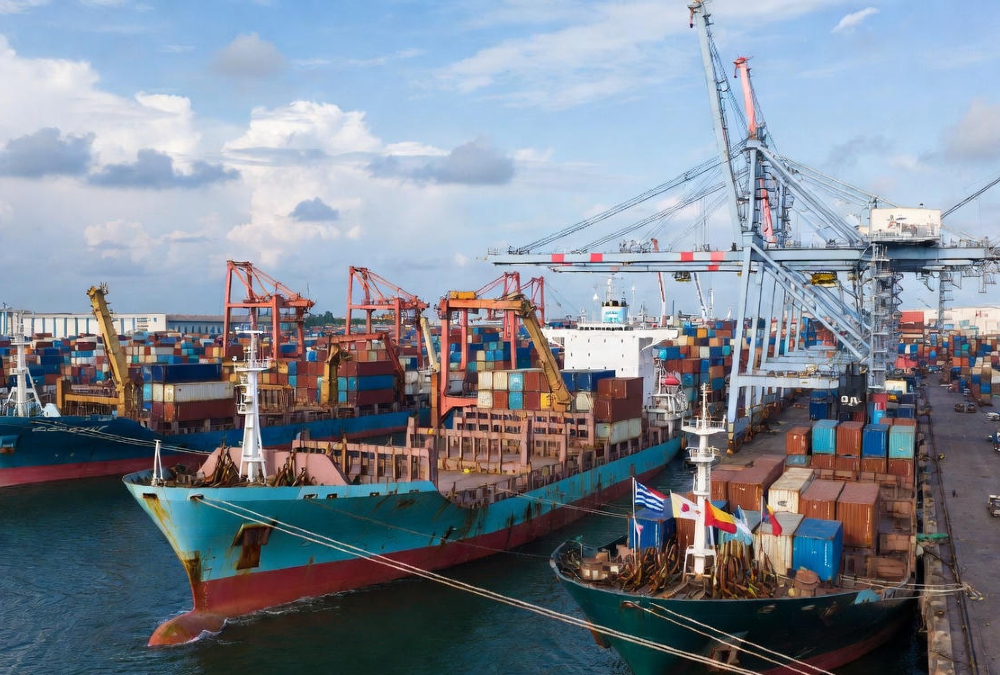
Nigeria’s maritime sector has delivered a striking performance in early 2025, with exports surging 12 percent in the first half of the year to reach US$29.9 billion – a figure that signals more than mere statistical growth. This development represents a potential inflection point for Africa’s largest economy, one that could reshape investor sentiment and currency stability in ways that have eluded policymakers for years.
The drivers behind this expansion merit close examination. Foreign exchange reforms, long overdue and finally implemented with conviction, have created a more transparent trading environment that encourages legitimate export activity.
But the real catalyst has been the Dangote Refinery, whose impact extends far beyond its impressive industrial footprint. By dramatically increasing refined petroleum product exports, the facility has fundamentally altered Nigeria’s trade composition – transforming the country from a crude oil exporter dependent on imported fuels into a potential regional energy hub.
Diversification and Regional Leverage
Fertilizer and refined petroleum products now constitute an expanding proportion of Nigeria’s export portfolio, diversifying a revenue base that has historically relied too heavily on raw crude. This shift carries profound implications.
Refined products command better margins than crude oil, while fertilizer exports position Nigeria as a critical supplier to agricultural markets across West Africa and beyond.
The potential stabilization of the naira – Nigeria’s perpetually embattled currency – represents perhaps the most significant downstream effect. Sustained export growth generates the foreign exchange inflows that have been chronically insufficient, potentially breaking the cycle of devaluation and import-driven inflation that has plagued Nigerian consumers and businesses alike.
Should these trends persist, the naira could finally achieve the stability that multiple administrations have promised but failed to deliver.
Investor confidence, that most elusive of economic intangibles, may follow. International capital has long viewed Nigeria with a mixture of attraction and trepidation – drawn by market size and potential, repelled by policy inconsistency and currency risk.
Demonstrable export growth backed by industrial capacity rather than merely commodity price fluctuations could alter this calculus substantially.
Cautious Optimism in a Volatile Landscape
Yet caution remains warranted. Six months of data, however encouraging, do not constitute a permanent transformation.
Nigeria’s economic history is littered with false dawns and reform initiatives that withered under political pressure or implementation failures.
The test will be whether these gains can be sustained through commodity price cycles, political transitions, and the inevitable challenges of maintaining infrastructure and competitive advantage.
The maritime export surge of 2025 may well be remembered as the moment Nigeria’s economy turned a corner – or as another promising trend that failed to consolidate. The difference will depend entirely on whether policymakers can maintain reform momentum and whether the Dangote Refinery represents the first of many such industrial investments rather than an isolated achievement.
For now, the data offers genuine grounds for optimism, tempered by the hard-earned skepticism that Nigeria’s economic journey has taught observers over decades.
Des H Rikhotso (PgDip-BA, MBL) is a seasoned C-suite Multi-Industry business executive with 25+ years of Business Leadership Experience across the South, East and Western Sub-Sahara Africa Region. Based in Kampala, Uganda he serves as East Africa Region Business Executive, driving Business Strategic Growth and Operational Excellence – contributing his Leadership Voice and Clarity to the Region. Des has held Business Leadership roles at BMW Group Africa, Volkswagen Group Africa, Peugeot Motors South Africa, Toyota/Lexus South Africa, Nissan Group of Africa, G.U.D Holdings (Africa Exports Operations Division) and The HDR Group of Companies. He holds Under-Graduate and Post-Graduate business degrees from the University of the Western Cape, Wits University (Wits Business School) and the University of South Africa.
