
Opinion
Implications of the French presidential election on the Caribbean and the world
By Alicia Nicholls
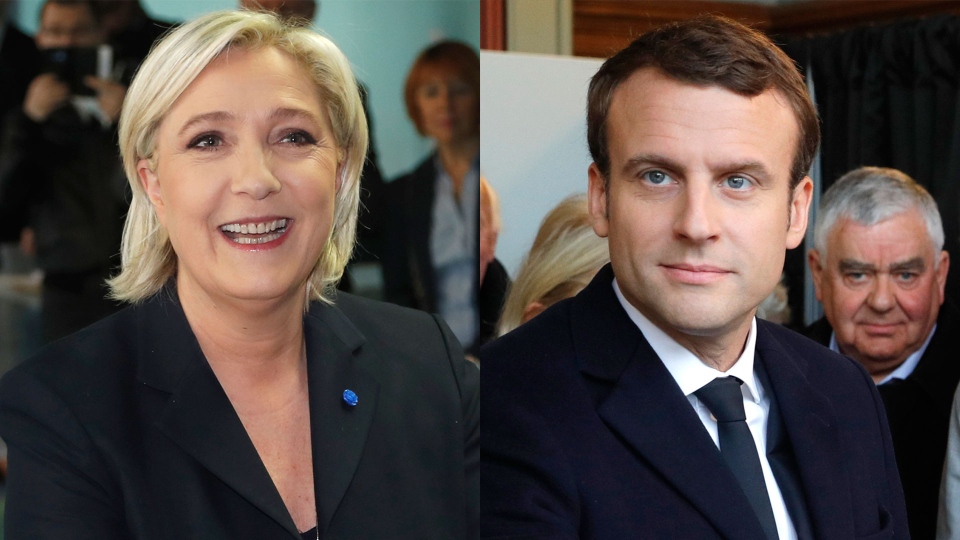
The results of the 1st round of voting in the 2-round French presidential elections are in! Pro-European Union businessman Emmanuel Macron and far-right candidate Marine Le Pen are the 2 candidates who will face off in the final round of voting in the next few days.
French presidential elections do not normally attract this much fanfare internationally, but the results of the first round of the 2017 race are interesting for 2 main reasons.
– The first is that there is a 50 percent chance that there could be a Le Pen presidency which would add to a growing string of political upsets globally.
– The second is that neither candidate is from the mainstream political parties in France, a firm rejection by the French people of the entrenched political establishment – not unlike what occurred in the United States with the election of Donald Trump.
France has a 2-ballot presidential election system which means that in the event of no one candidate winning over 50 percent of the votes in the 1st ballot, the 2 front-runners have to face off against each other in a 2nd ballot. As of the time of this article’s writing, Emmanuel Macron won this first run-off with 23.86 percent of the vote, while Le Pen came second with 21.43 percent, beating the other candidates.
France at the moment is facing lackluster gross domestic product (GDP) growth, high unemployment, high debt and an increase in high-profile and deadly terrorist attacks, which means the anti-establishment, anti-business as usual mood comes as no surprise. Incumbent President, Francois Hollande, currently faces low approval ratings and has decided not to seek a 2nd term.
Who are the candidates?
While Macron and Le Pen are “outsiders” from the political mainstream, both candidates represent 2 diametrically opposed worldviews.
Emmanuel Macron is a former investment banker who has never held elected office, but had worked for Francois Hollande during the 2012 Presidential Election campaign. He also subsequently served as Minister of Economy, Industry and Digital Affairs under then Prime Minister Manuel Valls in 2014 until August 2016. He (Macron) founded his own party En Marche! in April 2016 which currently has 253,907 members, according to the Party’s official website. The centrist Macron is pro-Europe, socially liberal and believes that France’s prosperity can be ensured through pursuing pro-trade and outward-looking policies and through continued membership in the European Union (EU).
Marine Le Pen is a lawyer, a Member of the European Parliament since 2009 and has been the leader of the populist Front National – a far-right party – which had been on the dark fringes of French politics until recently. She is the daughter of Front National co-founder, Jean Marie Le Pen, a far-right ethno-nationalist. She has sought to distance herself from some of her father’s most extreme views as she worked to broaden the Party’s appeal, and succeeded in having him ousted from the party.
Marine Le Pen, however, has strongly anti-immigrant, anti-EU views and has expressed enthusiastic support of both Brexit in the U.K., and the election of Donald Trump in the United States.
The polarity in the views of the 2 candidates means that the election of either will have completely opposite global implications.
What is at stake with the French presidential election?
Although polls are showing a Macron victory, Le Pen still has a chance of winning the final run-off on May 7.
A Le Pen victory on May 7th would be the continuation of a nationalist, inward-looking turn in advanced western economies, with both economic and geopolitical implications. Domestically, she has indicated her intention to pursue protectionist economic policies and champion anti-immigration reforms. She is anti-globalization and anti-free trade. She has vowed that she would pull France from the EU and the Eurozone, and the North Atlantic Treaty Organization (NATO).
She has voiced her intention to strengthen relations with Russia and had forcefully condemned the EU decision to extend its sanctions on Russia until mid-2017.
In their forecasts for the global economy and world trade respectively, both the International Monetary Fund (IMF) and the World Trade Organisation (WTO) have forecast higher growth rates but noted the vulnerability of the forecast growth to trade, monetary and other policies pursued by governments. IMF Managing Director, Christine Lagarde – who is a former French Minister of Finance – has been reported as stating that a Le Pen presidency could lead to political and economic upheaval.
First, France is the world’s 6th largest economy. A founding member of the EU, it is also the Eurozone’s 2nd largest economy. A more isolationist France would impact on the global economy and have implications for western approaches to current global threats and a reshaping of global alliances. Moreover, a French withdrawal from the EU (termed ‘Frexit‘), coming on the heels of the UK’s withdrawal from same, could plunge the EU into an existential crisis more so than Brexit would.
How does the French election impact the Caribbean?
Will there be any implications of a possible Le Pen presidency for the Caribbean? The specifics of Le Pen’s policies are still not fleshed out. However, a French withdrawal from the EU would reduce the amount of EU development assistance which the region currently receives under the European Development Fund (EDF).
What about trade? – Thanks to the Economic Partnership Agreement (EPA) signed between the EU and CARIFORUM in 2008, the countries which make up CARIFORUM (CARICOM plus the Dominican Republic) currently enjoy preferential market access for their goods and services to the EU market, including to the French market and to French Caribbean Outermost Regions (FCORs), by extension.
However, should France leave the EU, it would no longer be a party to the EPA. On its own, the lack of preferential access to the French market would be unlikely to have any significant economic impact on the anglophone Caribbean trade-wise as the volume of trade between English-speaking Caribbean countries and metropolitan France is limited.
There are, however, small but growing trade links between some CARICOM countries and the FCORs, which include French Guiana, Guadeloupe and Martinique.
Martinique, for example, is one of the most important source markets for tourists to St. Lucia.
While there are issues which have inhibited greater CARIFORUM trade with FCORs including the language barrier and the ‘octroi de mer‘ (dock dues) charged on all imports into FCORs (despite the EPA), the FCORs are also seen as stepping stones for exporting to continental Europe using the EPA. A French withdrawal from the EU if Le Pen wins means the latter will not be possible.
It is the democratic right of the French populace to choose which of the 2 candidates is in their country’s best interests. However, given France’s economic and geopolitical importance globally, and the political upsets of late, the results of the final round on May 7 will reverberate far beyond its borders.
Barbados’ Alicia Nicholls is a lawyer and trade and development consultant, with a keen interest in sustainable development, international law and trade. The original version of this article was published on her blog.
