
Opinion
Guyana: It is boom or bust – as the country is on the cusp of major oil production
By Mac Margolis
Guyana with a population of less than 750,000 people and a per capita income of US$4,300, is the smallest nation in the Caribbean and Latin American region.
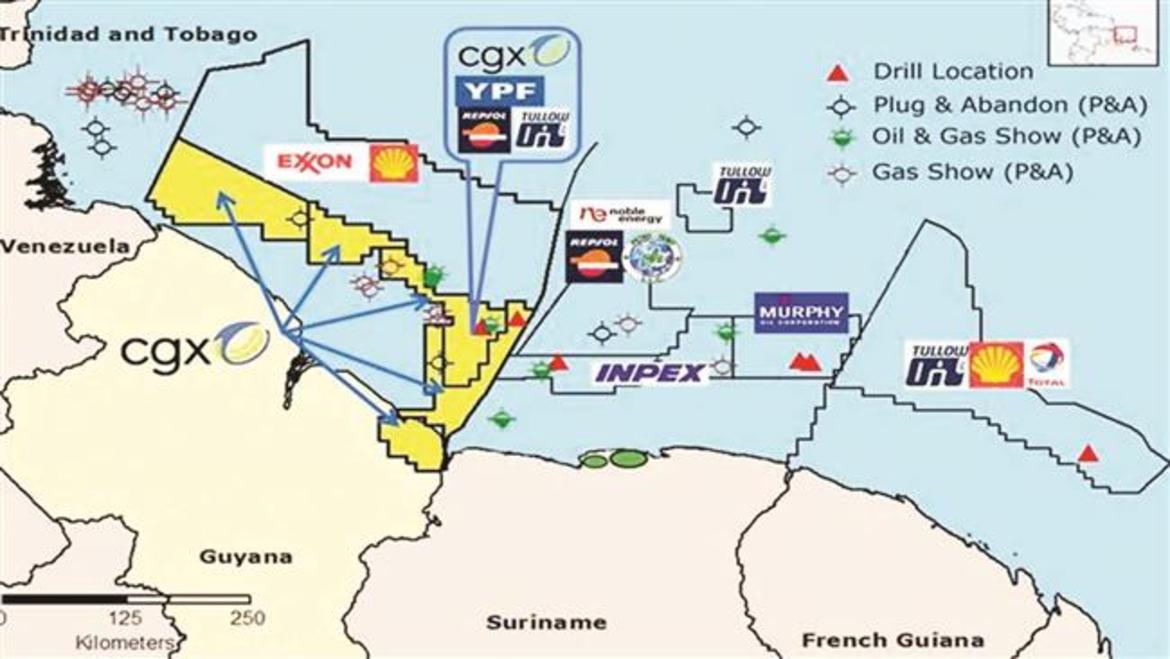
The country’s economy is set to change dramatically, having struck big oil offshore starting in 2015. Industry experts estimate total reserves at around 2 billion barrels.
That bounty could make Guyana immeasurably rich and the region’s biggest producer in less than a decade – or just another “Trump-hole“.
History abounds with tales of raw-material bonanzas turned into, at best, a mixed blessing for poor countries. Corruption (think Venezuela and Nigeria), life support for dictators: The gift of oil comes with many afflictions. A classic International Monetary Fund (IMF) study found that living conditions in oil-rich nations in sub-Saharan Africa were no better or worse than countries without oil.
“Equatorial Guinea comes to mind,” Rice University energy scholar Francisco Monaldi told me, in reference to the Central African dictatorship which, after striking oil in the 1990s, went in a matter of years from desperately poor to desperately rich.
“We know historically that if you are poorly managed when you received the windfall, you will likely have difficulty capitalizing your bounty for development,” said Monaldi.
The example is not lost on Guyana, which has a vibrant democracy, but frail institutions and admittedly scarce human capital to manage the coming wealth.
“Guyana has almost zero capacity now for dealing with oil and gas,” Jan Mangal, petroleum adviser to President David Granger, said recently at the University of Guyana.
While officials in the country’s capital Georgetown, quickly disavowed Mangal, his comments were hard to ignore. With major oil set to flow as soon as 2020, authorities are bracing both for the shock of wealth and its’ attendant woes.
The bounty will not come all at once: Exxon and other producers will use most of the early oil to pay down startup costs. But that will only delay the impact. “It is like drinking from a fire hose right now,” says Vincent Adams, a Guyanese engineer.
One of the biggest challenges is who will manage the gusher. Guyana is a nation of emigrants. Some 463,000 Guyanese, or 60 percent of its population, live abroad, and the outflow continues apace. What’s worse, the leavers have included roughly 9 of every 10 graduates with higher education – energy experts and oil engineers among them – according to the World Bank. “The cream of the crop migrated,” said Adams. “In terms of local capacity, we are at a serious disadvantage.”
Guyana could attenuate the brain drain by reaching out to its diaspora. There are more than 100 reported expatriate organizations, and as a group overseas Guyanese consistently send more money back home than foreign investors plow into the economy every year, according to a recent study by Hisakhana Pahoona Corbin and Luis Eduardo Aragon of the Center for Advanced Amazonian Studies. “We have a repository of knowledge outside of Guyana which is amazing,” said Adams.
The government belatedly began to tap this talent pool, launching an official Guyana Diaspora Project in late 2012, but the effort has been criticized as timid. In spite of this potential, few institutional arrangements have been put in place to better engage the diaspora or to unlock their potentials as an alternative for accelerating development.
Granted, Guyana will have some help. The Extractive Industries Transparency Initiative is counseling officials on how to avert corruption. Multilateral lenders are training the Guyanese to develop an investment plan and mitigate the fiscal risk of the oil boom. “The sudden inflow of wealth could become a tsunami, and if it is not managed well, could leave a dire situation,” Ramon Espinasa, general coordinator of the Extractive Sector Initiative at the Inter-American Development Bank, said in an interview.
Big Oil also knows the stakes. Despite the familiar criticisms – “Dem know wha Exxon do to govt all over de world,” one marquee local columnist warned in a mock patois – drillers have every reason to make sure their investment is safe.
The hardest part will be down to the host country, of course. “Until recently, small countries like ours were sheltered by benefactors in the east or west. Now the Berlin Wall is gone and the protectors have become our competitors, and we’re left to deal with the world markets,” said Adams.
That is the challenge the country’s emigrants faced when they remade their careers abroad. Now Guyana must reach out to its diaspora ringers and bring that lesson home.
