
Opinion
Dangote’s $1 Billion Bet in Zimbabwe: More Than Just a Pipeline

By Dr. Princess C. Mutisya
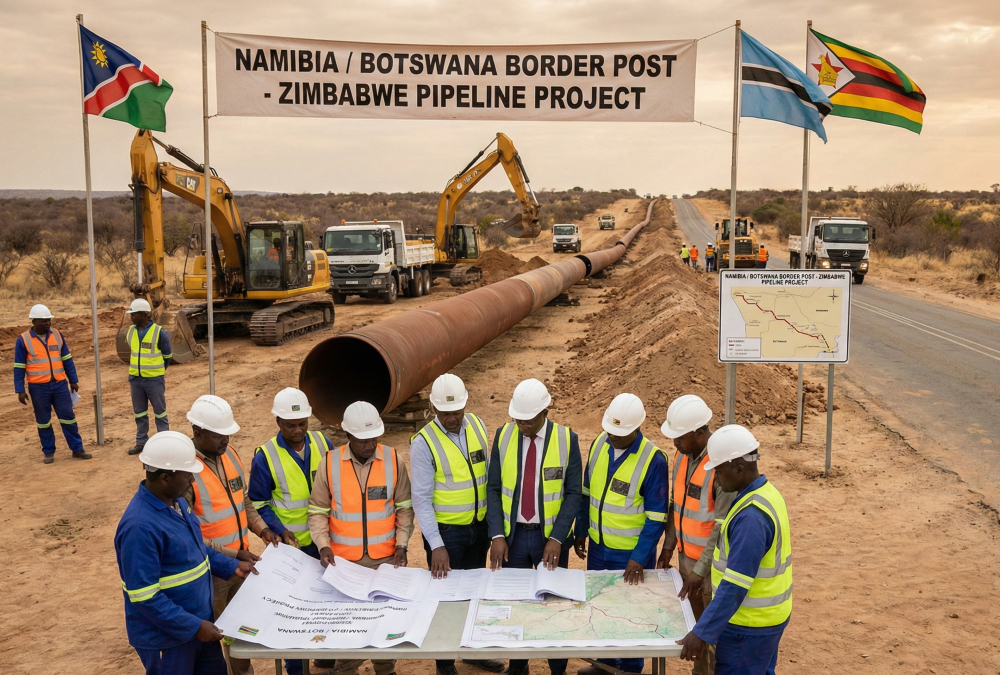
When Aliko Dangote announced a US$1 billion investment in Zimbabwe – centered on a 2,000-kilometer (1,243-mile) fuel pipeline stretching from Namibia’s Walvis Bay through Botswana and into Zimbabwe – it might have sounded like just another infrastructure play. But look closer.
This isn’t merely a pipeline project. It’s a high-stakes wager on whether Southern Africa’s legal frameworks, political will, and regional coordination can finally catch up with its economic ambition.
On the surface, the plan is straightforward: a cross-border pipeline to deliver refined fuels, flanked by parallel investments in fertilizer, power generation, and cement to catalyze Zimbabwe’s industrial revival. But stitch together Nigerian capital, a strategic Namibian port, Botswana’s transit corridors, and Zimbabwe’s urgent energy demands, and you have got something far more complex than logistics.
You have got strategy – geopolitical, financial, and institutional.
The Real Foundation Isn’t Steel – It’s Agreements
Here’s what press releases won’t tell you: cross-border energy infrastructure isn’t built by engineers first. It’s built by diplomats, lawyers, and regulators.
Long before the first weld is made, three governments must align – and stay aligned – on a host of thorny issues: transit rights, safety protocols, tariff structures, land access, and continuity across election cycles. And that alignment must hold for decades, not years.
Then come the investor-state assurances: 20- to 30-year commitments to regulatory stability, predictable taxation, trusted dispute-resolution mechanisms, enforceable step-in rights, and clear rules on how policy can evolve without gutting project economics. Without these, even the most technically sound venture becomes a stranded asset.
Community Trust Is Infrastructure, Too
But the real test lies beneath the steel: the 2,000 kilometers (1,243 miles) of pipeline will cut through farms, villages, grazing lands, and fragile ecosystems. If easement agreements are rushed, compensation is opaque, or community protections are weak, failure won’t come from a spreadsheet – it will come from a protest, a court injunction, or a blocked access road.
In infrastructure, local trust isn’t optional; it’s foundational.
Meanwhile, in the data rooms of global lenders and equity partners, the due diligence questions are even sharper:
- What happens when revenues flow in local currencies but debt service is due in dollars?
- Can three sovereigns credibly commit to a unified tariff model that satisfies international lenders?
- How do you secure enforceable collateral over a linear asset that traverses multiple legal jurisdictions?
- Who guarantees minimum throughput – and at what price?
A Vote of Confidence – With Conditions
And let’s not forget the ghosts in the room. Dangote evaluated Zimbabwe before – and walked away.
His return now signals more than opportunity; it’s a verdict. Investors remember broken promises, but they also reward progress.
Clearer policy signals, stronger institutions, and a demonstrable shift toward rule of law aren’t just governance talking points – they are investor magnets.
For African governments, this is the wake-up call: stability, transparency, and legal predictability aren’t bureaucratic luxuries. They are your competitive advantage in a world racing to reroute supply chains and diversify energy security.
For boards from Lagos to Riyadh: are you still assessing African opportunities as if they exist within neat national borders? The most transformative – and risky – prospects today are inherently cross-border, demanding integrated thinking across finance, law, and diplomacy.
If Southern Africa gets the architecture right – legal, financial, and social – Dangote’s US$1 billion could become the blueprint for the region’s next decade of growth. If not, it will join the long list of projects that proved easier to announce than to sustain.
Because in infrastructure, the hard part isn’t building it. It’s keeping three governments, three legal systems, and three economies rowing in the same direction long enough for it to actually work.
Dr. Princess C. Mutisya is a Strategic Legal Architect, author, and international business leader with more than 14 years of cross-border experience across Africa and the UAE. She is the Founder & CEO of CR Advocates LLP (Kenya) and CR Advocates Consultants LLC (UAE)among other leadership Roles. A recipient of Doctor of Laws (LLD) in International Legal Strategy and Doctor of Business Administration (DBA) in International Business & Global Transformation, Dr. Mutisya is an expert in international trade and investment law, advising governments, DFIs, and multinationals on investment law, sovereign frameworks, PPP structuring, Corporate Governance, trade facilitation, energy and infrastructure projects, real estate ventures, and private wealth structuring across Africa-GCC corridors. Beyond her legal and business enterprises, she is a global speaker and thought leader on economic diplomacy, policy innovation, and Africa’s emerging investment architecture.
