
Opinion
Could Africa Be the World’s Next Manufacturing Powerhouse?

By Dishant Shah
When we think of low-cost manufacturing hubs, Asia often dominates the conversation. But what if the next big player wasn’t in Asia at all?
What if it was Africa?
It might sound like a bold prediction, but hear us out – Africa has everything global manufacturers are clamoring for: affordable labor, abundant natural resources, rapidly growing domestic markets, and a young, dynamic workforce ready to take on the world.
The median age in Africa is just 19 – the youngest of any continent. Compare that to China, where the median age is now 39 and climbing.
This demographic shift is reshaping the global manufacturing landscape. Many Asian countries that once powered the world’s supply chains – China, Vietnam, Bangladesh – are grappling with rising labor costs, urban saturation, and aging populations.
Meanwhile, Africa is just getting started.
A Young Workforce and Untapped Potential
By 2035, according to McKinsey & Company, Africa will boast the world’s largest working-age population – around 1.1 billion people. And it’s not just about sheer numbers.
Wages in many African nations remain a fraction of those in Asia. For instance, in Ethiopia, the average monthly wage in manufacturing hovers between US$50 and US$60 – significantly lower than the US$150 to US$200 range seen in India or Vietnam.
But Africa’s appeal extends far beyond cheap labor. The continent holds nearly 30 percent of the world’s mineral reserves, including critical materials like copper, cobalt, and lithium – key components for electronics, electric vehicles, and clean energy technologies.
Why ship raw materials abroad when Africa could process and manufacture them locally?
The question isn’t whether Africa can become the next manufacturing powerhouse – it’s whether the world is ready for it. As Asia’s dominance faces challenges from rising costs and demographic shifts, Africa stands poised to step into the spotlight.
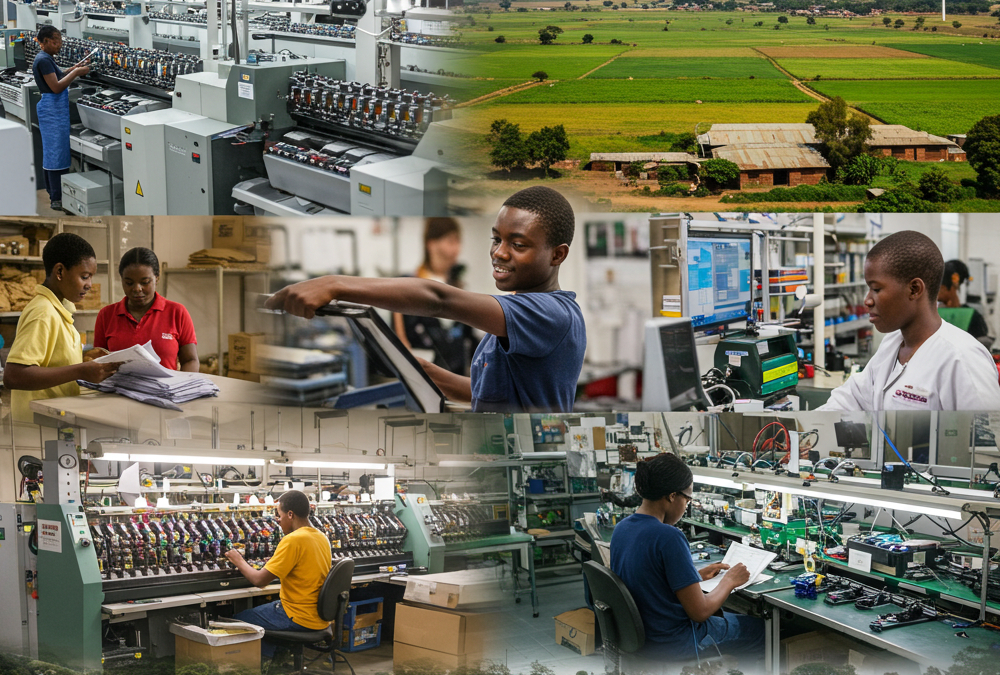
Some African nations are already making strides. Rwanda and Ethiopia are quietly emerging as light manufacturing hubs.
Chinese textile firms have set up shop in industrial parks in Addis Ababa, producing garments for export. Morocco is carving out a niche in electric vehicle (EV) parts, exporting them directly to Europe.
Meanwhile, Ghana and Kenya are gaining attention for their burgeoning tech manufacturing and agri-processing sectors.
Challenges and Opportunities Ahead
So, what’s holding Africa back? It’s not potential – it’s infrastructure, power, logistics, and policy clarity.
Moving goods across African borders can sometimes be more expensive than shipping them to Europe. Roads, railways, and ports need significant investment.
However, progress is underway. The African Continental Free Trade Area (AfCFTA), launched in 2021, is a game-changer.
If implemented effectively, it could reduce intra-African trade costs by over 16 percent, according to the United Nations Economic Commission for Africa.
Then there’s the issue of power. Manufacturing requires reliable electricity, yet many African countries still grapple with frequent outages.
Renewable energy could be the solution. Africa boasts some of the highest solar energy potential in the world, and the cost of solar technology continues to plummet.
With strategic investments in renewables, the continent could power its manufacturing ambitions sustainably.
With the right mix of investment, infrastructure development, and smart trade policies, Africa has a real shot at becoming a low-cost manufacturing hub – not just for its own consumption, but for the global market. Imagine an Africa that doesn’t just export raw materials, but finished products too.
From textiles to electronics, EV components to processed agricultural goods, the possibilities are vast.
The question isn’t whether Africa can become the next manufacturing powerhouse – it’s whether the world is ready for it. As Asia’s dominance faces challenges from rising costs and demographic shifts, Africa stands poised to step into the spotlight.
The only question left is: who will seize the opportunity first?
Is the world ready for an Africa that exports innovation, not just resources?
Dishant Shah is a partner at Legion Exim, a company specializing in facilitating the export of high-quality engineering products directly sourced from manufacturers in India to Africa. His areas of expertise include new business development and business management.
