
Opinion
China’s Zero-Tariff Policy and Africa’s Shifting Economic Landscape

By Des H Rikhotso
Despite geopolitical headwinds and persistent challenges, African economies are demonstrating remarkable adaptability and growth potential.
The narrative surrounding Africa’s economic prospects has long oscillated between unbridled optimism and cautionary pessimism. Yet recent developments across the continent suggest a more nuanced reality: Africa is quietly building economic resilience through diversified partnerships, sectoral growth, and strategic positioning in an increasingly multipolar world.
From China’s sweeping tariff elimination to South Africa’s tourism renaissance and Ethiopia’s aviation success, the continent is crafting its own path forward – one that defies simplistic characterizations.
Strategic Partnerships on Africa’s Terms
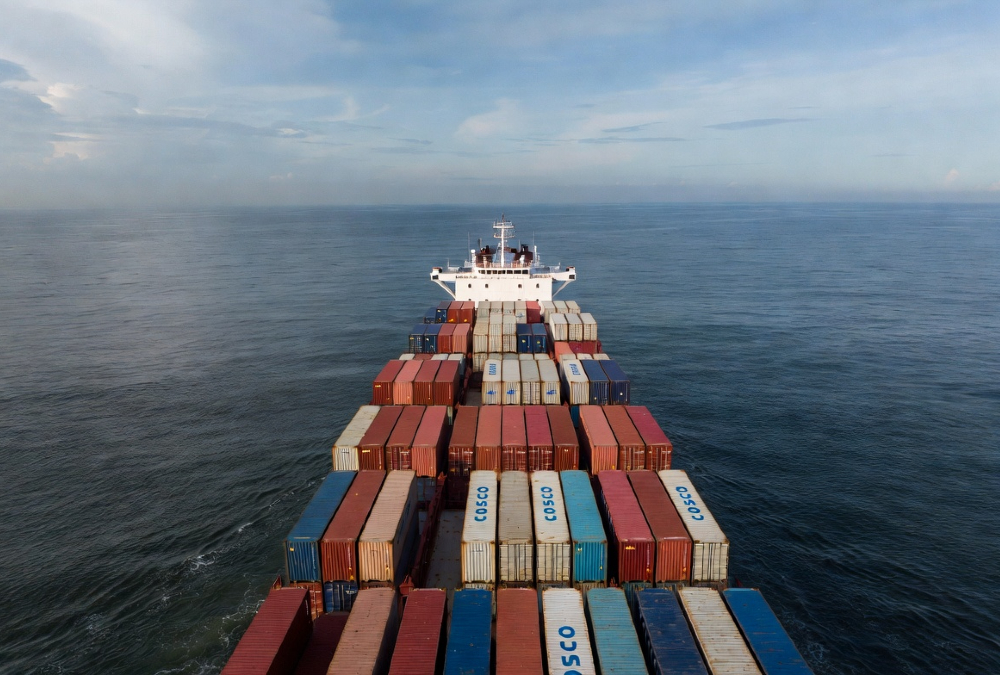
China’s announcement of a zero-tariff policy for imports from 53 African nations, set to take effect in May 2026, represents more than mere trade liberalization. By removing tariffs on nearly all items from participating countries – with only Eswatini excluded due to its diplomatic recognition of Taiwan – Beijing is making its most comprehensive economic overture to the continent yet.
This policy expands previous arrangements and could fundamentally reshape commercial flows that already reached US$222 billion in early 2025.
Critics will rightly note that Africa continues to experience a significant trade deficit with China, driven largely by the continent’s reliance on raw material exports while importing manufactured goods. This imbalance reflects the structural challenges that have long constrained African industrialization.
However, dismissing the tariff elimination as neocolonialism overlooks African agency in these arrangements. Many African governments view Chinese engagement as an opportunity to diversify away from traditional Western partnerships that have often come with stringent conditions and limited infrastructure investment.
The question is not whether China benefits from African resources – it clearly does – but whether African nations can leverage this engagement to build domestic manufacturing capacity, improve infrastructure, and gradually move up the value chain. The zero-tariff policy, if accompanied by technology transfer and industrial cooperation, could provide the breathing room for African exporters to develop more sophisticated products for the Chinese market.
Tourism as Economic Engine
While diplomatic maneuvering captures headlines, South Africa’s tourism sector offers a compelling case study in economic resilience. The country welcomed 10.5 million international visitors in 2025, surpassing pre-pandemic levels and generating revenue equivalent to nearly 9 percent of GDP while supporting 1.8 million jobs.
This achievement is particularly noteworthy given persistent global travel advisories citing safety concerns in South African cities.
Zimbabwe’s emergence as a leading source of visitors underscores the importance of regional integration and the growing purchasing power of African travelers themselves. The tourism boom also reveals an interesting geopolitical dimension: Russian arrivals experienced significant growth despite – or perhaps because of – Moscow’s increasing isolation from Western markets.
As traditional European tourists remained cautious, new markets filled the gap, demonstrating the sector’s adaptability.
This diversification of tourism sources mirrors broader economic trends across the continent. African nations are increasingly finding opportunities in the reconfiguration of global relationships, positioning themselves as alternative destinations for trade, investment, and strategic partnerships as great powers compete for influence.
Aviation’s Vertical Ascent
Ethiopian Airlines’ performance provides perhaps the most tangible evidence of Africa’s economic momentum. The carrier posted US$4.5 billion in half-year revenue, marking a 14 percent year-on-year increase, while transporting 10.64 million passengers and 451,000 tons of cargo within six months.
These figures are remarkable given the headwinds facing global aviation: aircraft shortages, geopolitical tensions, and operational restrictions including U.S. visa limitations.
The airline’s success reflects strategic vision rather than fortunate circumstances. Ethiopian Airlines has consistently invested in modern fleets, expanded routes, and positioned Addis Ababa as a continental hub connecting Africa to global markets.
The carrier’s commitment to its Vision 2035 expansion strategy, even amid global turbulence, demonstrates the kind of long-term planning that separates resilient institutions from those perpetually in crisis mode.
Yet the contrast with Kenya Airways is instructive. The Kenyan flag carrier is now being offered to foreign investors for approximately US$2 billion, following years of financial struggles despite a 2017 debt-to-equity conversion that left the government holding 48.9 percent and banks controlling 38.1 percent through a special vehicle.
The divergent fortunes of these two airlines highlight that African success stories are not inevitable – they require sound management, strategic positioning, and sometimes difficult reforms.
The Geopolitical Dimension
Russia’s expanding diplomatic and strategic presence across Africa adds another layer to the continent’s evolving economic landscape. Moscow is reallocating envoys previously stationed in Europe to reinforce its influence across African nations, a shift driven by deteriorating relationships with Western powers.
Key partnerships are developing in security, economic agreements, and nuclear energy infrastructure, with countries including Niger, Mali, and Burkina Faso demonstrating deepening security collaborations involving military training and equipment provisions.
This Russian pivot reflects Africa’s growing importance in global strategic calculations. For African nations, diversified partnerships – whether with China, Russia, or traditional Western allies – provide negotiating leverage and options that were unavailable during the Cold War era when the continent was often viewed as a passive theater for superpower competition.
Challenges Remain, But Agency Grows
None of this suggests that Africa’s economic challenges have evaporated. Structural issues including limited manufacturing capacity, infrastructure deficits, governance challenges, and vulnerability to commodity price fluctuations continue to constrain growth potential.
The China trade deficit exemplifies how resource-dependent economies remain vulnerable to terms-of-trade shocks and struggle to capture value from their natural wealth.
However, what distinguishes the current moment is African agency in navigating these challenges. Nations are strategically selecting partners, negotiating terms, and building institutions – like Ethiopian Airlines – that compete globally.
Tourism sectors are adapting to shifting visitor profiles, and governments are making difficult decisions about state-owned enterprises, as Kenya’s move to privatize its national carrier demonstrates.
The Path Forward
Africa’s economic resilience is not about achieving uniformly high growth rates or eliminating all challenges overnight. It is about diversifying partnerships, building competitive sectors, and making strategic choices that expand future options.
The zero-tariff policy with China, South Africa’s tourism success, and Ethiopian Airlines’ growth all represent different facets of this resilience.
The continent’s economic trajectory will depend on whether African nations can convert diplomatic competition into developmental gains, transform tourism revenue into broader economic opportunities, and replicate aviation success stories across other sectors. Early indicators suggest that many are doing exactly that – not perfectly, but progressively.
As global power dynamics shift and traditional alliances reconfigure, Africa is positioning itself not as a passive recipient of great power attention, but as an active participant shaping its economic future. That represents resilience of the most meaningful kind: the capacity not merely to withstand shocks, but to adapt, innovate, and advance despite them. The world would do well to pay attention.
Des H Rikhotso (PgDip-BA, MBL) is a seasoned C-suite Multi-Industry business executive with 25+ years of Business Leadership Experience across the South, East and Western Sub-Sahara Africa Region. Based in Kampala, Uganda he serves as East Africa Region Business Executive, driving Business Strategic Growth and Operational Excellence – contributing his Leadership Voice and Clarity to the Region. Des has held Business Leadership roles at BMW Group Africa, Volkswagen Group Africa, Peugeot Motors South Africa, Toyota/Lexus South Africa, Nissan Group of Africa, G.U.D Holdings (Africa Exports Operations Division) and The HDR Group of Companies. He holds Under-Graduate and Post-Graduate business degrees from the University of the Western Cape, Wits University (Wits Business School) and the University of South Africa.
