
Opinion
Benin: Africa’s Unlikely Answer to Singapore

By Mark-Anthony Johnson
Can a West African nation plagued by poverty replicate Asia’s most audacious economic miracle?
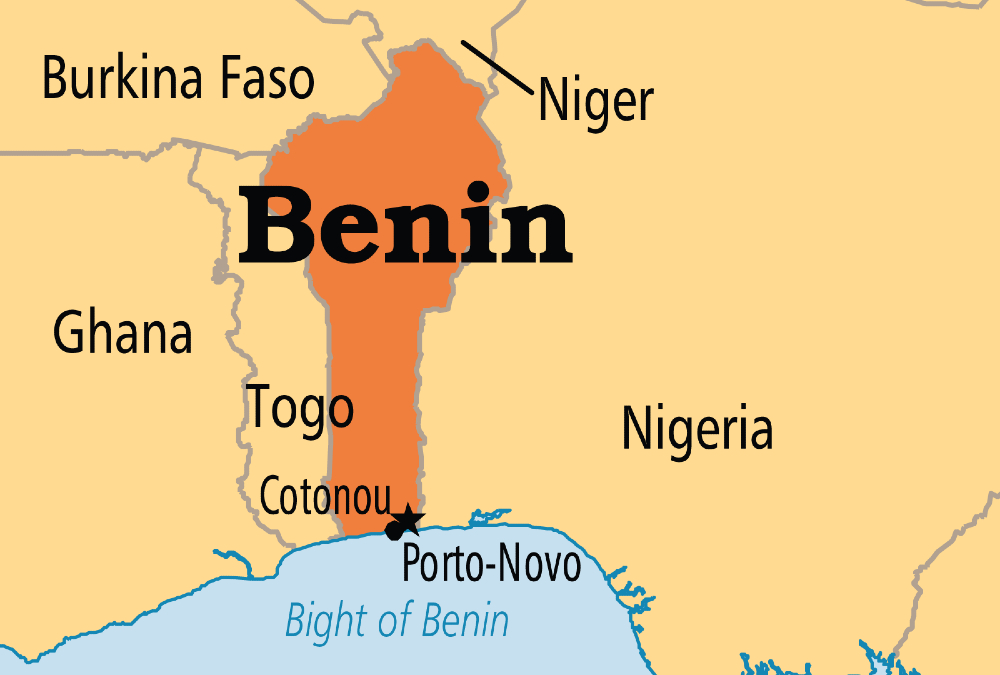
In the pantheon of ambitious national rebranding exercises, few comparisons carry more weight – or invite more skepticism – than invoking Singapore. Yet Benin, a slender West African nation wedged between Togo and Nigeria, has begun styling itself as precisely that: the “New Singapore of Africa.”
Under President Patrice Talon’s leadership, this former French colony of 13 million people is pursuing an audacious transformation that has turned Cotonou, its commercial capital, into something approaching a West African showcase of modernity.
A Capital Transformed
The transformation is visible to anyone arriving at Cotonou’s refurbished airport or driving along newly paved roads that would have been potholed quagmires a decade ago. The city has earned a reputation – remarkable by regional standards – for cleanliness and organization.
A sprawling “ministerial city” is rising from the ground, while the Glo-Djigbé Special Economic Zone promises to attract manufacturing investment. The government’s “SMART GOUV” initiative is digitizing public administration at a pace that would impress bureaucrats in far wealthier nations, with digital services projected to contribute over US$210 million to GDP by 2028.
The macroeconomic indicators tell an impressive story. Real GDP growth hit 7.5 percent in 2025 and is forecast to sustain above 6 percent through 2027 – figures that significantly outpace West African averages.
The government has integrated artificial intelligence into priority sectors and is pushing hard to diversify beyond cotton, the crop that has historically defined Beninese exports, toward agriculture, tourism, and services.
The Reality Behind the Numbers
Yet the Singapore comparison, while flattering, exposes the profound gulf between aspiration and reality. Singapore transformed itself from a colonial backwater into a First World metropolis within a generation, achieving GDP per capita exceeding US$80,000.
Benin’s GDP per capita languishes around US$1,500 to US$1,640, making it one of the world’s poorest nations. Despite impressive headline growth, poverty reduction has lagged woefully behind capital accumulation.
The gleaming infrastructure projects in Cotonou tell only part of the story; venture beyond the capital and you encounter a country where the majority still struggles with basic subsistence.
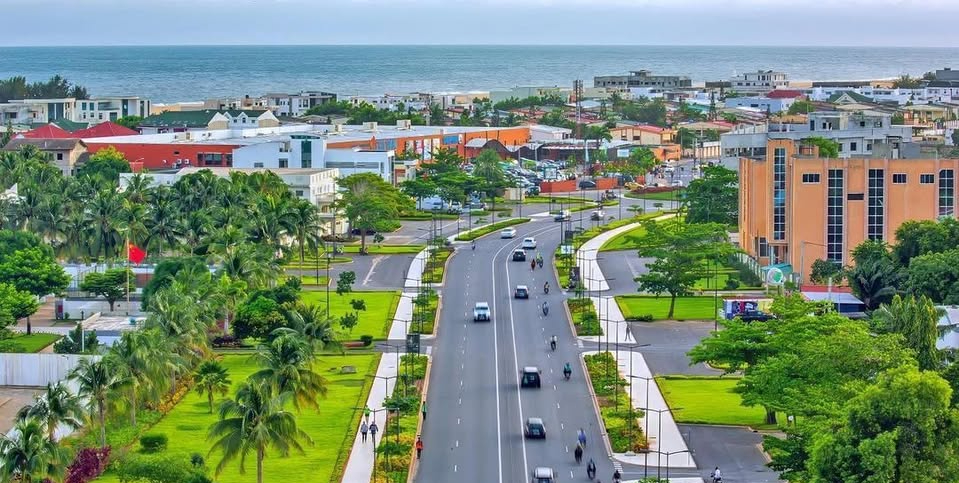
Avenue in Cotonou, Benin. The city has been noted for its significant infrastructure projects and organized environment.
Institutional Resilience Tested
The political context adds further complexity. In December 2025, Lieutenant Colonel Pascal Tigri led a group of soldiers in an attempted coup that was swiftly crushed by loyalist forces with support from ECOWAS and Nigeria.
The failure was taken by observers as evidence of institutional resilience, particularly when contrasted with neighboring Sahel nations that have succumbed to military rule.
But coups – even failed ones – rarely occur in stable, prosperous societies. They are symptoms of underlying tensions: between haves and have-nots, between regions, between those benefiting from growth and those left behind.
President Talon, having served two terms, is expected to step down after the April 2026 elections, supporting Finance Minister Romuald Wadagni as his successor to maintain policy continuity. This orderly succession, if it materializes, would indeed distinguish Benin from much of ‘francophone Africa’, where leaders often cling to power by rewriting constitutions or manufacturing crises.
Yet the true test will come not in the transfer of power but in whether the next administration can translate macro-growth into tangible improvements in ordinary Beninese lives.
Why the Singapore Model Doesn’t Fit
Singapore’s success rested on several pillars that Benin cannot easily replicate. Lee Kuan Yew’s city-state enjoyed a strategic position as a maritime crossroads, a highly educated Chinese diaspora, and ruthless efficiency in rooting out corruption.
Benin has geography working partly in its favor – it serves as a corridor to landlocked Niger and provides an alternative route to Nigeria’s congested ports – but it lacks the human capital and institutional rigor that characterized Singapore’s rise. Corruption, while perhaps less endemic than in some neighbors, remains a persistent obstacle.
The comparison to Singapore may ultimately prove less useful than learning from more proximate examples. Rwanda, under Paul Kagame, has pursued a similar vision of authoritarian modernization with mixed results – economic growth and gleaming Kigali streets, but also political repression and unresolved regional tensions.
Ethiopia under the late Meles Zenawi showed how state-directed development could deliver rapid growth, only to see those gains threatened by ethnic conflict and authoritarianism’s inevitable brittleness.
Forging a Different Path
What Benin deserves credit for is attempting something difficult: using a combination of infrastructure investment, digitalization, and economic diversification to break the cycle of stagnation that traps so many African nations. The skepticism that greets the “New Singapore” moniker should not obscure genuine progress.
Cotonou is cleaner and better organized than it was. Growth rates are impressive. Institutional resilience appears stronger than in neighboring states succumbing to coups and chaos.
But Singapore’s transformation took place in a different era, under unique circumstances, and with advantages Benin does not possess. The real question is not whether Benin can become Singapore, but whether it can forge its own path to broadly shared prosperity – one that extends beyond Cotonou’s boulevards to the rural villages where most Beninese still live.
That would be an achievement worth celebrating, even if it lacks the rhetorical punch of comparisons to Asia’s gleaming city-state.
The verdict on Benin’s experiment will not be written in GDP growth rates or infrastructure projects, but in whether a poor farmer in the interior feels the benefits of development, whether a young graduate can find dignified employment, and whether political institutions can weather the storms that inevitably accompany rapid change. Those are harder metrics to quantify, and they are the ones that ultimately matter most.
Mark-Anthony Johnson is the founder and CEO of JIC Holdings, a global asset and investment management firm founded in 2009. With over 30 years of experience and strong ties to Africa, his investments span mining, infrastructure, power, shipping, commodities, agriculture, and fisheries. He is currently focused on developing farms across Africa, aiming to position the continent as the world’s breadbasket.
