
Opinion
Air transport in Africa: often not an option, but the only choice
By Danilo Desiderio
A recent report by the Konrad-Adenauer-Stiftung Institute analyzed the early trade experiences under the African Continental Free Trade Area (AfCFTA), emphasizing the importance of reducing transportation costs especially for agricultural goods to promote intra-African trade. The report detailed the experiences of various African nations under the AfCFTA Guided Trade Initiative, highlighting Rwanda’s strategy of consolidating shipments to lower air freight costs for exporting products like tea and coffee to Ghana.
The findings suggest that minimizing logistics and freight expenses is crucial for African exporters, particularly smaller businesses, to leverage economies of scale. However, it raises the question: why rely on air transport, the most expensive shipping option?
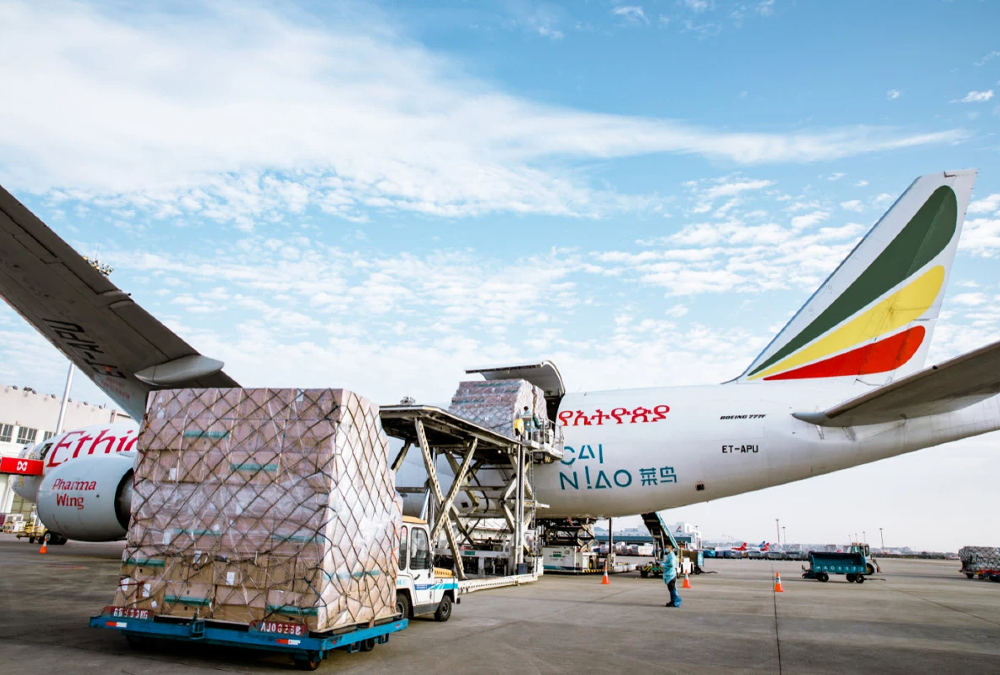
Africa, home to 16 landlocked countries, faces unique connectivity challenges due to limited infrastructure, such as roads, ports, and railways, connecting these nations to international markets. Consequently, air transport often becomes the default option, despite its high costs, especially for low-value goods like agricultural products that cannot easily absorb elevated shipping expenses.
These additional costs can significantly increase prices in destination markets, making African goods less competitive. A key strategy to alleviate these expenses is consolidating shipments to optimize airplane cargo space, resulting in lower rates.
On September 25, 2024, the Rwandan government supported six local companies in sending another consolidated shipment of agricultural goods to Ghana. This consignment included 400 kilograms of tea, 400 kilograms of coffee, and smaller quantities of higher-value products like 50 liters of honey and 100 liters of avocado oil.
To further streamline the process, Rwanda’s National Agricultural Export Development Board (NAEB) issued a single export license covering all products. This initiative could serve as a blueprint for other African countries aiming to reduce air transport costs. However, the question remains: will this be enough to make air-shipped goods competitive within Africa?
Given Africa’s geographical constraints and the large number of landlocked countries, air transport is more crucial on this continent than elsewhere. Africa is divided by 110 land borders, covering a total of 83,500 kilometers (51,884 miles) – over twice the circumference of the Earth.
To address these challenges, the African Union (AU) launched the Single African Air Transport Market (SAATM) as part of its Agenda 2063 to lower air transport costs and create a unified market for air transport services across the continent, benefiting both passengers and cargo. Despite this initiative, air transport remains underutilized in Africa.
According to UNECA, only 0.9 percent of African goods are traded within the continent by air, compared to 76.6 percent by road, 22.1 percent by sea, and 0.3 percent by rail. These figures underscore not only the limitations but also the potential for growth in the aviation sector.
African countries must urgently liberalize air transport, prioritizing national industry benefits over the interests of state-owned carriers.
Liberalizing air transport is also a key component of the Abuja Treaty (Article 61), which views it as essential for deeper economic integration across Africa. However, since the process began with the Yamoussoukro Declaration in 1988, progress has been slow. The initial roadmap aimed for full liberalization of air services within eight years by deregulating the sector and allowing transnational competition, but these goals have largely remained unmet.
Another declaration in 1999 sought to revive the initiative, yet substantial progress remains elusive.
The SAATM seeks to create a unified air transport market, enhancing connectivity between African nations and boosting trade, tourism, and investment in the aviation industry. Despite a 2015 resolution by the Assembly of Heads of States and Government urging AU members to accelerate the establishment of the SAATM by opening their air transport markets “immediately and without conditions,” progress has continued to lag.
Over 35 years after the first Yamoussoukro Declaration, many African countries still restrict their air service markets to protect national carriers, often state-owned airlines. This protectionism drives up air freight costs and dissuades African businesses from utilizing air transport, despite it being their most viable export option.
Interestingly, when shipments are handled by non-African airlines destined for markets outside the continent, the dynamics shift. These companies operate in a more liberalized environment, resulting in lower costs, which encourages African traders to focus on international rather than intra-African markets.
So, how much longer will this persist? While there is growing recognition of the importance of air transport in fostering economic integration and developing a more efficient aviation industry in Africa, the sector’s liberalization remains slow, primarily due to the lack of regional and national regulations to open the market. Rwanda’s initiatives are positive steps, but they are only part of a broader solution.
African countries must urgently liberalize air transport, prioritizing national industry benefits over the interests of state-owned carriers. A critical incentive to shift a portion of Africa’s external trade within the continent is to close the cost gap between extra-continental and intra-continental air transport.
Danilo Desiderio serves as the CEO of Desiderio Consultants Ltd in Nairobi, Kenya specializing in African customs, trade, and transport policies.
