
Opinion
Africa’s Next Trillion-Dollar Opportunity Isn’t in AI – It’s in Agribusiness
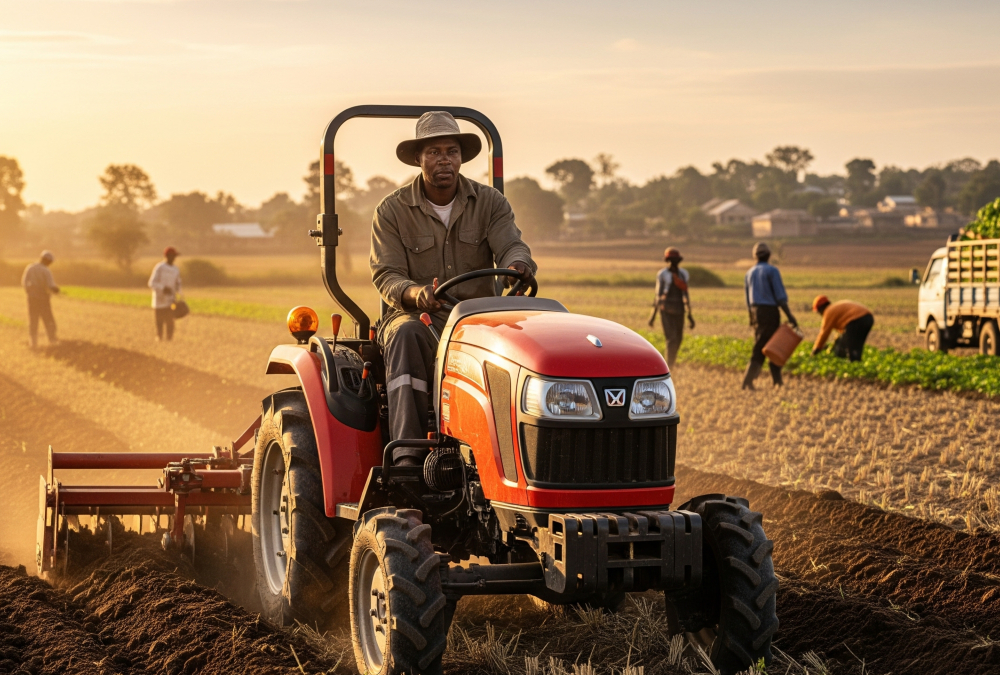

By Jean Claude Niyomugabo
While the world races to dominate artificial intelligence, a far more transformative revolution is quietly taking root across Africa – one that could reshape the continent’s economic future and redefine global food security.
It’s not happening in tech hubs or data centers. It’s unfolding in the soil.
Agribusiness is on track to become a US$1 trillion industry in Africa by 2030, according to the African Development Bank. Yet, paradoxically, the continent still imports over US$50 billion in food annually.
This contradiction isn’t a weakness – it’s a signal. A signal of untapped potential, inefficiency, and, above all, opportunity.
Africa holds 60 percent of the world’s uncultivated arable land, more than any other region on Earth. Its climate, biodiversity, and youthful workforce position it as the world’s next agricultural frontier.
But potential alone doesn’t feed people. Infrastructure does.
The Real Disruption Isn’t Digital – It’s Physical
While Silicon Valley and global investors pour billions into AI startups, Africa’s most impactful innovation may not come from algorithms – but from cold storage units, irrigation systems, grain silos, and rural supply chains.
The bottleneck isn’t land or labor. It’s logistics.
Millions of smallholder farmers – responsible for over 80 percent of Africa’s food production – lack reliable access to markets, credit, and modern farming technology. Post-harvest losses exceed 30 percent in some countries due to inadequate storage and transport.
That’s food that’s grown, but never eaten. That’s income lost before it reaches the farmer’s pocket.
The true wealth in African agribusiness lies not in apps or payment platforms – though they have their role – but in agricultural infrastructure. The next generation of African unicorns won’t just write code.
They will build bridges between farms and cities, connect harvests to supermarkets, and turn subsistence farming into scalable, sustainable enterprise.
From Subsistence to Scale: The Rise of the Agri-Entrepreneur
The future of African prosperity is being sown in fields, not server farms.
Visionary entrepreneurs are already stepping in. From drone-based crop monitoring in Kenya to solar-powered irrigation in Nigeria, and from blockchain-enabled supply chains in Ghana to decentralized grain storage in Ethiopia, innovation is redefining what agribusiness means on the continent.
But technology is only part of the equation. The real transformation will come when capital, policy, and entrepreneurship align to build integrated food systems – from seed to shelf.
Governments must prioritize rural infrastructure. Investors must look beyond tech fads and fund value-chain development.
And young innovators must recognize that solving Africa’s food puzzle isn’t just noble – it’s lucrative.
A US$1 Trillion Market Built on Necessity
This isn’t speculation. It’s driven by demographic and economic inevitability.
Africa’s population is projected to reach 2.5 billion by 2050. Urbanization is accelerating.
Diets are changing. The demand for safe, affordable, and nutritious food is rising faster than production can keep up.
Meanwhile, global food systems face mounting pressure from climate change, geopolitical instability, and supply chain fragility. Africa isn’t just a consumer of food security – it could become one of its primary providers.
The continent has the land. It has the labor. What it needs now is investment, vision, and execution.
The Next African Giants Will Be Agri-Innovators
The next wave of African billionaires won’t all come from fintech or e-commerce. Some will be the founders who cracked cold chain logistics.
The engineers who designed affordable farm machinery. The entrepreneurs who built regional processing hubs that turn cassava into flour, milk into powder, and tomatoes into paste – without spoilage.
They will be the ones who didn’t just digitize agriculture – but industrialized it.
This is more than an economic opportunity. It’s a chance to reduce poverty, create millions of jobs, and transform rural communities into engines of growth.
The world is chasing AI. But Africa’s future may be written not in lines of code – but in rows of crops.
The soil is ready. The time to build is now.
Jean Claude Niyomugabo is an entrepreneur and digital communication specialist with a strong passion for Africa’s development. He is dedicated to harnessing the power of social media to drive positive change and enhance livelihoods. With diverse interests and a strategic approach to digital engagement, he strives to create meaningful impact through innovation and connectivity.
