
Opinion
Africa’s Forgotten Gold: Why Palm Oil Should Be Our Priority Over Crude

By John Dale
In a striking reversal of economic logic, a barrel of palm oil is now more valuable than a barrel of crude oil. While global oil prices fluctuate under geopolitical tensions and energy transitions, one of Africa’s oldest agricultural treasures is quietly commanding premium prices across West Africa and beyond – and yet, Nigeria, once the world leader in palm oil production, watches from the sidelines as imports pour in and opportunity slips away.
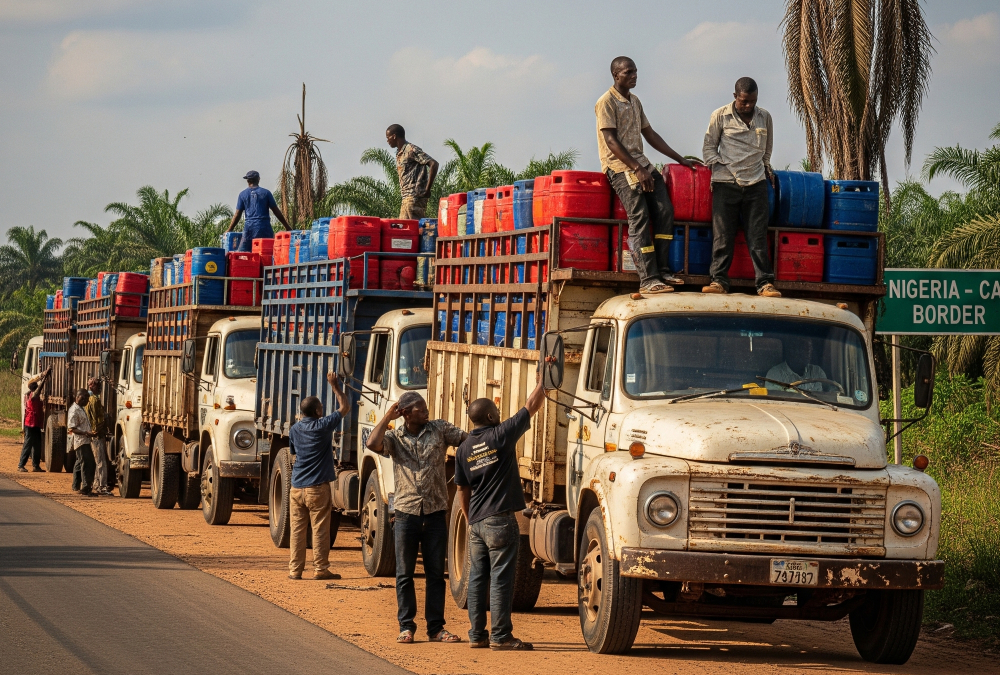
Consider this: in our cross-border trade operations, we move approximately ₦700 million (US$605,000) worth of crude palm oil every two weeks via truck convoys to northern Nigeria, where buyers from Niger, Chad, Cameroon, and Mali arrive to transport the cargo back to their countries for resale. Two weeks later, the empty kegs return – a testament to relentless regional demand.
This cycle repeats, unbroken, driven by a market that is not only active but hungry.
Globally, the palm oil industry is a powerhouse. In 2023 alone, Indonesia – with 15.9 million hectares under cultivation – earned US$22.9 billion from exports, with domestic consumption adding another US$16 billion. Malaysia and India are also major players, exporting refined and raw palm oil to markets worldwide.
Yet Nigeria – blessed with fertile land, a favorable climate, and a legacy as the world’s top palm oil producer in the 1960s – now spends over US$400 million annually importing palm oil: US$235 million from Malaysia, US$92.7 million from India, and US$68.2 million from Indonesia.
The Palm Oil Paradox: From Global Powerhouse to Import Dependency
How did we get here?
Behind this paradox lies a national tragedy: 3.1 million hectares of oil palm plantations – an area larger than Belgium – lie dead, abandoned, and untended. These forgotten estates represent an asset worth over ₦11 trillion (US$9.5 billion), lost not to drought or war, but to neglect, policy failure, and lack of vision.
Even more ironic? Some of Nigeria’s largest palm oil processors and exporters are also among the country’s top importers.
They source cheaper, subsidized foreign oil rather than invest in domestic revitalization – a symptom of a broken value chain and a market distorted by short-term thinking.
This isn’t just about palm oil. It’s a pattern that repeats across Africa’s agricultural landscape:
- Groundnuts, once Kano’s pride, are now dominated by Indian exports.
- Cocoa, grown by Ghanaian and Nigerian farmers, is shipped raw to Europe, where it’s turned into premium chocolate brands.
- Cotton, once a thriving industry in Kaduna, now sees raw bales exported while Africa imports finished garments from Asia.
- Shea butter, hand-processed by generations of African women, is shipped abroad, repackaged, and sold at ten times the value under foreign labels.
We are not lacking in resources. We are failing in value addition. Every year, billions of dollars in potential wealth – sustainable, renewable, and generational – flow out of Africa because we continue to sell raw materials and buy back finished goods at a markup.
And while governments spend billions prospecting for finite crude oil reserves, they hesitate to invest in crops that renew themselves – palm oil that fruits for 25+ years, cocoa that bears yield for decades, shea trees that thrive with minimal input, and cotton that grows season after season.
The return on investment in agriculture – particularly in agro-processing – is among the highest available today. Yet across the continent, enabling environments for private investment in planting, processing, and supply chain development remain weak.
Bureaucracy, inconsistent policies, and poor infrastructure deter even the most committed entrepreneurs.
It’s time for a new mindset. This is a call to action – not just to policymakers, but to Africans everywhere: at home, in the diaspora, in business, in communities.
Don’t wait for government grants. Don’t wait for subsidies. Don’t wait for permission.
Organize. Mobilize. Invest.
- Reclaim abandoned farmland.
- Replant oil palm, cocoa, and cotton estates.
- Build local processing plants.
- Create packaging and branding hubs.
- Develop export-ready supply chains.
Crude oil will run out. But palm oil renews. Cocoa bears fruit. Shea keeps producing. Cotton keeps growing.
If we act now, we can revive an industry that once made Nigeria the envy of the global palm oil market. We can create jobs, boost exports, reduce import dependency, and build intergenerational wealth rooted in our own soil.
But if we continue to look away, history will judge us harshly – as the generation that chose to import what our ancestors once exported to the world.
The raw materials are still here. The knowledge is still here. The people are still here. What’s missing is the will.
Let’s plant more than trees. Let’s plant a new future.
John Dale is an agricultural expert, procurement specialist, and export entrepreneur with 20+ years of experience in Nigeria’s agro-commodity value chain. He has deep expertise in farming, sourcing, storage, and international trade of commodities such as cashew, palm oil, ginger, and cocoa. As Co-Founder of Storgit Ltd., an agro-fintech company, he develops innovative solutions for commodity storage, trading, export, and livestock investment. Passionate about reducing post-harvest losses, strengthening procurement systems, and improving export infrastructure, John is dedicated to building a digital, efficient, and inclusive future for African agriculture.
