
Opinion
Liberia’s AfCFTA Strategy Turns One. The Real Work Hasn’t Started.
A national implementation strategy is a milestone, not a finish line. For Liberian traders, the real test is what happens at the border, not what is written in the strategy document.

By Ziad Hamoui
One year ago, Liberia launched its African Continental Free Trade Area (AfCFTA) National Implementation Strategy, a milestone worth celebrating. Turning continental ambition into a national plan is no small bureaucratic feat, and Liberia deserves credit for getting it done.
But a strategy is only as good as its execution. Twelve months on, five stubborn, operational barriers still stand between that document and the traders it was written to serve. President Joseph Boakai has himself called for action that goes beyond what he described as “declarations in conference halls.” Here is what that action needs to look like on the ground.
1. The Public Still Doesn’t Know AfCFTA Exists
According to the latest Afrobarometer survey, just 13 percent of Liberians have heard of AfCFTA, even though 76 percent support free trade in principle. That gap is telling.
A strategy that hasn’t reached the population it was designed to mobilize cannot yet be called operational. Awareness isn’t a public-relations afterthought; it is the precondition for everything else the strategy hopes to achieve. Traders cannot use a framework they don’t know exists.
2. Non-Tariff Barriers Are Still the Daily Reality at the Border
Delays, informal payments, and inconsistent regulatory enforcement persist at Liberia’s borders, despite ECOWAS protocols explicitly designed to eliminate them. Without a functioning mechanism to monitor and resolve these non-tariff barriers, the framework remains, quite literally, a paper agreement.
Traders don’t experience trade policy in the abstract; they experience it in the time it takes to clear a checkpoint.
3. Infrastructure Gaps Are Undermining Good Policy
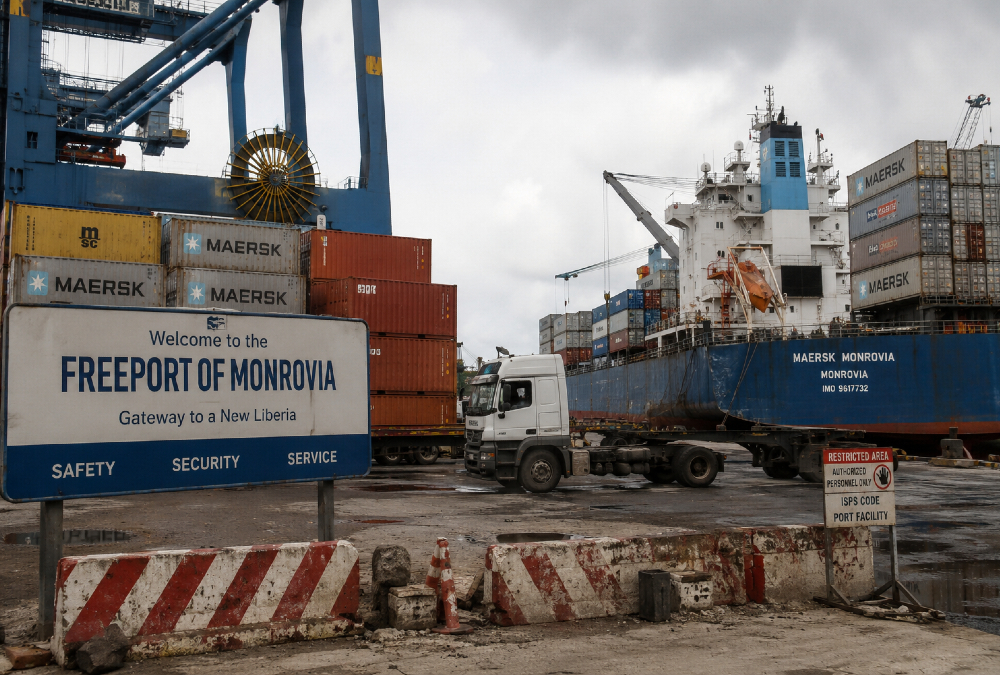
Port capacity, unreliable energy, and weak transport corridors continue to hold Liberia back. No amount of sound trade policy can compensate for infrastructure that simply isn’t there. Soft policy cannot deliver outcomes that roads, ports, and power grids have not yet made physically possible.
4. Small Businesses Are Navigating a Maze Alone
Rules of origin, export procedures, market intelligence, and trade finance are all essential to competing under AfCFTA, and most of Liberia’s micro, small, and medium-sized enterprises (MSMEs) have access to none of them. A market opportunity worth US$450 billion continental-wide means little if the businesses closest to the ground can’t find their way to its entry points.
5. Women Traders Are Being Left Behind
As is true across much of West Africa, women carry the bulk of Liberia’s cross-border trade, yet they routinely face harassment, inadequate facilities, and exclusion from formal regulatory processes. AfCFTA cannot fulfill its promise while sidelining the majority of the people actually using it.
From Strategy to Street Level
The strategy itself is real, and that matters. But implementation isn’t measured in policy documents; it’s measured in border crossings, cleared shipments, and small businesses that successfully reach new markets. A meaningful second year will require naming who is accountable for closing each of these five gaps, and then holding them to it.
The inventor Charles Kettering once observed that a problem well stated is a problem half solved. Liberia has now stated its problem clearly, in strategy form. The next twelve months should be about the other half: turning that statement into results traders can feel at the border, not just read on a page.
We wish Liberia continued success in reforming its business and trade environment, opening the door for its manufacturers and traders to compete fully in regional and continental markets.
Ziad Hamoui is the Co-Founder and Past President of the Borderless Alliance, a leading private-sector advocacy group promoting economic integration and removing trade and transport barriers in West Africa. With extensive experience in Ghana’s road transport, logistics, and shipping sectors, he currently serves as Executive Director of Tarzan Enterprise Ltd., a long-established family business. He is a former Co-Chair of the Africa Food Trade Coalition, Co-Founder of the Trade Facilitation Coalition for Ghana, and serves on multiple high-level advisory committees on trade, transport, agriculture, and security. A Chartered Fellow of the Chartered Institute of Logistics and Transport (CILT) Ghana, he is also a former member of its Governing Council.
