
Opinion
Russia: A Strategic BRICS Partner in an Evolving Multipolar World

By Jacqueléne Coetzer
Russia is often viewed through the lens of geopolitics, sanctions and international conflict. Yet behind the headlines lies one of the world’s largest economies, a global industrial power and a strategically important member of the expanding BRICS alliance.
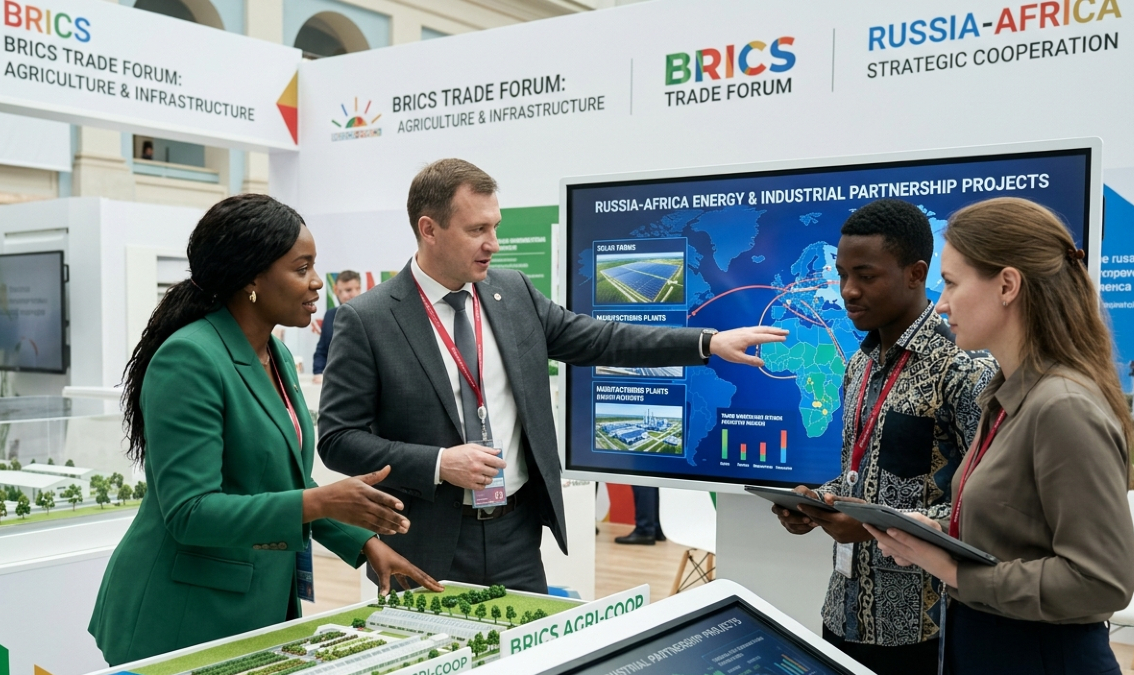
As the world moves towards a more multipolar trading system, Russia is strengthening its engagement with Africa through investment, technology, agriculture, energy and industrial cooperation. For African businesses seeking to diversify their international partnerships, Russia presents opportunities that deserve careful consideration.
Beyond Oil and Gas: An Industrial and Scientific Powerhouse
Russia’s importance extends far beyond oil and gas. It is a leading producer of fertilisers, wheat, industrial machinery, metals, chemicals and advanced engineering products. Combined with internationally recognised expertise in aerospace, nuclear technology and scientific research, these capabilities position Russia as an important long-term partner for African industrialisation.
Trade between Russia and Africa continues to grow, although it remains well below its potential. As the African Continental Free Trade Area (AfCFTA) accelerates regional integration, opportunities are emerging to combine Russian technology and investment with Africa’s expanding consumer markets and manufacturing ambitions.
Navigating Opportunities and Managing Risk
Like many relationship-driven markets, success in Russia depends on trust, preparation and long-term commitment. Businesses must also navigate sanctions, banking restrictions and evolving compliance requirements through careful planning and professional due diligence. These challenges should not discourage engagement but rather reinforce the importance of approaching the market strategically.
The greatest opportunities for African business lie in agriculture, mining & mineral beneficiation, energy, healthcare and pharmaceuticals, as well as in technology & innovation. Russia is crucial for Africa in terms of food security, particularly regarding the importation of wheat and fertilisers. Education, research and skills development is also very important. Russia provides scholarships to more than 35,000 African students each year.
Russia’s Role within BRICS and the Road Ahead
Russia’s significance cannot be separated from its role within BRICS. As the bloc expands its influence in global trade and investment, Russia continues to advocate stronger South-South cooperation and closer economic engagement with Africa. For African businesses willing to look beyond political headlines, this presents an opportunity to build resilient commercial partnerships in an increasingly diversified global economy.
For businesses prepared to move beyond conventional assumptions and approach the market with professionalism, patience and a long-term perspective, Russia offers opportunities that extend far beyond its traditional image. As Africa continues to strengthen its own economic integration and expand its global commercial relationships, partnerships founded on mutual respect, practical cooperation and shared development objectives will become increasingly important.
The future of international trade will increasingly be shaped by diversification, resilience and the ability to build partnerships across multiple regions. In this evolving environment, Russia remains an important participant in the global economy and a significant partner within the BRICS alliance.
Ultimately, successful international trade is not driven by politics alone. It is built on understanding markets, managing risk and developing trusted relationships. Within the evolving BRICS landscape, Russia remains a market worthy of serious consideration by African businesses seeking sustainable long-term growth.
Jacqueléne Coetzer is a strategic trade and market analyst specialising in African and emerging markets. Her work focuses on structuring cross-border commercial relationships, connecting buyers and sellers, and facilitating trade across key sectors including commodities, diagnostics, and premium agricultural products. Her writing explores the realities behind global trade architecture, BRICS, and African economic development – not from a theoretical lens, but from active market engagement and transaction-level insight.
