
Opinion
Africa’s Next Trading Frontier: How a Botswana – Dubai Pact Could Shift Value from Minerals to Agriculture
A new multi-commodity trading corridor promises to fix the continent’s broken agricultural supply chains, offering a blueprint for the future of African commodity trade.

By Ashish Muley
Africa’s commodity trading landscape just took a meaningful step forward. The strategic partnership between the Botswana Stock Exchange (BSE) and the Dubai Multi Commodities Centre (DMCC), which establishes Africa’s first multi-commodity sister-hub trading corridor, is being framed – understandably – as a milestone for diamonds and critical minerals.
But the more interesting story is the one nobody is telling yet: this deal could end up mattering more for African agriculture than for African mining.
That claim deserves scrutiny, since diamonds are what put Botswana on the map and minerals are what will dominate the headlines. Still, the long-term opportunity here lies less in the glamour of gemstones and more in the unglamorous plumbing of agricultural trade – storage, grading, financing, and logistics – the kind of infrastructure that rarely makes news but determines whether a continent’s farmers prosper or merely survive.
The Real Bottleneck Isn’t Production
For many African economies, particularly landlocked and developing nations, the constraint has rarely been how much farmers can grow. It has been what happens after harvest: limited market access, inadequate storage and logistics, fragmented value chains, constrained trade finance, and price discovery that too often leaves smallholders as price-takers rather than price-makers.
This is the narrative the BSE-DMCC partnership has a genuine chance to rewrite.
What Changes If This Works
Direct access to global markets. A functioning exchange corridor tightens the links between farmers, cooperatives, processors, exporters, and international buyers – shortening a chain that has long been needlessly long.
Transparent price discovery. Exchange-based trading brings standardized contracts, quality assurance, and the kind of transparency that builds investor confidence rather than eroding it.
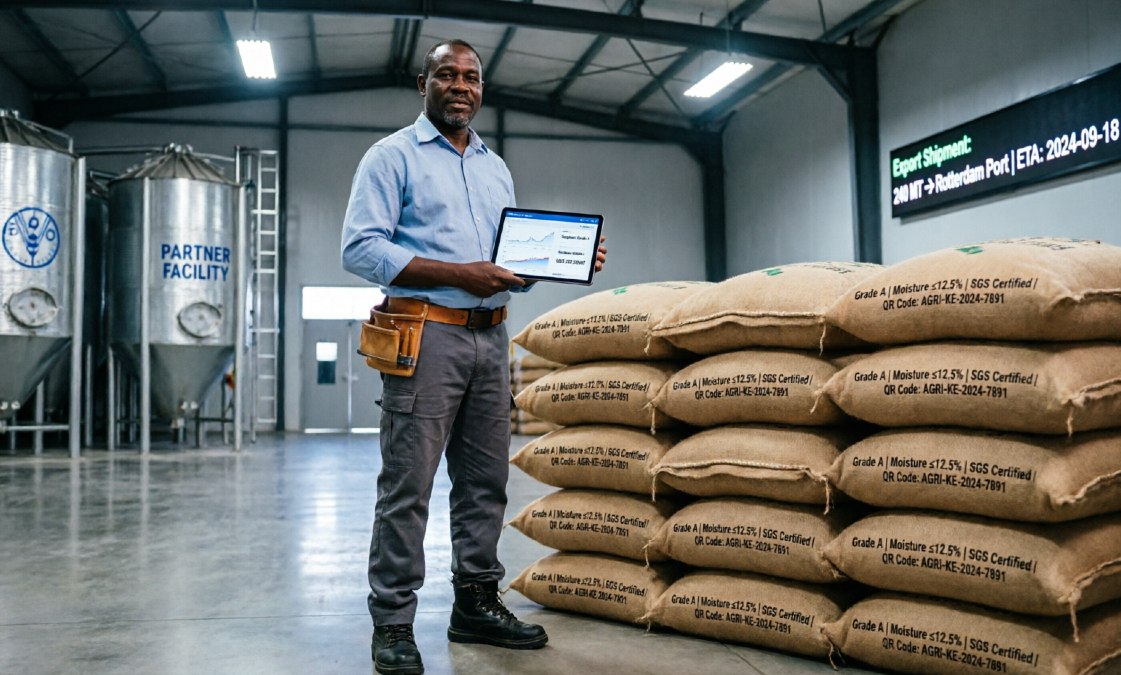
Modern trade infrastructure. Certified warehouses, formal commodity grading, and Warehouse Receipt Systems (WRS) can cut post-harvest losses – which in parts of Africa still run into double-digit percentages – while turning stored grain into collateral that unlocks financing.
World-class logistics. Dubai’s logistics ecosystem, among the most sophisticated in the world, could meaningfully improve export efficiency and plug African commodities into global supply chains more directly than has historically been possible.
Innovative trade finance. Digital trade finance, Shariah-compliant financing structures, and the tokenization of physical commodities as real-world assets (RWAs) could open new pools of capital for agricultural small and medium-sized enterprises that conventional banks have long overlooked.
A boost for AfCFTA. The initiative dovetails with Africa’s broader vision of integrated regional markets under the African Continental Free Trade Area, and could serve as a template for future commodity exchange partnerships across the continent.
Greater certainty and reduced counterparty risk. Exchange-based trading introduces standardized contracts, defined rules, formal clearing, and settlement mechanisms reducing uncertainty around payment, delivery, quality, and performance. Where trades are centrally cleared, the system provides greater settlement certainty and transforms commodity trading from a relationship-based transaction into a rules-based market.
Infrastructure Is the Hard Part
At Stalwart Management Consulting, our work on Warehouse Receipt Systems and commodity market development across Africa has taught us one consistent lesson: a trading platform alone does not make a market. Certified warehouses, rigorous grading standards, reliable market information systems, efficient settlement mechanisms, and genuine participation from farmers, cooperatives, financial institutions, processors, and exporters are the load-bearing walls of any sustainable commodity ecosystem.
Without them, even the most ambitious exchange partnership risks becoming an impressive signing ceremony with little to show for it five years on.
If Botswana and its partners build these foundations alongside the BSE-DMCC corridor – rather than treating the trading platform as the finish line rather than the starting point – the country could do something more significant than facilitate a few high-value mineral trades. It could institutionalize agricultural commodity trade and hand the rest of the continent a working blueprint.
The Question Worth Asking
Could this partnership mark the beginning of a new era for African agricultural commodity exchanges? It is too early to say with confidence.
But the ingredients – regional ambition, foreign logistics expertise, and a policy environment increasingly friendly to regional integration – are more aligned than they have been in years. The diamonds will get the press coverage. The grain, if this works, may get the real results.
Ashish Muley is an independent consultant with Stalwart Management Consulting, with 27+ years in agricultural commodity value chains, export markets, and international trade. He has led projects on business development and capacity building across African countries in partnership with international organizations. Formerly, he spent 15 years in financial services leadership, focusing on sales, marketing, and business development. Based in Pune, India, Ashish advises on agricultural trade, commodity markets, Warehouse Receipt System (WRS) and Asia–Africa economic opportunities, and regularly writes on international trade and logistics.
