
Opinion
Africa’s $5 Billion Question: Why the Continent Still Can’t Trade With Itself
Why flying to Dubai is cheaper than flying to Lagos, and what that says about the cost of Africa’s fragmentation.

By Sheena Raikundalia
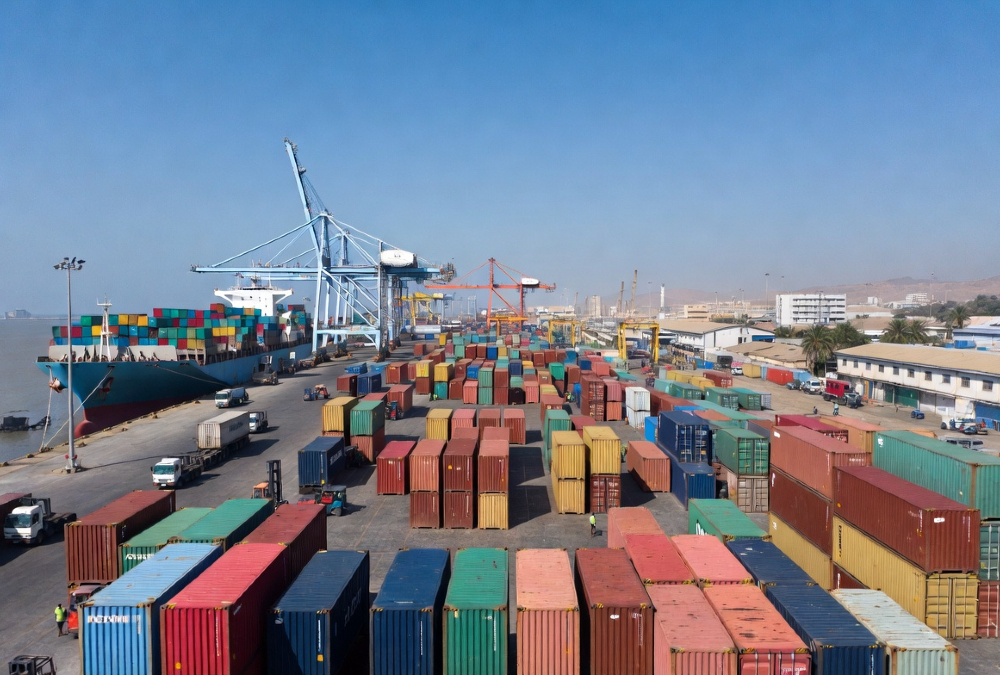
Consider a simple, maddening fact: it is often cheaper to fly from Nairobi to Dubai than to fly from Nairobi to Lagos. Moving a shipping container between two neighboring African countries can cost more than shipping one all the way from China. And every year, the continent loses an estimated US$5 billion simply because a shilling must first become a dollar before it can become a naira. These are not quirks of geography. They are the price of fragmentation.
On paper, Africa has already solved this problem. The African Continental Free Trade Area (AfCFTA), the Single African Air Transport Market (SAATM), and the Pan-African Payment and Settlement System (PAPSS) all exist, signed, ratified, and celebrated. In practice, 54 economies still function largely as 54 separate worlds, each with its own currency, customs regime, and regulatory logic. The agreements are real. The integration, mostly, is not.
That gap between ambition and reality was the subject of a recent Africa Innovation Council webinar I moderated, “Africa’s Innovation Paradox: From Strategy to Systems.” Three insights from that conversation have stayed with me, and they point toward a conclusion more uncomfortable than the usual talk of a “skills gap” or a “funding gap.”
History Was Never Designed to Connect Us
Chika Okeke-Agulu, chair of the Africa Innovation Council and director of the Africa World Initiative at Princeton University, offered a reminder that is easy to forget in the optimism of summit speeches: Africa’s fragmentation is not an oversight. It is an inheritance.
The continent’s transport corridors, trade routes, and financial systems were built to move goods and capital outward, to ports, to colonial capitals, to global markets, not to link African economies with one another. That architecture has outlived the empires that built it. It still determines why a flight to the Gulf is more direct, and cheaper, than a flight to a country next door, and why a truck can wait longer at an internal border than a container waits at a coastal one. Understanding this history is not an academic exercise. It is the starting point for any policy that hopes to undo it.
Technology Cannot Outrun Trust
Amal El Fallah-Seghrouchni, Morocco’s Minister Delegate for Digital Transition and Administrative Reform, brought a different lesson from Morocco’s own digital transformation: technology is the easy part.
It is trust, regulation, and institutional capacity that determine whether an innovation scales or stalls. A payment system is only as useful as the confidence people place in it. A digital ID is only as powerful as the government’s credibility in protecting it. Africa does not have a shortage of clever platforms and promising pilots. It has a shortage of the institutional scaffolding, sound regulation, interoperable standards, dependable courts, that allows a good idea in one country to become infrastructure for fifty-four.
Innovation Should Follow Demand, Not the Other Way Around
Brando Okolo, head of Science, Technology and Innovation at AUDA-NEPAD, pushed back on a habit common across the continent’s research institutions: producing more papers, patents, and pilots without asking who, exactly, is asking for them.
Strong innovation ecosystems, he argued, are built the other way around. Researchers, entrepreneurs, investors, and policymakers need to be solving problems that markets actually have, not chasing metrics that funders reward. This is less a call for less research than for research anchored in real demand: a shift from innovation as performance to innovation as problem-solving.
Don’t Copy China. Don’t Copy the West. Copy the Logic.
A natural question follows: should Africa simply replicate China’s state-led industrial playbook, or the West’s market-led one? Neither, exactly. Africa can learn selectively from both while building institutions suited to its own context, its own demographics, and its own starting point.
But there is a model closer to home worth studying more carefully: Europe. The European Union was not built on affection between its member states. France and Germany did not integrate because centuries of rivalry had suddenly dissolved into goodwill. They integrated because their leaders recognized a shared economic and strategic interest that no single nation could secure alone. Integration, in Europe’s case, was not sentiment. It was strategy.
The Real Paradox
This is, perhaps, the deeper paradox behind Africa’s “innovation paradox.” The problem is not a lack of ideas. Africa’s cities are full of them. It is not a lack of talent. The continent’s universities and startup hubs prove that daily. The problem is that Africa has not yet treated scale as the economic and political imperative it is, the deliberate work of making 54 markets function, trade, pay, and build as one.
AfCFTA, SAATM, and PAPSS are the right instruments. What they still need is what Europe eventually supplied for itself: the political will to make integration not an aspiration on a summit agenda, but the operating logic of the continent’s economy.
Sheena Raikundalia is an accomplished entrepreneur, former lawyer, government policy advisor, and angel investor with deep expertise across the legal, financial services, and impact investment sectors in Europe and Africa. She has played a pivotal role in advancing Africa’s technology and innovation ecosystems, leveraging a career that spans top-tier London law firms, leadership as Country Director of the UK-Kenya Tech Hub for the UK Foreign, Commonwealth & Development Office (FCDO), and her current position as Chief Growth Officer at agri-tech company Kuza One. Sheena is recognized for her strategic vision, commitment to fostering innovation, and strong advocacy for Africa’s growth potential in technology, entrepreneurship, and impact investment.
