
Opinion
Africa Must Not Just Grow – It Must Own What It Grows
Growth without ownership is a rental agreement, not an inheritance.
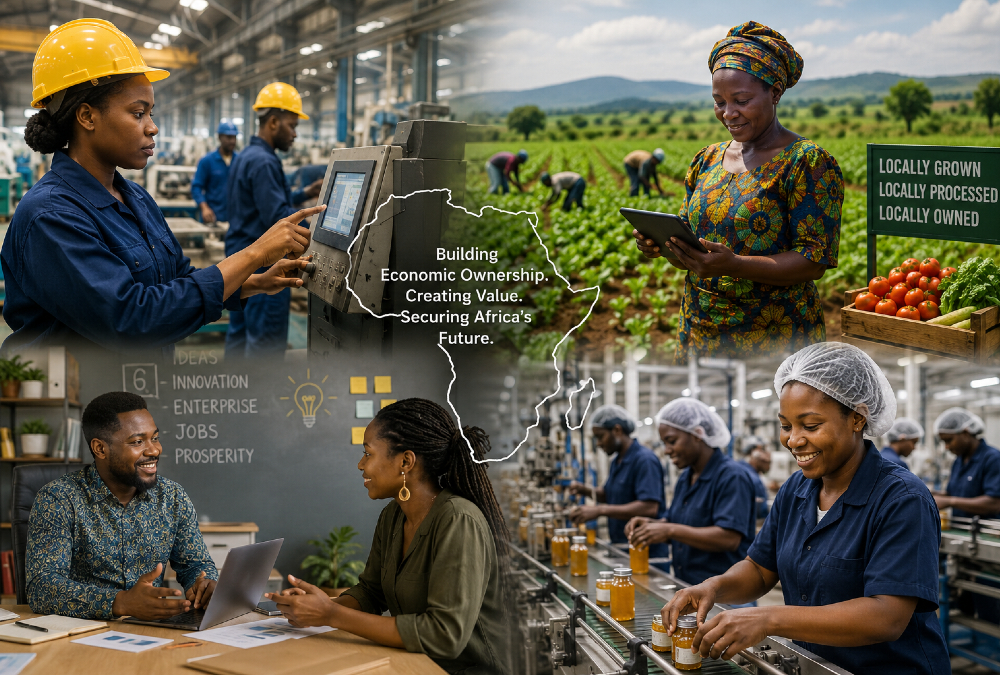

By Farhia Noor
Every civilization, at some point, confronts the same question: who owns the value it creates? For Africa, in this decade of rising GDP figures, expanding cities, and record foreign investment, that question has never been more urgent – or more easily ignored.
The continent has no shortage of raw material for prosperity. It has land, labor, talent, markets, and ideas in abundance. Its economies are growing. Its skylines are rising. Capital is flowing in at rates unseen a generation ago. By almost every headline metric, Africa looks like a continent on the move.
But growth, on its own, proves nothing. An economy can expand for decades while the wealth it generates flows elsewhere – into foreign shareholder accounts, offshore tax havens, or supply chains controlled from Shanghai, London, or New York. A nation can post impressive growth statistics while its own people remain spectators to their own prosperity. The real test of African development is not whether the numbers go up. It is whether Africans own what those numbers represent.
The Questions That Actually Matter
Consider what ownership looks like in practice, sector by sector, generation by generation.
Do African farmers capture lasting value from what they grow, or do they sell raw commodities cheaply and buy back processed goods at a premium? Do African businesses control meaningful stakes in their own value chains, or do they operate as subcontractors in supply chains designed and priced elsewhere? Do African workers share proportionally in the wealth their labor helps create, or does productivity growth simply enrich distant shareholders?
Do African children inherit not just jobs, but skills, functioning institutions, usable technology, and productive assets they can build on? Do African governments construct financial systems that fund African enterprise and keep value circulating on African soil – or do they remain dependent on foreign capital with foreign terms attached? Do African universities generate original research and homegrown leadership, or do they mainly export their best minds abroad? Do African intellectuals shape an independent African intellectual tradition, or do they mostly interpret frameworks built elsewhere?
Do African institutions actively protect ownership and long-term national interest, or are they structured to let value quietly leak out? Do African youth see themselves as builders, founders, and innovators – or only as applicants waiting for someone else to create the opportunity? And when the African diaspora returns home, does it bring back capital, expertise, and institution-building ambition, or merely remittances that cover the gap left by structural underdevelopment?
These are not rhetorical questions. They are diagnostic ones. And for much of the continent, the honest answers remain uncomfortable.
Ownership Is Not Exclusion – It Is Responsibility
It is worth being precise about what “ownership” means here, because the word invites misreading. This is not a call for economic nationalism, protectionism for its own sake, or shutting out foreign partners. Africa needs investment, trade, and global partnership as much as any region on Earth – arguably more.
Ownership means something narrower and more constructive: ensuring that African people participate meaningfully in the industries, technologies, institutions, and profits that shape their own future. It means African stakes in African value chains. African expertise in African boardrooms. African capital financing African enterprise. It is a responsibility, not a wall.
Growth without this kind of ownership tends to pass through a country like water through sand – visible for a moment, then gone, leaving little trace. Ownership, by contrast, is what converts a temporary boom into permanent capability. It is what allows one generation’s opportunity to become the next generation’s inheritance.
From Opportunity to Inheritance
This distinction – between growth and ownership – may be the single most important lens for evaluating Africa’s development trajectory over the next twenty years. A continent can attract investment, build infrastructure, and post strong growth figures while still functioning largely as a supplier of cheap inputs to value chains it neither designs nor controls. That is growth without ownership. It is fragile, reversible, and ultimately borrowed.
The alternative is harder and slower, but durable. It means African governments building financial systems that channel capital toward African enterprise. It means universities producing research that solves African problems on African terms. It means young people encouraged not merely to seek employment, but to build companies, institutions, and technologies of their own. It means a diaspora that returns not just with remittances, but with networks, know-how, and the willingness to reinvest in home institutions.
None of this happens automatically, and none of it happens quickly. But every decision made across African boardrooms, ministries, campuses, and family businesses should be measured against a single standard: does this leave African people more capable, African institutions stronger, and a greater share of African-generated value in African hands?
Growth is the easy part – capital is mobile, and it will flow toward opportunity wherever it appears. Ownership is the hard part, because it requires deliberate choices, patient institution-building, and the discipline to prioritize long-term capability over short-term convenience.
Africa has spent decades proving it can grow. The next chapter of its story depends on whether it can also learn to own.
Farhia Noor is a seasoned business consultant based in Dar es Salaam, Tanzania. With a proven track record in developing enterprises and executing turnkey projects across both government and private sectors, she brings deep expertise to the table. Farhia is also a committed advocate for community-led development and is passionate about advancing sustainable, intra-African growth.
