
Opinion
Africa’s Next Harvest: From Food Security to Brand Power
Two very different showcases, one shared lesson: from Tanzania’s fields to Rwanda’s national parks, Africa’s economic future depends on turning its own assets into value it keeps at home.

By Ratnakar Wagh
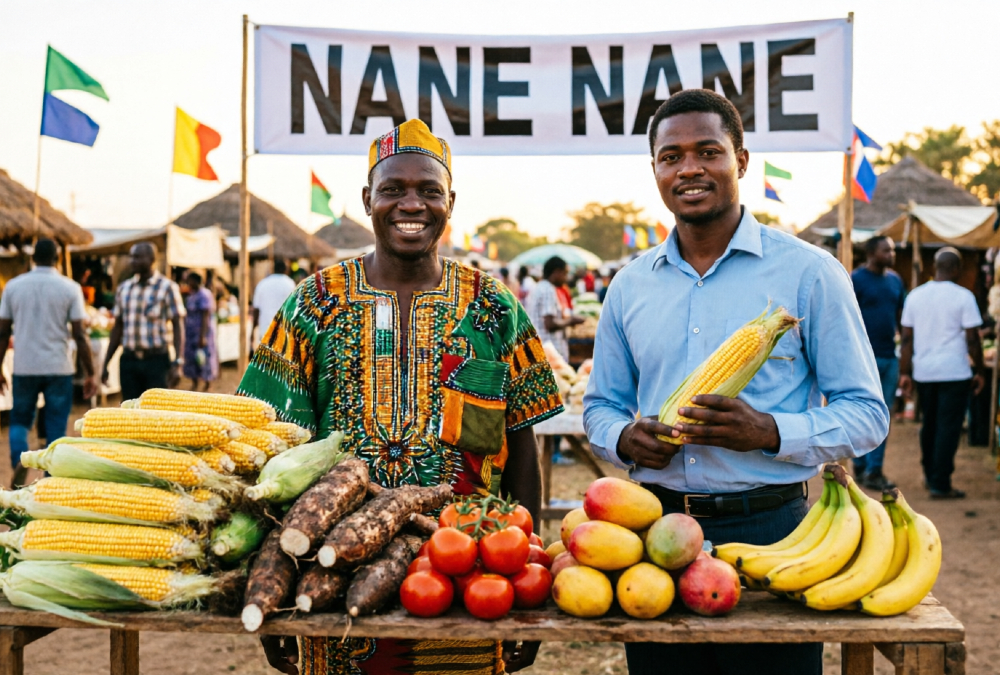
Food security is national security. That principle sat at the heart of Tanzania’s Nane Nane agricultural exhibition this year, held under the banner “Recognize the Market, Increase Productivity, to Implement Vision 2050.” It is also, whether by coincidence or design, the same principle driving Rwanda’s remarkable rise as a tourism powerhouse.
Taken together, these two stories reveal something larger about where African economic resilience will actually come from: not from external supply chains or borrowed brands, but from disciplined, locally rooted strategy.
The Case for Growing What the Market Wants
Long-term economic resilience cannot be built on external supply chains alone. That lesson is playing out across East Africa, where a quiet but consequential shift is underway – from food dependence toward regional self-sufficiency.
From the exhibition grounds of Nane Nane to the trade corridors linking the East African Community and the wider continent, three pillars are emerging as the backbone of this transformation.
First, market-driven production must replace subsistence farming. That means aligning what farmers grow with actual demand, investing in climate-smart irrigation, and weaning agriculture off its dangerous dependence on rainfall alone. A warming climate has made rain-fed farming an increasingly unreliable bet; the countries that shift toward irrigated, demand-responsive production will be the ones that weather the next drought without a food crisis.
Second, agro-processing and value addition need to become the norm, not the exception. Too much of Africa’s raw produce leaves the farm – and often the continent – before it is ever transformed into a finished good. Converting crops into processed, packaged products locally does two things at once: it slashes post-harvest losses, which remain a chronic drain on farmer incomes, and it keeps the wealth generated by that value addition inside the region rather than exporting it along with the raw material.
Third, intra-regional trade integration has to move from aspiration to infrastructure. Frameworks like the African Continental Free Trade Area (AfCFTA) provide the legal architecture, but they only matter if the physical logistics catch up – roads, storage, and corridors robust enough to move food efficiently from high-surplus breadbaskets to areas of high demand.
Africa has no shortage of land, a young and growing workforce, and no lack of entrepreneurial ambition. What it needs is the connective tissue: public-private partnerships, accessible agricultural financing, and a genuine commitment to modernizing value chains from the ground up.
Rwanda’s Rebrand: A Masterclass in Strategic Patience
If Tanzania’s story is about production, Rwanda’s is about perception – and it offers a striking answer to a deceptively simple question: can a destination’s global brand actually rewrite its economic trajectory? The numbers suggest it can.
Rwanda’s “Visit Rwanda” campaign has helped push tourism receipts to a historic US$685 million (roughly RWF 1 trillion), alongside 1.49 million visitor arrivals and a MICE (meetings, incentives, conferences, and exhibitions) sector that hosted more than 160 global events. But the headline figures obscure the more instructive story: how Rwanda got there.
Three strategic choices stand out.
Rwanda moved beyond traditional marketing entirely. Rather than leaning on conventional advertising, it pursued high-impact sports diplomacy – partnering with elite clubs including Arsenal, Paris Saint-Germain, and Atlético Madrid, along with major American sports franchises. That approach embedded the Rwandan brand into millions of international households organically, reaching a younger, global demographic that traditional tourism ads rarely touch.
It chose value over volume. Instead of chasing the low-margin churn of mass tourism, Rwanda deliberately positioned itself around high-value, low-impact eco-tourism, protecting singular natural assets like its mountain gorilla population while maximizing revenue per visitor rather than visitor count. It is a model that treats scarcity as an asset rather than a limitation.
It paired institutional discipline with community integration. The Rwanda Development Board has operated with something close to corporate efficiency, and critically, a robust revenue-sharing model has ensured that surrounding communities benefit directly from conservation.
That single design choice – turning conservation into a shared economic asset rather than an externally imposed burden – may be the most exportable lesson of all.
The Common Thread
What links a farming exhibition in Tanzania to a tourism boom in Rwanda is not sector, but strategy. Both stories reject the idea that Africa’s growth must be imported, outsourced, or borrowed.
Both insist instead that the continent’s true competitive advantages – its land, its wildlife, its people, its culture – only translate into durable prosperity when paired with intentional execution: market discipline in agriculture, brand discipline in tourism, and institutional discipline in both.
Africa does not lack natural or human capital. It has the land and labor to feed itself and, increasingly, the world. It has the cultural and ecological wealth to become a premier global travel destination on its own terms.
What remains is the harder work: aggressive but coherent branding, data-driven execution, accessible financing, and the kind of visionary institutional leadership that turns potential into a track record. Tanzania and Rwanda, in their own ways, are showing what that work looks like when it’s done well. The question now is how many other nations on the continent are prepared to do the same.
Ratnakar Wagh is an entrepreneur, management professional, and CEO of Tanzania-based Kinglion Investment Company, an investment firm driving industrial development across Africa through initiatives in manufacturing, renewable energy, and logistics infrastructure. He specializes in organizational transformation, sustainability, and leadership, with a strong focus on building high-performing teams and creating long-term value across emerging markets.
