
Opinion
Africa’s Tourism Renaissance: From Safaris to Global Travel Powerhouse
Beyond safaris and pyramids, Africa is building a modern, diversified travel economy – and the world is starting to take notice.

By Dishant Shah
For generations, the world’s image of African travel was frozen in a handful of postcards: a lion prowling the Serengeti, the silhouette of Mount Kilimanjaro at dawn, the Great Pyramids rising from the desert, and a scattering of beach resorts along the coast. It was a marketable image, and not an inaccurate one – but it was radically incomplete.
That picture is now being redrawn, and fast.
A Continent Broadening Its Appeal
Africa’s tourism industry is no longer defined solely by game drives and iconic landmarks. Cultural festivals are drawing international crowds. Heritage tourism is turning centuries-old cities and trade routes into destinations in their own right. Adventure sports – from surfing in Morocco to hiking Rwanda’s volcanoes – are attracting a younger, more active traveler. Luxury hospitality brands are opening properties from Lagos to Victoria Falls. Culinary tourism is putting African cuisine on the global map. And a growing wave of remote workers is treating the continent not as a place to visit, but as a place to live, even temporarily, as digital nomad hubs take root from Cape Town to Accra.
This is not a marginal shift. It is a structural one – and it did not happen by accident.
The Obstacles That Held Africa Back
It would be dishonest to tell this story without acknowledging how difficult the road here has been. For years, political instability in various pockets of the continent scared off would-be travelers. Transport infrastructure lagged behind demand. Air connectivity between African nations was – and in some cases still is – frustratingly poor, often requiring travelers to route through Europe or the Middle East just to fly between two African capitals. Visa restrictions added friction at every border. Health concerns, particularly during outbreaks like Ebola, cast a long shadow over regional tourism, even in countries entirely unaffected. And marketing campaigns, when they existed at all, were often inconsistent, underfunded, or poorly coordinated across neighboring destinations that should have been promoting themselves as a single, connected region.
Underinvestment compounded the problem. Hotels, roads, airports, and basic visitor services in many destinations simply failed to keep pace with global standards, leaving enormous tourism potential on the table.
The Turnaround: Infrastructure Meets Ambition
Over the past decade, something has genuinely shifted. Governments and private investors, recognizing tourism’s outsized potential to generate jobs and foreign exchange, have moved with real urgency to close these gaps.
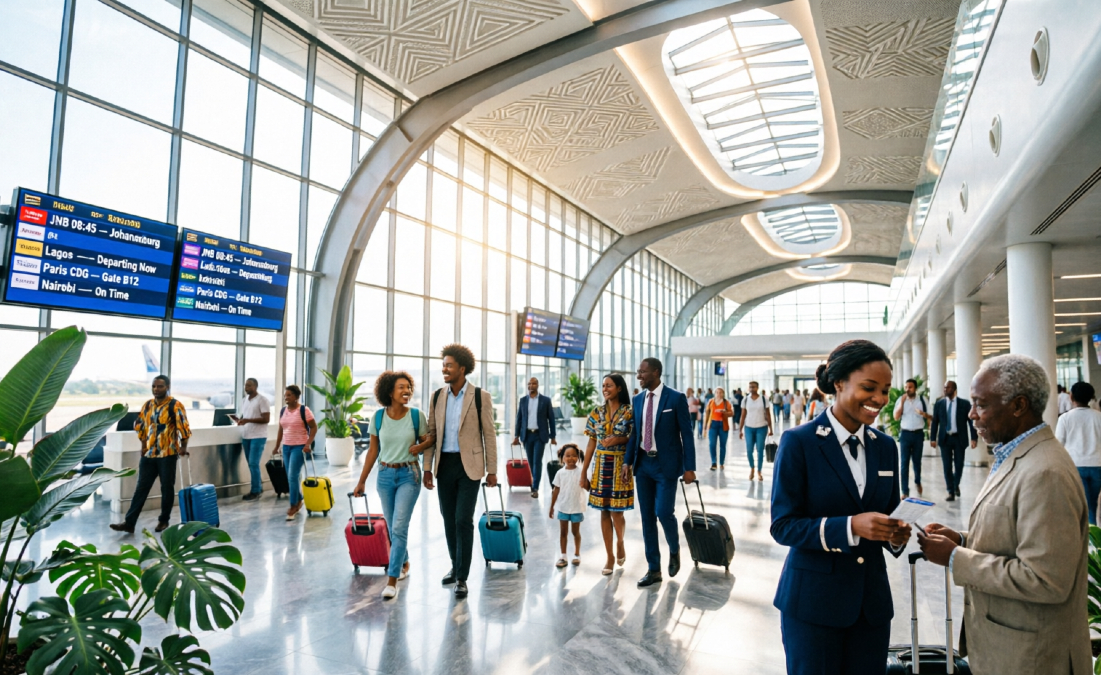
New international airports have opened. National carriers have expanded their fleets and route networks. Highways connecting major tourist corridors have been upgraded. Digital payment systems have made it dramatically easier for international visitors to transact without friction. And tourism boards – once an afterthought – are now running sophisticated, well-funded campaigns to compete on the world stage.
Policy has caught up with ambition, too. Visa-on-arrival schemes and visa-free travel agreements between African nations are steadily dismantling the bureaucratic barriers that once made regional travel needlessly painful. The African Continental Free Trade Area (AfCFTA) promises to accelerate this further, easing business mobility across borders and, by extension, boosting the corporate and conference travel that so often accompanies economic integration.
What the Numbers Say
The data tells a genuinely encouraging story. International visitor arrivals have rebounded sharply since the pandemic’s low point, with Morocco, South Africa, Kenya, Tanzania, Rwanda, Mauritius, Egypt, Namibia, Ghana, and Zambia all reporting robust growth in tourism activity. Meanwhile, a tier of premium destinations – Zanzibar, Cape Verde, Botswana, and Seychelles – continues to command the attention of high-spending leisure travelers seeking exclusivity alongside natural beauty.
This is not recovery for recovery’s sake. It is expansion into new market segments that didn’t meaningfully exist for African tourism a decade ago.
An Economic Engine, Not Just an Attraction
Perhaps the most important shift is in how tourism is now understood – not as a nice-to-have source of foreign currency, but as a genuine economic engine. Across the continent, the sector supports millions of jobs spanning hospitality, aviation, ground transport, handicrafts, food service, entertainment, and conservation.
Capital is following that logic. Investment is increasingly flowing into eco-lodges that blend sustainability with luxury, conference and convention centers built to capture business travel, cruise terminals along both coasts, national parks in need of modernized infrastructure, coastal resort developments, and heritage restoration projects that preserve history while monetizing it responsibly.
The Real Question Ahead
The debate over whether Africa possesses world-class tourism potential is, at this point, settled. It does – and the results are showing up in arrival numbers, investment flows, and a rapidly diversifying set of offerings that go well beyond the safari brochure.
The more interesting question now is what comes next: how infrastructure investment, air connectivity, conservation strategy, digital technology, and policy reform will continue to shape what may be one of the world’s fastest-evolving travel markets over the next ten years. Africa has already proven it can compete. The coming decade will determine how far that competitiveness can go.
Dishant Shah is a partner at Legion Exim, a company specializing in facilitating the export of high-quality engineering products directly sourced from manufacturers in India to Africa. His areas of expertise include new business development and business management.
