
Opinion
Africa’s Automotive Revolution Is Already Underway – the World Just Isn’t Watching
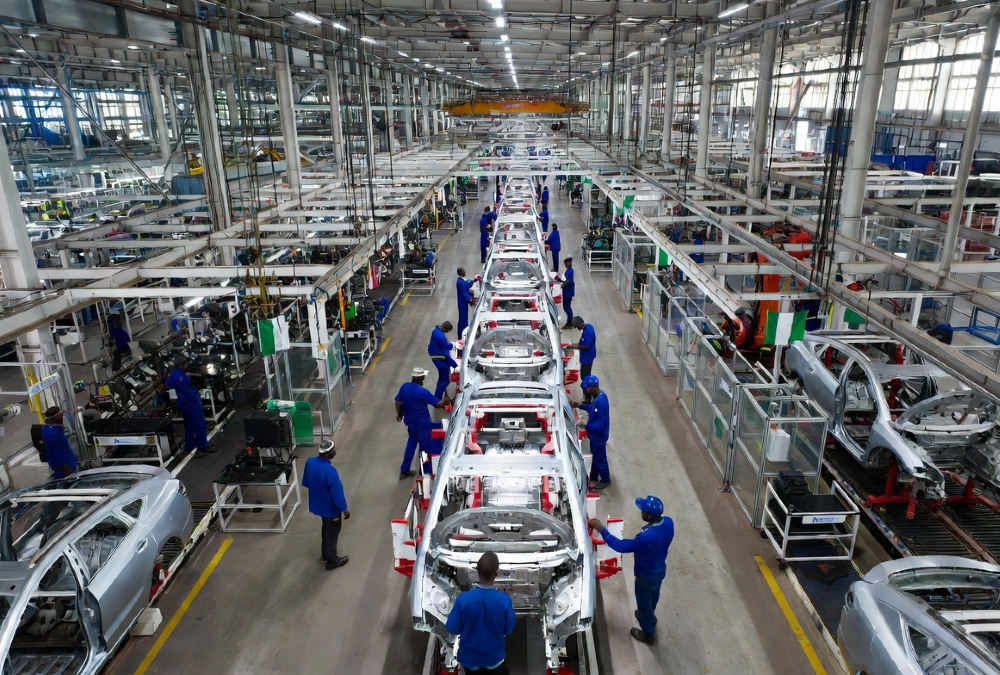
From South Africa’s export-grade assembly lines to Morocco’s surging Renault and Stellantis plants, a quiet industrial transformation is reshaping one of the world’s most underestimated manufacturing frontiers.

By Des H Rikhotso
When analysts speak of the next great automotive frontier, their gaze almost reflexively drifts toward Southeast Asia or Eastern Europe. They would do well to look south – considerably further south.
Across the African continent, a network of passenger-car assembly plants is quietly expanding, backed by indigenous entrepreneurs, multinational giants, and governments hungry for industrial diversification. The story is neither uniform nor without friction, but it is unmistakably real.
Africa’s automotive sector is not a single market but a mosaic of ambitions. South Africa remains the continent’s undisputed production powerhouse.
Morocco has emerged as a formidable challenger, its Mediterranean coastline now dotted with export-oriented facilities that ship vehicles to Europe and beyond. Meanwhile, Nigeria, Kenya, Ghana, Egypt, and Ethiopia are building the foundations – sometimes haltingly, sometimes boldly – of genuine domestic manufacturing capacity.
“Africa’s automotive sector is not a single market but a mosaic of ambitions – and the ambitions are growing fast.”
South Africa: The Established Engine
South Africa has long anchored the continent’s automotive credentials. Toyota South Africa Motors holds the title of the country’s largest vehicle assembler, a distinction it has defended through decades of labor disputes, rand volatility, and shifting global supply chains.
Volkswagen Group South Africa has refined the Polo – a vehicle now synonymous with affordable quality across the continent – into a cornerstone export product. BMW’s Rosslyn plant, which produces the 3 Series for global markets, offers perhaps the most compelling proof that African-made cars can meet the uncompromising standards of premium consumers worldwide.
Ford’s Southern Africa operation, responsible for the Ranger pickup, tells a similarly instructive story. The Ranger is not merely assembled here; it is engineered partly here, shaped by the demands of African roads and African buyers.
Nissan South Africa rounds out a competitive field, focusing on the utility vehicles and SUVs that define mobility in a region where infrastructure remains a work in progress.
Morocco: The Fast-Rising Challenger
If South Africa represents automotive maturity, Morocco embodies the sector’s most exciting growth narrative. Renault’s giant Tangier facility, opened in 2012, was widely regarded as a gamble at the time.
It has since become one of the most productive automotive plants on the continent, feeding European demand with an efficiency that has silenced the skeptics. The arrival of Stellantis – assembling Peugeot, Citroën, and Fiat models – has only deepened Morocco’s claim as Africa’s second automotive capital.
Morocco’s success is not accidental. Strategic investment in port infrastructure, a liberalized trade framework with the European Union, and a government willing to make long-term industrial bets have collectively created an environment in which global manufacturers feel confident committing capital.
The lesson for other African nations is plain, if not always easy to replicate.
Nigeria, Kenya, Ghana, and Ethiopia: The Next Wave
Elsewhere, the picture is more nascent but no less significant. Nigeria’s Innoson Vehicle Manufacturing stands as a symbol of what indigenous ambition can achieve when paired with patient capital.
Founded by Innocent Chukwuma, Innoson has moved from assembling imported kits to developing vehicles with a genuinely local identity – a feat that would have seemed improbable to outside observers just two decades ago. The Stallion Group’s Nissan assembly operation adds a licensed international dimension to Nigeria’s growing capacity.
In East Africa, Kenya’s Associated Vehicle Assemblers has quietly served as one of the region’s most enduring assembly operations, while Mobius Motors has attracted international attention for its stripped-back, purpose-built SUVs designed explicitly for African terrain and African price points. Ghana’s Kantanka Automobile has followed a similar philosophy, championing local identity in a market long dominated by imports.
Japan Motors, operating under a Nissan license, adds a complementary layer of international partnership.
Egypt, with its larger industrial base, hosts General Motors’ Chevrolet assembly operations alongside Hyundai and the more specialized Arab American Vehicles – the latter producing both civilian and military configurations, a reminder that automotive manufacturing in Africa encompasses defense and utility dimensions rarely acknowledged in mainstream coverage.
Ethiopia’s Bishoftu Automotive Industry, government-backed and strategically positioned in a country of over 120 million people, points to the continent’s longer-term potential as a domestic consumption story begins to gain traction.
The Ranger is not merely assembled in South Africa – it is engineered partly there, shaped by the demands of African roads and African buyers.”
The Road Ahead
The continent’s automotive expansion is not without its challenges. Infrastructure deficits, currency instability, the persistence of cheaper used-car imports, and the looming transition to electric vehicles all present genuine headwinds.
The shift to EVs, in particular, raises questions about whether Africa’s nascent industry can leapfrog the internal combustion engine era or whether it will find itself, once again, importing the technology of tomorrow on someone else’s terms.
But the direction of travel is clear. The seventeen passenger-car assembly plants catalogued below represent not just economic activity but aspiration – a continent’s determination to make things, to add value, and to supply its own roads with vehicles built by its own hands.
For investors, policymakers, and anyone prepared to look beyond the conventional wisdom, Africa’s automotive sector deserves far more serious attention than it typically receives.
The assembly lines are running. It is time the world started paying attention.
Top Passenger Car Assembly Plants in Africa
Note: This list excludes buses, medium commercial vehicles (MCV), and heavy commercial vehicles (HCV).
| # | Assembly Plant | Country | Notable Details |
|---|---|---|---|
| 1 | Innoson Vehicle Manufacturing | Nigeria | Leading indigenous automobile producer |
| 2 | Stallion Group | Nigeria | Licensed Nissan passenger vehicle assembler |
| 3 | Toyota South Africa Motors | South Africa | Largest vehicle assembler in the country |
| 4 | Volkswagen Group South Africa | South Africa | Produces VW Polo and export vehicles |
| 5 | BMW Group South Africa | South Africa | Manufactures BMW models for global markets |
| 6 | Nissan South Africa | South Africa | Known for pickup trucks and SUV assembly |
| 7 | Ford Motor Company of Southern Africa | South Africa | Renowned for Ford Ranger production |
| 8 | Renault Group Morocco | Morocco | Major plants in Tangier and Casablanca |
| 9 | Stellantis Morocco | Morocco | Produces Peugeot, Citroën, and Fiat vehicles |
| 10 | General Motors Egypt | Egypt | Assembles Chevrolet vehicles locally |
| 11 | Hyundai Egypt | Egypt | Leading passenger car assembler |
| 12 | Arab American Vehicles | Egypt | Produces civilian and military vehicles |
| 13 | Associated Vehicle Assemblers Kenya | Kenya | One of East Africa’s largest assembly plants |
| 14 | Mobius Motors | Kenya | Kenyan brand making rugged, affordable SUVs |
| 15 | Kantanka Automobile | Ghana | Ghana’s indigenous automobile manufacturer |
| 16 | Japan Motors | Ghana | Licensed Nissan vehicle assembler |
| 17 | Bishoftu Automotive Industry | Ethiopia | Government-linked vehicle assembly facility |
Des H Rikhotso is a seasoned C-Suite Multi-Industry (Automotive – OEM + Retail, Logistics, Oil & Gas, etc) business executive with 25+ years of Business Leadership Experience across the South, East and Western Sub-Sahara Africa Region. Based in Kampala, Uganda he serves as East Africa Region Country Director and Business Executive, driving Business Strategic Growth and Operational Excellence – contributing his Business Leadership Experience to the Region. Des has held Business Leadership roles at BMW Group Africa, Volkswagen Group Africa, Peugeot Motors South Africa, Toyota/Lexus South Africa, Lexus East Rand (Unitrans/CFAO), Nissan Group of Africa, G.U.D Holdings (Africa Exports Operations Division),The HDR Group of Companies and The Ezra Group of Companies (a Leading Uganda & East Africa Conglomerate). He holds Under-Graduate and Post-Graduate business degrees from the University of the Western Cape, Wits University (Wits Business School) and the University of South Africa.
