
Opinion
Africa at the Table: The Urgent Case for a Unified Foreign Policy

By Kingsely Moghalu
Even before the rapid, ongoing reconfiguration of global order, Africa was always mostly on the menu – not at the table. That African leaders now bemoan the defenestration of multilateralism and the resurgence of unilateral power politics suggests a continent still struggling to recognize when the rain began to beat it.
What is unfolding is hardly novel. We are witnessing the gloves come off – the quiet part said aloud.
The hand was always there, and it was always the same hand, previously cloaked in the smooth conventional wisdoms of an illusory “international community” wherein we were all to be our brothers’ keepers. Yet power has ever been the province of nations possessing its true currency: technological supremacy, productive economies that generate national wealth and high living standards for citizens, and military might.
These are the enduring denominations of global influence. They have not changed in millennia.
The Immutable Arithmetic of Global Power
A caveat is warranted. While the possession of all three factors guarantees a seat at the table, not every powerful nation holds them in equal measure.
Certain international actors have commanded global attention with only one or two of these enablers. China exemplifies this: it wielded demographic heft and, more critically, military power – specifically nuclear capability – long before achieving its current economic stature.
Nuclear capability confers a distinct form of influence. Call it the power of destructive nuisance, or military nuisance value. North Korea illustrates this perfectly.
India and Pakistan enjoy at least tertiary standing in the global pecking order – India especially, as a rising emerging market with substantial demographic power.
Ruto’s Gambit – and the Hard Math of Dependency
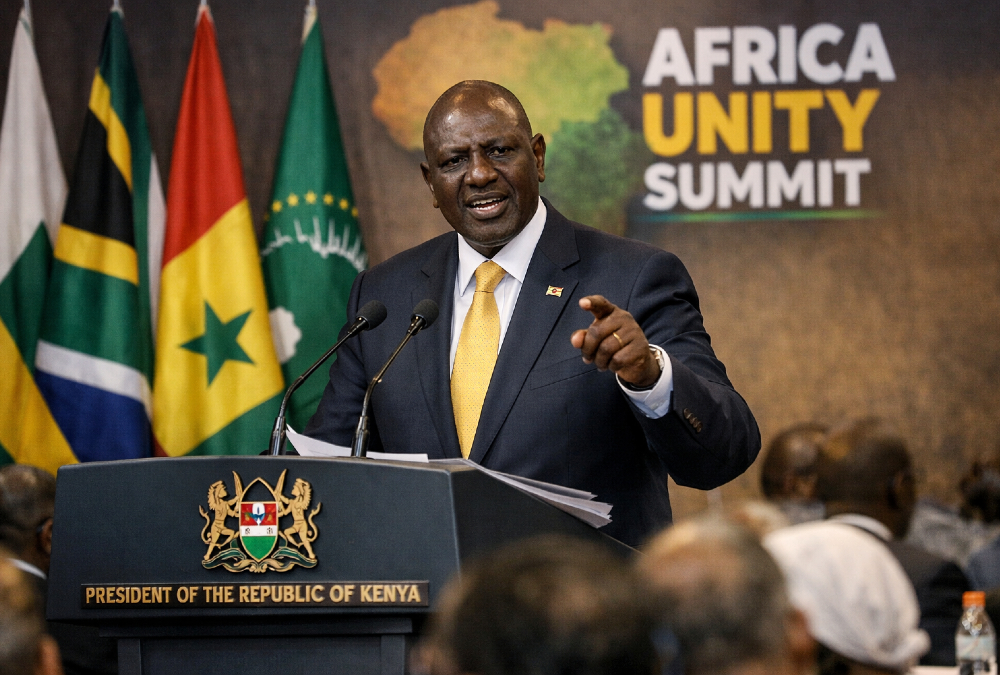
Against this backdrop, Kenyan President William Ruto’s proposal that the African Union select five representatives from the continent’s sub-regions to formulate a common African foreign policy appears sensible. Its practical realization, however, faces formidable obstacles.
First, the internal state capacity and cohesion of many African nations remain deficient. Second, Africa lacks a unified, foundational worldview to inform its understanding and navigation of both its immediate environment and the broader international system.
Most African states have functioned as client states – riddled with corruption – for so long that a fundamentally new leadership class would be required to think differently and achieve continental cohesion. Consider: seventy percent of the AU’s program budget is funded by external “partners.” Common foreign policy? Not a bad idea indeed.
Kingsley Moghalu is a Nigerian political economist, lawyer, and academic with broad expertise in international affairs, finance, and governance. A former Deputy Governor of the Central Bank of Nigeria and founding President of the African School of Governance, he is recognized globally for his leadership in economic policy, international development, and public sector reform. Moghalu has advised governments, corporations, and international organizations on strategy, finance, and global competitiveness. A respected thought leader, speaker, and author, he brings intellectual rigor and executive experience to debates shaping Africa’s economic transformation and global governance.
