
Opinion
What I learned about Stop and Frisk from watching my black son
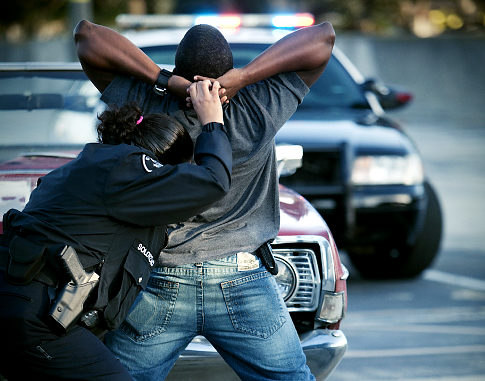
However, because cautious African American men know that they are frequent targets of sudden and unexplained police stops, they must suppress their rational defensive reactions with self-imposed docility. What if these were plainclothes police officers? Any resistance could have led to my son’s being tasered or even shot. And if the police were to shoot him in this context – all alone in the shadows on an empty street late at night – that act would likely have been judged as a justifiable homicide. In my son’s case, it turned out that they were plainclothes police officers who failed to identify themselves until the encounter was well underway.
This example is by no means unique. My African American brother-in-law, a white-collar professional, was driving to my house on Thanksgiving Day with his 20-something son when their car was stopped and surrounded by multiple police vehicles. The police officers immediately pointed guns at my relatives’ heads. If my brother-in-law or nephew – or one of the officers – had sneezed, there could have been a terribly tragic police shooting. After the officers looked them over and told them they could go, my relatives asked why they had been stopped. The officers hemmed and hawed for a moment before saying, “You fit the description of some robbery suspects – one was wearing a Houston Astros jersey just like the one your son is wearing.”
In reality, if my in-laws had fit the description of the robbery suspects so well, there is no way the police could have ruled them out as the robbers without searching their car. Sadly, it seems likely that the police were stopping – and presumably pointing guns at – every African American male driver who happened by. I have heard similar stories from other African American friends, and never from any white friend or relative.
Many have noted that stop and frisk practices hinder important constitutional values: the liberty to walk freely down the street; the reasonable expectation of privacy against unjustified invasion of one’s person by government officials; and the equal protection of the laws. But even the best-intentioned white writers often gloss over the actual human impacts of these encounters. Now and again, an individual white elite will have an experience that personalizes this principle of individualized suspicion.
For example, Linda Greenhouse, the Yale Law School Research Scholar and New York Times columnist, once wrote about the “unnerving” experience of being “unaccountably pulled over by a police officer” in a quiet, residential neighborhood in Washington, D.C. at night. As Greenhouse wrote, “My blood pressure goes up as I recall it years later.” Michael Powell, another New York Times columnist, learned from his two 20-something sons that they had never been stopped by police despite traveling regularly all over New York City, while 8 male African American college students told him they’d cumulatively been stopped a total of 92 times, in encounters that included rough physical treatment. Neither of these writers lacked knowledge about these issues, but their experiences obviously humanized and heightened their awareness.
My son’s experiences aside, I can only call on one personal reference when the issue of stop and frisk is raised. As a graduate student in April 1981, I spent a spring break traveling around Europe. When I visited Germany, I decided to spend one afternoon walking around Communist East Berlin. I quickly found myself being stopped at every single street corner by police officers whose suspicions were undoubtedly raised by my American clothing. Because of my limited knowledge of German, every encounter involved emphatic demands and raised voices, accompanied by threatening hand-slapping gestures. While Linda Greenhouse described her one-time experience with a police officer as “unnerving,” my encounter with a Communist police state would be better described as “suffocating.” I had the sense of being helplessly trapped, aware that no matter which direction I chose to walk, I would find more police waiting for me on the next block. I often wonder whether suspicionless stop and frisk searches regularly force African American males into an East Berlin-esque sense of oppression, while the rest of us go our merry ways without noticing.
I understand the necessity and inevitability of police discretion. I also understand the pressures we place on law enforcement agencies to prevent and control crime. However, stop and frisk practices frequently disregard the basic requirements laid out in the seminal 1968 Supreme Court case Terry vs. Ohio. The Court ruled that an officer performing a stop should note “unusual conduct which leads him reasonably to conclude in light of his experience that criminal activity may be afoot and that the persons with whom he is dealing may be armed and presently dangerous.” By contrast, in their reports on stop and frisk encounters, contemporary New York City police officers can merely check a box that says “furtive movements” or one that implausibly just says “other.”
