
Opinion
Unlocking Africa’s Rivers: The Continent’s Overlooked Engines of Growth

By Dishant Shah
When pundits discuss Africa’s economic future, they often fixate on familiar themes: mineral wealth, youthful demographics, or the rapid adoption of digital technology. But there’s a quieter, more foundational force shaping the continent’s trajectory – one that flows right beneath our feet.
Look at a map of Africa, and you will see something extraordinary: vast river systems crisscrossing national borders – the Nile (6,650 kilometers), the Congo (4,700 kilometers), the Niger (4,200 kilometers), and the Zambezi (2,600 kilometers). These are not just natural wonders; they are integrated economic systems with the potential to revolutionize trade, energy, agriculture, and regional integration across half the continent.
Their true value isn’t measured in kilometers or miles – but in opportunity.
Cheaper, Cleaner, Smarter Logistics
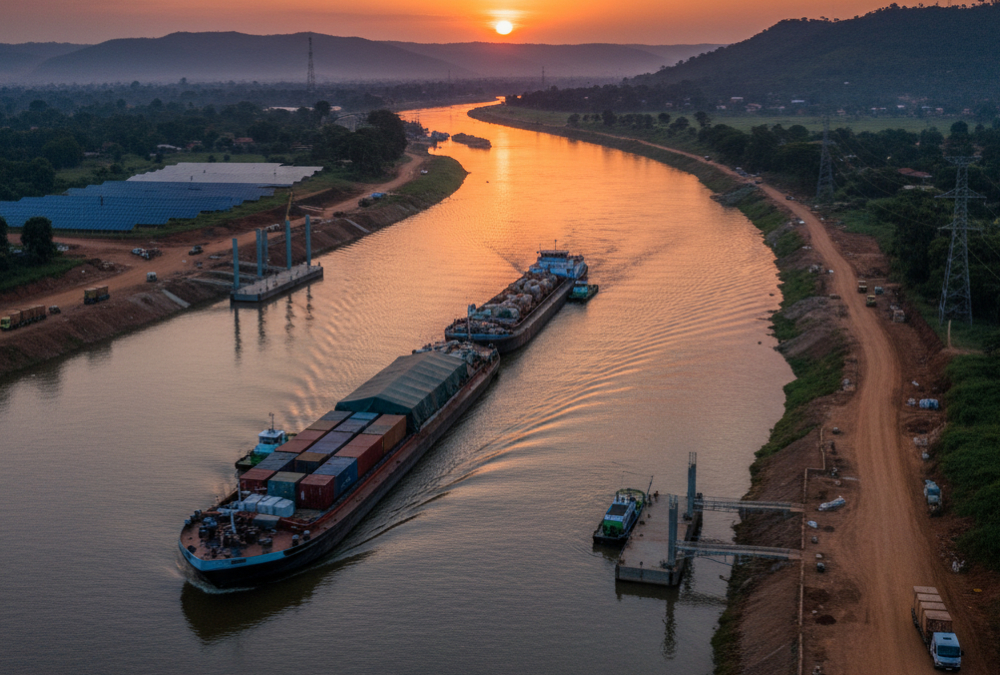
River-based transport is inherently more cost-effective, energy-efficient, and environmentally sustainable than road-based freight. Countries like the Democratic Republic of Congo, Nigeria, Mali, Zambia, and Mozambique sit atop interconnected waterways that, with modest investment, could slash logistics costs and catalyze cross-border commerce.
Imagine what that unlocks:
- Lower freight costs for farmers and manufacturers
- Stronger regional trade through seamless inland corridors
- New commercial hubs emerging far from coastal capitals
This isn’t speculative – it’s strategic. A single shift toward river transport could generate billions in new trade across the continent.
Powering Industrialization from Within
Africa’s rivers are also reservoirs of untapped energy. The Congo Basin alone holds the potential to power half the continent through hydropower.
The Nile and Zambezi basins harbor multi-gigawatt capacity that could energize entire industrial ecosystems.
This isn’t just about electricity – it’s about economic sovereignty. Reliable, affordable hydropower can anchor:
- Manufacturing zones
- Agro-processing clusters
- Value-added mining operations
- Urban industrial corridors
In other words, rivers can become the backbone of Africa’s long-elusive industrial takeoff.
From Food Importer to Global Breadbasket
Africa’s river basins are also its most fertile lands – yet a staggering share remains under-irrigated. Expanding irrigation infrastructure along the Nile, Niger, and Zambezi could enable:
- Year-round and multi-season farming
- High-value crop production (think horticulture, rice, and export-grade staples)
- Climate-resilient agriculture that withstands droughts and erratic rainfall
The payoff? A continent that moves from being a net food importer to a reliable global exporter – boosting rural incomes, food security, and foreign exchange earnings simultaneously.
Tourism, Jobs, and Biodiversity – All Along the Banks
The Nile, the Congo rainforests, and Victoria Falls already draw millions of visitors annually. But the real opportunity lies in scaling eco-tourism: river cruises, conservation-based tourism, delta wildlife safaris, and community-led experiences.
These models don’t just protect biodiversity – they create high-quality jobs in underserved inland regions, aligning economic development with environmental stewardship.
Water Security as Strategic Capital
As climate pressures intensify, water security is emerging as the new currency of geopolitical influence. Cooperative governance of transboundary basins will be decisive for Africa’s stability and investor confidence:
- The Nile Basin (Egypt, Sudan, Ethiopia)
- The Niger Basin Authority (9 member states)
- The Zambezi Watercourse Commission
How these nations manage shared waters will shape everything from foreign direct investment to regional peace.
Following the Global Blueprint
History shows the pattern: every major economy built its rise around a river. The Mississippi powered America’s heartland.
The Yangtze transformed China’s interior. The Rhine integrated Europe’s industrial core.
Africa has not one – but four river systems with continental-scale potential.
If these waterways are developed as trade arteries, energy corridors, irrigation networks, and tourism clusters, Africa’s growth narrative over the next 30 years will be fundamentally rewritten.
Rivers gave rise to Africa’s earliest civilizations – from ancient Egypt to Great Zimbabwe. Today, they offer the continent a second chance to build prosperity from within.
The question is no longer whether Africa can harness its rivers – but whether it will.
Dishant Shah is a partner at Legion Exim, a company specializing in facilitating the export of high-quality engineering products directly sourced from manufacturers in India to Africa. His areas of expertise include new business development and business management.
