
Opinion
The Quiet Rise of the Global South: How the World’s New Architects Are Redefining Power

By Dishant Shah
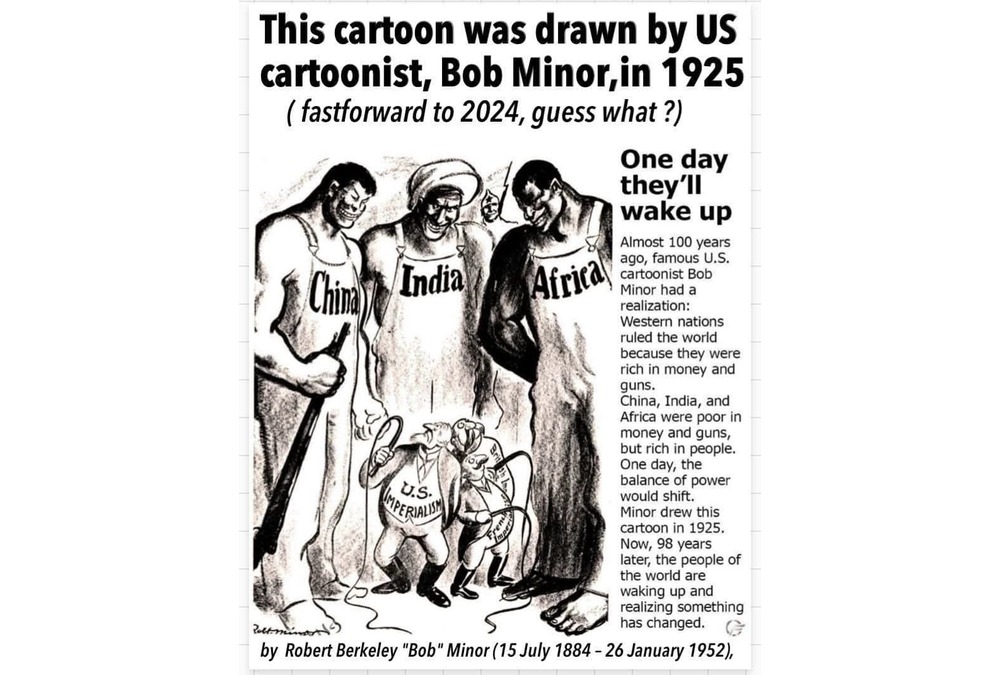
Ninety years ago, the world was starkly divided. Wealth and weapons were concentrated in the hands of a few Western powers, while much of the rest of the world – rich in population and labor – was relegated to the role of suppliers: sources of cheap manpower or raw materials.
Back then, the assumption was simple: power belonged to those who held capital and arms. Everyone else followed.
But history has a way of unfolding on its own time.
Today, what we are witnessing isn’t just a realignment of economic metrics or manufacturing dominance. It is a deeper transformation – one that redefines who shapes the future and how it’s built.
Across Asia, Africa, and parts of Latin America, regions once seen as passive players are emerging as active architects of global progress – not simply because they produce more, but because they think differently.
India: From Outsourcing Destination to Digital Pioneer
Not long ago, India was framed in the global imagination as a back-office economy – known primarily for low-cost IT services, call centers, and outsourced software development.
Fast forward to today, and the narrative has changed dramatically. India is building digital public infrastructure that the world is now trying to emulate.
The Unified Payments Interface (UPI) is not just a payment system; it’s a blueprint for financial inclusion at scale. It has brought banking into the hands of over a billion people, enabling access, agency, and autonomy.
India is no longer just participating in global innovation – it’s setting the pace.
China: From Factory Floor to Innovation Engine
China’s rise from “the world’s factory” to a global leader in technology and innovation is well-documented – but often underestimated. Once seen as a place where others’ ideas were assembled, China is now building its own models, tools, and systems – and exporting them with confidence.
From electric vehicles to solar energy and fintech experimentation, China is no longer waiting for external validation. It is shaping the rules of engagement on its own terms, influencing trade, technology, and geopolitics in ways that can no longer be ignored.
Africa: A Continent Reimagined
Africa, too, is undergoing a quiet revolution. For decades, the continent was viewed through the lens of aid, charity, and development projects – a recipient rather than a creator.
But today, a new generation of entrepreneurs is redefining what’s possible. In Kenya, fintech adoption outpaces many Western economies.
In Rwanda, ambitious investments in AI research and business services are positioning the country as a tech-forward hub.
Across the continent, young innovators are leveraging mobile technology, solar microgrids, and digital wallets to build local solutions with global implications.
This shift may not always make headlines, but it is relentless – and it is reshaping economies from the ground up.
The Tides of Power Are Changing
Power doesn’t always announce itself with fanfare. Sometimes, it shifts like the tide – gradual, persistent, and easy to overlook until it’s irreversible.
The world is no longer flat. It’s fluid.
And the old frameworks – the maps drawn by colonial histories and Cold War alignments – are becoming less relevant by the day.
We may not yet know who will write the next chapter of global leadership. But one thing is clear: more voices are picking up the pen.
And as those who were once led begin to lead – not only their own nations but the direction of global progress – we must ask ourselves:
What happens when the world’s new architects start building the future on their own terms?
Dishant Shah is a partner at Legion Exim, a company specializing in facilitating the export of high-quality engineering products directly sourced from manufacturers in India to Africa. His areas of expertise include new business development and business management.
